Caribbean · 18°28′N 66°06′W · Kitchen testing pending
Puerto Rico
Where a third of the cooking starts at a grater
The ten
Ranked by what people actually name first
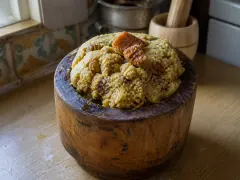 MofongoFried green plantain crushed in a wooden pilón with garlic, pork, and fat while it is still hot enough to smear — served with a cup of hot broth beside it.
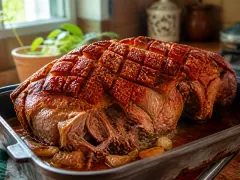 PernilChristmas pork in an apartment — a bone-in shoulder packed overnight with a garlic-oregano paste and recao sofrito, roasted long, then blasted for cuerito.
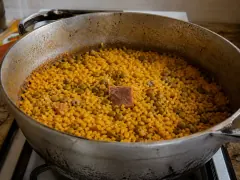 Arroz con GandulesPigeon peas and rice in one pot with recaíto, achiote oil, and pork, until the grains are stained orange and the bottom has a chance at pegao.
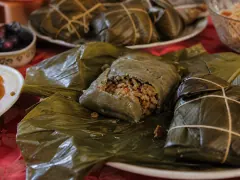 PastelesGrated green banana, plantain, and yautía, coloured with achiote and folded around a reduced pork guiso in a banana leaf, tied, and boiled. Not a tamal.
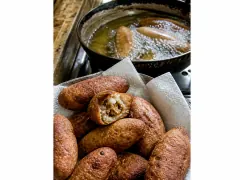 AlcapurriasYautía and green banana masa, orange from achiote, smeared around cold picadillo and fried naked in deep oil until the crust blisters. Kiosco food.
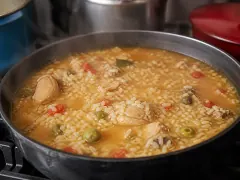 Asopao de PolloSoupy rice with bone-in chicken and sofrito — thicker than soup, wetter than arroz con pollo. Pull it off the heat before it looks right, because the rice keeps drinking.
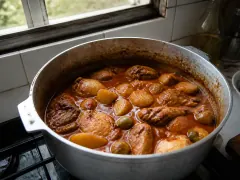 Pollo GuisadoBone-in chicken braised in fried recaíto and tomato until the sauce clings in a rust-orange coat. If it runs off the chicken like soup, you cooked asopao weather.
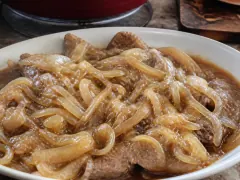 Bistec EncebolladoThin beef marinated in garlic, oregano, and sour orange, then cooked with more onion than seems decent until the onions collapse and become the sauce.
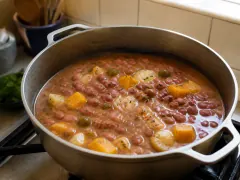 Habichuelas GuisadasPink beans stewed in fried recaíto and smoked pork, with calabaza smashed against the pot until the liquor clings to a grain of rice instead of running off it.
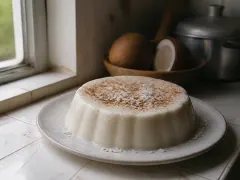 TemblequeA coconut-and-cornstarch pudding cooked to a nappe and chilled until it shivers on the plate. No eggs, no caramel, no dairy — the name is the instruction.
Three of the ten dishes here begin the same way: a green plantain or a root vegetable, and a tool that turns it into something you can build with.
Mofongo is fried green plantain crushed in a tall wooden pilón with garlic and pork. Alcapurrias are green banana and yautía grated raw into a paste, wrapped around beef, and fried. Pasteles are that same grated masa spread on a banana leaf, filled, folded, tied in pairs, and boiled — a dish that honestly takes a day, and that almost nobody makes alone. That is the point of it. The assembly line is the recipe.
Green starch is not a side dish on this island. It is the structure.
The seasoning base is recaíto, and it is green: culantro, cilantro, ají dulce, onion, garlic, sweet pepper, blitzed and kept in a jar in the fridge. The Cuban base a hundred miles west turns red with tomato; this one does not have to. Over that goes achiote oil — annatto seeds warmed in fat until it runs orange — which is colour and a little earth. It is not heat. Almost nothing on this list is spicy, and the ají dulce is named dulce for a reason.
The rest is pots. Pollo guisado, bistec encebollado, habichuelas guisadas, asopao: onions cooked further than you think, and then time.