Pernil
Christmas pork in an apartment — a bone-in shoulder packed overnight with a garlic-oregano paste and recao sofrito, roasted long, then blasted for cuerito.
- Prep
- 1 hr 45 min
- Cook
- 5 hr 30 min
- Serves
- 8–10 Christmas plates from a 4–4.5 kg shoulder
- Difficulty
- Hard
Researched · Kitchen testing pending
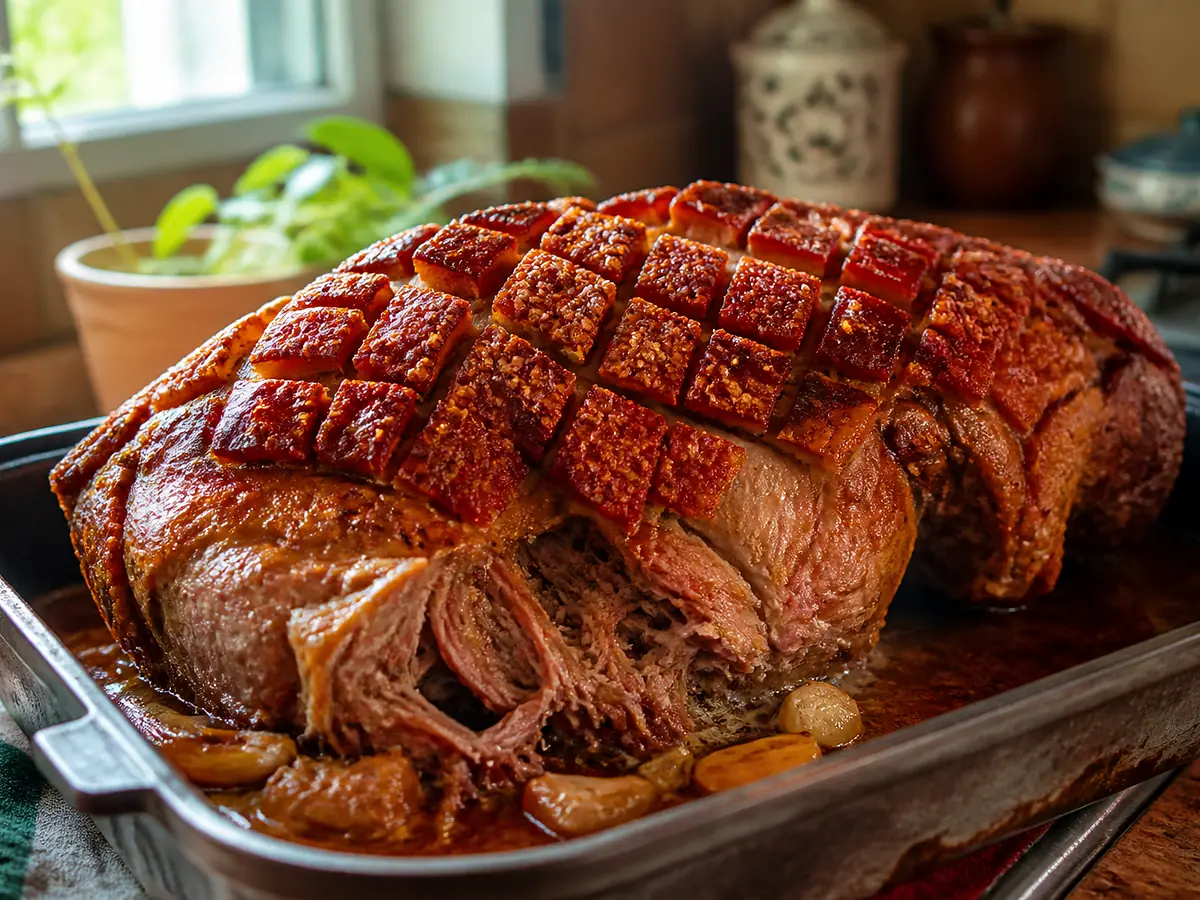
The night of the 23rd I pack garlic into the scores on a pork shoulder and put the pan in the fridge, oregano and adobo on every surface I can reach, because Christmas pork in a Puerto Rican apartment is an overnight paste and a long oven, not a pit in the yard.
Pernil de cerdo is the home cut: a shoulder that can pull, fat that renders, skin that should crackle into cuerito. I want the house to smell of garlic and recao before the oven even goes on.
This is not a whole pig. Lechón on the island is a Nochebuena yard project. This is the shoulder that fits a home oven and still feeds the table with arroz con gandules. Cuban lechón asado is a different island’s roast, built on naranja-agria mojo with cumin — that recipe lives here, and I am not rewriting it on this page.
The pork
- 4–4.5 kg9–10 lbBone-in pork shoulder — pernil, paleta, or picnicskin-on if you can get it; Boston butt if that is the market. Patted dry
Garlic-oregano paste (adobo de ajo)
- 70 g20–24 clovesGarlic, peeled
- 18 g1 tbspKosher salt
- 10 g4 tspDried oregano, crumbled between your palms
- 4 g2 tspBlack pepper, freshly ground
- 8 g1 tspGround cuminoptional and light — some houses use it. Keep it modest so this does not read as a Cuban mojo
- 30 ml2 tbspWhite vinegar, or naranja agria
- 45 ml3 tbspLard, melted and cooled until just liquidor olive oil
Sofrito, packed in with the paste
- 100 g3½ ozYellow onion, roughly chopped1 small
- 100 g3½ ozCubanelle or Italian frying pepper, stemmed, seeded, chopped
- 40 g1½ ozAjíes dulces, stemmed6–8, or ½ extra cubanelle
- 6–8 leaves6–8 leavesRecao (culantro), choppedor 15 g cilantro leaves and stems if recao is missing
For the skin or fat cap
- 12 g2 tspKosher salt
- 30 ml2 tbspLard, at room temperature
- 120 ml½ cupWater, for the roasting panplus more if the drippings threaten to scorch
Optional achiote colour — a labelled pantry habit
- 4 g1 tspSazón with achiote, or ground annatto bloomed in the lardcolour, not the backbone of the marinade
Yield
8 to 10 Christmas plates from a 4–4.5 kg bone-in shoulder, with leftovers that are the point of the 25th.
On the cut
Pernil in a home kitchen is pork shoulder. Picnic (paleta) often comes with skin, which is how you get cuerito. Boston butt is easier to find in many North American markets and is often skinless — you get a browned fat cap and pullable meat, not true crackling. Bone-in. The bone slows the cook and keeps the interior from drying the way a tied boneless roast will. A whole pig is the island feast, and your oven is not a caja china. Do not buy loin: it is lean, done at a sliceable 63 °C / 145 °F, and will never pull. Trim only thick waxy flaps that will never melt; leave the cap.
On garlic, oregano, adobo, and sofrito
The marinade is a paste you pack into slits and scores, not a citrus bath. Mash garlic with salt so the cells break. Oregano should be dried leaf, crumbled. Commercial adobo powder — salt, garlic, oregano, pepper, often turmeric — is an island pantry fact. If you use a packet, skip most of the extra salt and still mash fresh garlic. A packet alone is dusty. Sofrito here is onion, cubanelle, ají dulce, recao. Recao (culantro) is the long saw-edged leaf that smells like cilantro turned up; cilantro is the labelled stand-in. Tomato in sofrito is a known house habit, but I leave it out of this roast so the pork does not stew in a sauce. A little vinegar or naranja agria wets the paste so it clings.
On lard versus oil
Lard is what I rub on the fat cap and mash into the paste when I have it. It tastes like pork and handles the late high heat for cuerito without the fruitiness of extra-virgin olive oil. Olive oil in the paste is ordinary in Puerto Rican kitchens; I use it when the lard tin is empty. Neutral oil is the departure. Butter on the skin will brown too fast and then burn.
On skin and cuerito
Cuerito is the goal if you have skin: blistered, shattering, salty. Water on the skin is steam, and steam is rubber. Score through skin into fat, not down into the meat. Salt the skin harder than the flesh. Keep it as dry as you can during the long roast — baste the meat sides, not a flood over the crackling. Blast at the end. If you have no skin, you are roasting a fat cap. It should render and brown. It will not be cuerito. Say so.
Equipment
- A roasting pan that fits the shoulder with a few centimetres of air around it, and a rack so the meat is not boiling in its own juice for five hours
- A mortar or small blender for the paste
- A sharp knife, for scoring and slits
- An instant-read thermometer you trust
- Heavy foil, for a loose tent if the top browns too fast
Do not use a glass baking dish for a roast this large, a turkey oven bag, or a flimsy cookie sheet. Do not put this in an Instant Pot as the method — a pressure cooker gives shredded pork for a different meal, and the timing is in the substitutions as a labelled departure.
Method
Make the paste and the sofrito20 min
Mash the garlic and 18 g of salt in a mortar to a sticky paste, or pulse it in a blender with the vinegar so it catches. Stir in the oregano, black pepper, optional cumin, and the 45 ml of melted lard or oil. It should smell sharp and herbal, not like separate spices sitting in fat.
Pulse or chop the onion, cubanelle, ají dulce, and recao to a coarse wet mix — not a smoothie. Stir 2 tablespoons of the garlic paste into it.
Alliinase in ruptured garlic cells needs that mash; whole cloves in a few holes will not season 4 kg of pork. A blender smoothie of sofrito will scorch on the pan.
Mash garlic and 18 g salt to a sticky paste, using vinegar if blending. Mix in oregano, pepper, optional cumin and 45 ml melted lard or oil. Coarsely pulse onion, cubanelle, ají dulce and recao; stir 2 tablespoons garlic paste into this sofrito.
Score, slit, pack, overnight25 min work, then 12–24 hours cold
Pat the shoulder dry again. If there is skin, score it in a 2 cm diamond pattern, through skin and into the fat, not into the muscle. If there is only a fat cap, score the fat the same way so it can render. Deep cuts into meat leak juice for hours and dry the roast.
Make 10 to 12 deep slits in the flesh sides with a small knife, and push garlic paste into every one. Rub the rest of the paste and all of the sofrito over the flesh, into the scores on the meat side, and under any flap of fat you can lift.
Salt the skin or fat cap with the 12 g of kosher salt — the skin wants a dry salt crust more than a wet soak. If you use achiote or sazón, blend it into the paste, not over the skin where it will scorch.
Cover and refrigerate 12 to 24 hours. Overnight is the minimum I will defend. Salt moves inward slowly, and acid does not tenderise a 4 kg shoulder to the bone — the overnight seasons the outer centimetres and starts the garlic.
Dry shoulder. Score skin or fat in 2 cm diamonds without cutting into muscle. Make 10–12 deep slits in flesh sides and pack with garlic paste; rub remaining paste and sofrito over flesh and under fat flaps. Salt skin with 12 g salt; keep optional achiote in paste, off skin. Cover and refrigerate 12–24 hours.
Bring it toward room temperature, and heat the oven1 hour
Take the pork out 45 to 60 minutes before it goes in. Wipe loose onion off the skin so it will not burn. Rub the fat cap or skin with the 30 ml of room-temperature lard.
Set it on the rack in the roasting pan, skin or fat cap up. Pour 120 ml of water into the pan — not over the meat.
Heat the oven to 160 °C / 325 °F.
A fridge-cold 4 kg roast browns the paste before the centre has moved. Water in the pan keeps the first drippings from going to carbon.
Remove pork from refrigeration 45–60 minutes before roasting. Wipe loose onion off skin and rub skin or fat cap with 30 ml lard. Set skin-up on a rack; pour 120 ml water into the pan, not over pork. Heat oven to 160 °C / 325 °F.
Slow roast until the meat will pullabout 4½–6 hours for this size
Roast at 160 °C / 325 °F. After 90 minutes, spoon the pan juices over the flesh sides — not in a flood over the skin. If the pan dries and the drippings smell like they will burn, add water 60 ml at a time. You want browned fond, not black.
Plan on roughly 60 to 75 minutes per kilogram as a first guess, then ignore the clock and go by temperature and feel. Collagen loosens as the interior climbs through 70 °C / 158 °F. For pullable pernil I want 91–96 °C / 195–205 °F in the thickest muscle, not touching bone.
USDA safety for whole cuts is 63 °C / 145 °F plus a rest. That number gives you sliceable loin, not this plate — at 63 °C the connective tissue is still tough.
A fork slides in with slow resistance and the fibres separate when you twist; the juice runs clear with orange beads of fat; the bone starts to wiggle. If it looks pale and tight at 82 °C, keep going. If the top browns too fast, tent loosely with foil, leaving the skin as exposed as you can.
Roast at 160 °C / 325 °F, roughly 4½–6 hours or 60–75 minutes per kilogram, prioritising tenderness over time. After 90 minutes, baste flesh sides without wetting skin; add pan water in 60 ml increments if needed. Probe thickest muscle away from bone for 91–96 °C / 195–205 °F and fork-separating fibres; continue if tight at 82 °C. Tent loosely if browning too quickly.
Rest, then crackle the cuerito25–35 min rest · 8–15 min blast
Take the pan out. Spoon off most of the fat, leaving the dark juices. Tent the meat loosely, skin uncovered if you can manage it. Rest 25 to 35 minutes — carve at once and the board turns into a puddle.
If you have skin: blot it dry with a towel. Surface water is the enemy of crackling. Move the oven to 230 °C / 450 °F, or use a broiler with the rack not too close. Return the pork and watch it. The skin should blister, darken, and sound hollow when tapped, 8 to 15 minutes. Burnt sofrito bits can go black — pick them off. You are after cuerito, not charcoal.
If you have only a fat cap, the same blast renders the last fat and deepens the colour.
Carve: crackling off in pieces, then meat off the bone in thick shreds or slices, following the muscle seams. Spoon the defatted pan juices over the meat.
Remove pan, skim most fat and loosely tent meat, leaving skin exposed. Rest 25–35 minutes. Blot skin dry; heat oven to 230 °C / 450 °F or use a broiler at a safe distance. Return pork for 8–15 minutes, watching closely until blistered and hollow-sounding; remove burnt sofrito. Skinless fat cap browns without crackling. Remove crackling, carve meat along muscle seams and spoon defatted juices over.
Storing it
The marinade is not a sauce
Do not put the overnight dish juices on cooked meat unless you boil them hard for several minutes. Pan juices from the roast are already cooked — skim the fat and keep them.
Leftovers
Cool within 2 hours; pull or slice so it cools faster than a 4 kg lump. Refrigerate 3 to 4 days at 4 °C / 40 °F or below. Reheat to 74 °C / 165 °F in a covered pan with a spoon of juices; the microwave dries it. Freeze 2 to 3 months, packed with juices. Eat the cuerito that night — it does not freeze well.
Troubleshooting
- The meat is done at the bone but the thickest muscle is under 88 °C.
Ovens are uneven and bones conduct. Cook to the thickest muscle, not the bone reading, and tent the parts that are already brown.
- The meat is dry and stringy at temperature.
It sat past 98 °C / 208 °F, or it was a lean boneless roast, or you started with loin. Slice thicker and moisten with the pan juices. Next time, bone-in shoulder, pulled in the 91–96 °C window.
- It will not pull and feels tight at 80 °C.
The collagen is not done. Keep roasting. Tight is time, not a bad cut.
- The skin is rubbery.
It never dried, or you steamed it under tight foil, or you skipped the late high heat, or you basted the skin. Next time: dry, salt, score, blast at the end.
- The skin burned and the interior is raw.
Oven too hot from the start, or the roast sat too close to the top element. Tent earlier, drop to 150 °C / 300 °F, and finish by temperature.
- The pan drippings are black and bitter.
The water dried up. Do not serve those drippings.
- There is no crust, only grey meat.
No dry surface, or it stayed covered the whole time. Uncover and raise to 190 °C / 375 °F for 20 minutes if the interior is already at temperature.
Substitutions
Traditional versus known departure
| Traditional | Known departure |
|---|---|
| Whole pig, pit or caja china (Nochebuena lechón) | Bone-in shoulder in a home oven — this recipe. Still pernil. The pig is a different project |
| Skin-on paleta or picnic | Boston butt, often skinless: browned fat cap, no cuerito |
| Fresh garlic mashed with salt | Commercial adobo powder plus fresh garlic. A packet alone is dusty. Not garlic salt only |
| Recao (culantro) in the sofrito | Cilantro, more of it. Not parsley |
| Ají dulce | Cubanelle. Not jalapeño — heat is not the point |
| Lard on the cap and in the paste | Olive oil in the paste is ordinary. Neutral oil. Not butter on the skin |
| Overnight paste | A same-day 4-hour marinade seasons the surface only. I would rather you start the night before |
| Slow oven roast | Pressure cooker, 45–60 min at pressure for a 2 kg chunk — shredded pork, a labelled island-reality departure, not this cuerito roast |
| Dried oregano | Fresh oregano at twice the volume bruises and goes dark on the roast |
Scaling
Bone-in shoulder does not scale linearly with the clock. Always cook to 91–96 °C / 195–205 °F in the thickest muscle.
Other sizes
A 2.5 kg roast may be done in 3 to 3½ hours; a 6 kg piece can run 6 to 7 hours. The paste should pack the slits and coat the surface — if you go larger, increase the garlic so it is not a smear.
What to serve it with
Arroz con gandules is the Christmas plate this pork is built for — the pot that sits next to the roasting pan.
- Arroz con gandules
- A simple salad
- Boiled yautía or yuca
- Leftover pernil the next day, with more of that rice
Questions
Is this a whole pig?
No. On the island the pig is the Nochebuena feast, often called lechón, cooked in a box or a pit with a crew. This page is apartment pernil: a shoulder in a home oven. The pig is not a second number on this list.
Do I have to marinate overnight?
For this recipe, yes. Four hours is better than nothing and worse than twelve.
What internal temperature is actually done?
91–96 °C / 195–205 °F in the thickest muscle, for shoulder that pulls. 63 °C / 145 °F is the safety floor for whole cuts, not the texture target — 85 °C is still tight collagen.
Lard or oil?
Lard on the cap. Oil in the paste if that is what you have. Butter on the skin will burn.
Can I use a boneless roast?
You can. Watch the temperature sooner; boneless cooks faster and dries faster. I would rather you pay for the bone.
My market has no recao and no ají dulce.
Cilantro for recao, cubanelle for ají dulce. Label it. The garlic-oregano paste is still the backbone.
Can I cook it the day before?
Yes. Roast to temperature, cool, refrigerate, then reheat covered at 150 °C / 300 °F until 74 °C in the centre and blast the skin. Cuerito is better the hour you first make it.
Do I cover the pan?
Not tight. A loose tent only if the top is browning too fast. A covered pot is steamed pork.