South America · 12°03′S 77°02′W · Kitchen testing pending
Peru
The most decorated food country on the continent, and it knows it
The ten
Ranked by what people actually name first
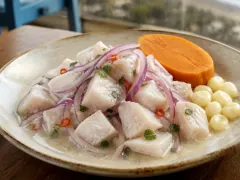 CevicheFresh white fish cured in abundant lime for minutes, not hours, with ají, paper-thin red onion and cilantro. The leche de tigre is the sauce and the drink, and sweet potato, choclo and cancha live on the plate rather than in the bowl.
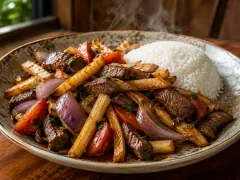 Lomo SaltadoBeef strips seared hard in a screaming wok, then onion, tomato and ají amarillo, with soy and vinegar as the aromatic spine. Medium-rare beef, blistered vegetables and crisp fries — chifa technique on a Peruvian plate, not a generic glossy stir-fry.
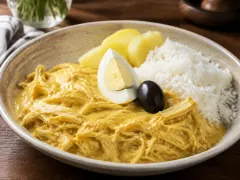 Ají de GallinaPoached chicken shredded into a warm emulsion of milk-soaked bread, ground nuts and bloomed ají amarillo. The sauce should coat a spoon and still ribbon off it — marigold yellow over rice, potato, egg and botija olives.
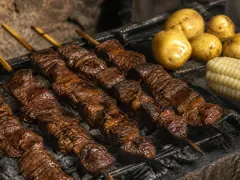 AnticuchosBeef heart cubed onto skewers, bathed in ají panca, vinegar and garlic, then grilled hard enough that the edges char while the centre stays juicy. Potato and choclo on the side are not decoration — they cool the spice and catch the drips.
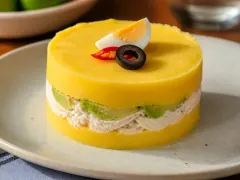 Causa LimeñaA cold layered potato cake — lime-bright, yellow from ají amarillo, filled with tuna or chicken. Causa is architecture, and the whole point is that first slice standing upright with distinct bands you can see from across the table.
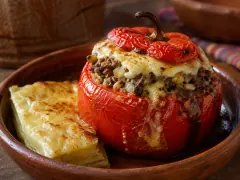 Rocoto RellenoArequipa's baked stuffed pepper — thick-walled rocoto seeded and blanched to tame the fire, filled with a beef-and-pork picadillo of raisins, olives and peanuts, blanketed with cheese and set in a savoury milk-egg bath. Not a Mexican chile relleno.
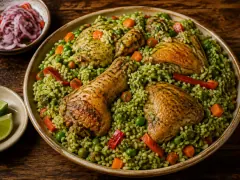 Arroz con Pollo PeruanoBone-in chicken browned for fond, then rice cooked in a blended cilantro and ají amarillo sofrito that stains every grain deep herb green. Beer, stock and peas, finished with salsa criolla — green rice, never yellow, and not the Cuban cousin.
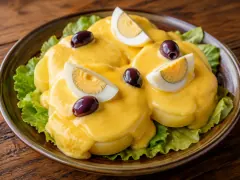 Papa a la HuancaínaBoiled yellow potatoes under a thick, sunny emulsion of ají amarillo, queso fresco, milk and pulverised crackers. The sauce is the dish, not a garnish, and the plate stays cool on purpose — warm sauce dulls the chile and turns the cheese pasty.
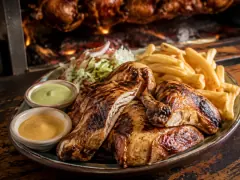 Pollo a la BrasaPeru's rotisserie chicken, done in a home oven — a soy, garlic, cumin and ají panca marinade worked under the skin, hours in the fridge, then a hot start and a steady roast until the skin lacquers and crackles. Fries, salad and ají mayo alongside.
 Suspiro de LimeñaLima's spoon dessert — dense, caramel-sweet manjar blanco cooked down from milk and sugar, under a cool cloud of port-scented Italian meringue, dusted with cinnamon. Not flan, not brigadeiro. A layered glass of sigh, eaten slowly and cold.
Three ingredients do most of the work on this list, and two of them are chiles. Ají amarillo is the fruity yellow one that turns huancaína sauce sunny, dyes ají de gallina marigold, and rides along in the green paste under arroz con pollo. Ají panca is its darker cousin — smoky, mild, and the backbone of both anticuchos and pollo a la brasa. Learn the difference and half the country’s flavour logic falls into place.
The third is the potato, and Peru is where it comes from. It shows up boiled under cold sauce in papa a la huancaína, pressed into lime-bright yellow layers in causa limeña, cut into fries tossed straight through a wok in lomo saltado, and sitting quietly beside the skewers at an anticucho cart.
Two of the ten are not really Peruvian in origin, and that is the point. Lomo saltado is chifa cooking — the Chinese-Peruvian kitchen that arrived in the nineteenth century and never left, which is why soy sauce and a screaming wok belong in a Lima classic. Pollo a la brasa carries the same soy influence into a rotisserie marinade. Neither is a fusion novelty; both are simply how the country eats.
The ceviche comes first because it is the one dish that punishes hesitation. The fish cures in lime for minutes, not hours, and everything else on the plate — sweet potato, choclo, cancha — exists to balance the acid rather than to join the cure.