Lomo Saltado
Beef strips seared hard in a screaming wok, then onion, tomato and ají amarillo, with soy and vinegar as the aromatic spine. Medium-rare beef, blistered vegetables and crisp fries — chifa technique on a Peruvian plate, not a generic glossy stir-fry.
- Prep
- 37 min
- Cook
- 8 min
- Serves
- 3–4 servings
- Difficulty
- Medium
Researched · Kitchen testing pending
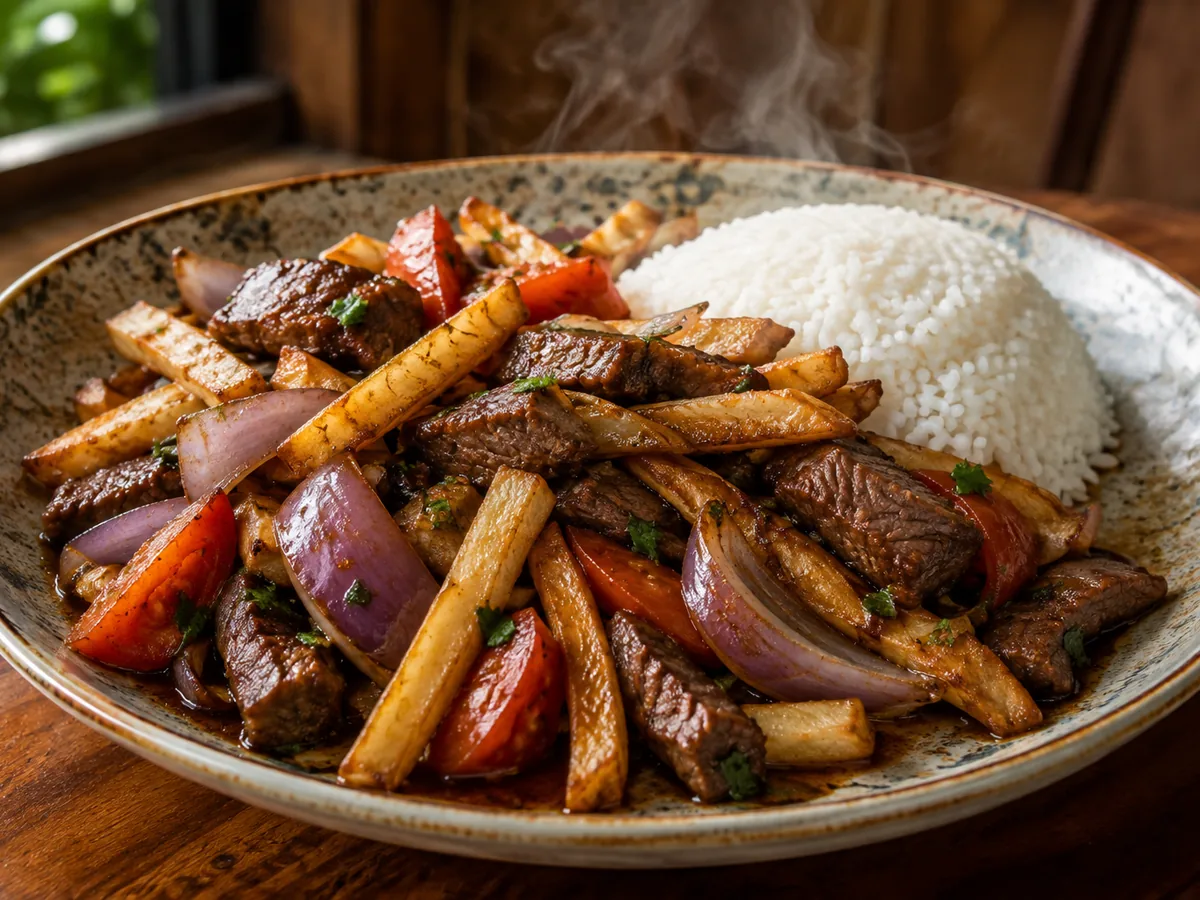
The wok has to be hotter than seems reasonable. If the beef steams, the chifa edge that separates this plate from a weeknight pepper steak is already lost.
Heat the pan until a drop of water skitters and vanishes, then let the meat hit and sit long enough to brown before it moves. Onions and tomatoes follow in a rush, soy and vinegar perfume the steam, and fries and rice catch the sauce. Medium-rare strips, blistered vegetables, crisp potatoes — that is the target, not a generic glossy stir-fry.
The plate should reach the table smell first: soy, vinegar, seared beef, and fries still clicking as they cool. A kitchen that never got a little smoky is usually a kitchen that underdid the heat.
Beef and marinade
- 500 gabout 1 lb 2 ozBeef tenderloin or sirloin, trimmed and cut into stripsabout 1 cm × 1 cm × 5–6 cm / ⅜ in × ⅜ in × 2–2½ in
- 15 ml1 TbspSoy sauce
- 10 ml2 tspRed wine vinegar or distilled vinegar
- 2 g½ tspFreshly ground black pepper
- 5 ml1 tspNeutral oil, rubbed onto the meat
Stir-fry
- 45 ml3 TbspNeutral high-smoke-point oil, dividedcanola, grapeseed or peanut
- 1 large1 largeRed onion, cut into thick petals or 2 cm / ¾ in wedgesabout 250 g / 9 oz; keep some layers attached so they stay chunky
- 2 medium2 mediumRipe tomatoes, cut into wedgesabout 300 g / 10 oz total; the seeds can stay
- 2–32–3Ají amarillo, sliced into stripsfresh if available, or 15–30 ml / 1–2 Tbsp ají amarillo paste
- 2 cloves2 clovesGarlic, minced
- 30 ml2 TbspSoy sauce, for the pan
- 15 ml1 TbspRed wine vinegar, for the pan
- 10 ml2 tspOyster sauceoptional, for body
- 5 ml1 tspCuminoptional pinch
- Handful of cilantro leaves, roughly chopped
- Salt, only if needed after tasting the soy
Fries and rice
- 600 gabout 1⅓ lbRusset or similar starchy potatoes, cut into fries
- 30 ml2 TbspOil for frying, or for oven-roasting
- 300 g1½ cupsRaw long-grain ricecooked to yield about 4 cups hot rice
- Salt, for the potato water or for seasoning
Why the heat and the cut matter
Lomo saltado sits at the intersection of Peruvian home cooking and Chinese-Peruvian chifa technique. Soy and vinegar are not optional garnishes; they are the aromatic spine. The beef should stay pink inside, which means high heat, small batches, and strips thin enough to sear fast but thick enough not to dry out — roughly pencil-wide, finger-long.
The pan is not negotiable
If the pan temperature falls below a hard sear — think a surface near 200–230 °C / 390–450 °F when the meat lands — the juices flood out and you get grey stew. A carbon-steel wok, or the heaviest skillet in the kitchen, is the right tool. Nonstick at medium heat will not give the same char or fond.
On the rice
Start it early. Rinse until the water runs clearer, then cook in your usual ratio; 300 g rice to 480 ml (2 cups) water gives a drier grain that drinks sauce. Keep it hot and covered. Cold rice on a saltado plate feels like an afterthought.
Equipment
- Carbon-steel wok or the heaviest skillet you own, 30 cm / 12 in or larger
- Deep pan for frying, or a sheet pan for the oven method
- Rack for draining the fries
- Rice pan
- Instant-read thermometer, optional
Method
On the fries — crisp before the wok rush25–35 min
You can deep-fry or oven-roast. Deep-frying is closer to many restaurant plates.
Deep-fry method: cut the potatoes into fries about 1 cm (⅜ in) thick. Soak in cold water 15–20 minutes to pull out surface starch. Drain and dry thoroughly — wet fries spit oil and steam instead of crisping. Heat oil to 160 °C / 320 °F and blanch the fries 4–5 minutes until pale and cooked through but not browned, then drain on a rack. Just before the beef goes in the wok, bring the oil to 190 °C / 375 °F and fry again for 2–3 minutes until deep gold and crisp. Salt lightly and hold on a rack, not in a bowl where they steam soft.
Oven method: toss the dried fries with 30 ml (2 Tbsp) oil and salt, spread on a hot sheet, and roast at 220 °C / 425 °F, flipping once, until browned and crisp — 25–35 minutes. They will not match double-fried texture, but they stay honest under sauce if you add them at the last second.
Start rinsed rice early: 300 g with 480 ml (2 cups) water; keep hot, covered. Cut 1 cm (⅜ in) fries, soak 15–20 minutes and dry thoroughly. Fry at 160 °C / 320 °F for 4–5 minutes; rack-drain, then fry at 190 °C / 375 °F for 2–3 minutes just before searing beef. Salt and rack-hold. Alternatively, toss dry fries with 30 ml (2 Tbsp) oil and salt; roast on a hot sheet at 220 °C / 425 °F for 25–35 minutes, turning once.
On the beef — trim, strip, season10–15 min
Chill the beef 15 minutes in the freezer if it is soft; cold meat slices cleaner.
Cut against the grain into strips of even thickness. Irregular pieces mean some overcook while others stay raw.
Toss with 15 ml (1 Tbsp) soy, 10 ml (2 tsp) vinegar, the black pepper and 5 ml (1 tsp) oil. Rest 10–15 minutes at room temperature while the pan heats. This is a light seasoning, not a long marinade — too much liquid on the meat kills the sear.
If soft, freeze beef 15 minutes for easier slicing. Cut against the grain into 1 × 1 × 5–6 cm (⅜ × ⅜ × 2–2½ in) strips. Toss with 15 ml (1 Tbsp) soy, 10 ml (2 tsp) vinegar, pepper and 5 ml (1 tsp) oil; rest 10–15 minutes at room temperature.
On the vegetables — cut for heat, not for stew
Onion wedges should stay chunky so they char at the edges and stay raw-crisp in the middle. Tomato wedges should be ripe but not collapsing; soft tomatoes dissolve into sauce and turn the dish muddy.
Ají amarillo strips give fruity heat without the vinegar spike of pickles. If you are using paste only, have it measured and ready — it burns if it sits alone on bare steel too long.
Line everything up beside the stove. Once the wok is screaming, there is no time to mince garlic.
Cut onion into chunky wedges and ripe, firm tomatoes into intact wedges. Slice fresh ají or measure paste ready for brief frying. Mince garlic and arrange all vegetables and sauces beside the stove before heating the wok.
On the wok — timed methodunder 8 min
Work in batches if your pan is smaller than 30 cm (12 in). Crowding is the usual failure mode.
Set the wok or skillet over high heat for 2–3 minutes until very hot. Add 30 ml (2 Tbsp) oil and swirl; it should shimmer and move like water, and faint wisps of smoke are fine for canola or peanut.
Minute 0–1.5, beef sear: add the beef in a single layer. Do not stir for 45–60 seconds — you want a deep brown crust on the first face. Flip and sear the other side 30–45 seconds. The strips should still feel soft and springy, medium-rare; a pulled strip should show warm pink, and on a probe in a thicker piece stop around 50–52 °C / 122–125 °F, because carryover and the second toss will climb. Transfer to a clean plate. If juices pool hard in the pan it was crowded or not hot enough — wipe the excess and reheat before the next batch.
Minute 1.5–3, onion and ají: add the remaining 15 ml (1 Tbsp) oil if the pan looks dry, then the onion wedges and ají strips. Stir-fry 60–90 seconds until the edges blister and pick up brown spots while the centres stay snappy. Add the garlic for the last 20 seconds so it turns fragrant without burning — burnt garlic tastes bitter and dulls the soy.
Minute 3–4, tomato: add the tomato wedges and toss 30–45 seconds. They should soften at the skin and release a little juice, not break into sauce. If you are using ají amarillo paste instead of fresh, clear a spot and fry the paste 10–15 seconds before coating the vegetables.
Minute 4–5, sauce and reunion: return the beef and any plate juices. Pour in 30 ml (2 Tbsp) soy, 15 ml (1 Tbsp) vinegar, and the oyster sauce if using, plus the optional pinch of cumin. Toss hard 20–30 seconds. The sauce should coat and smell sharp-savoury, not flood the pan. If it looks dry, splash in 15–30 ml (1–2 Tbsp) water or unsalted stock. Taste, and salt only if the soy brand is mild.
Minute 5–6, fries and cilantro: add the hot fries and most of the cilantro. Toss once or twice, just enough to catch sauce without turning the fries to mush. Kill the heat.
Total hard-heat time is short on purpose. Serve within minutes.
Heat a heavy wok 2–3 minutes on high, surface 200–230 °C / 390–450 °F; add 30 ml (2 Tbsp) oil. Batch-sear beef 45–60 seconds, flip 30–45 seconds; remove at 50–52 °C / 122–125 °F for later finishing. If dry, add 15 ml (1 Tbsp) oil; stir-fry onion and fresh ají 60–90 seconds, garlic the last 20. Toss tomatoes 30–45 seconds; fry ají paste, if used, 10–15 seconds. Return beef and juices with 30 ml (2 Tbsp) soy, 15 ml (1 Tbsp) vinegar, optional oyster sauce and cumin; toss 20–30 seconds. Loosen with 15–30 ml (1–2 Tbsp) water or unsalted stock if dry. Taste, add hot fries and cilantro, toss once or twice and serve immediately with hot rice.
Sensory checkpoints and temperatures
- Empty pan before the oil: too hot to hold your hand near for more than a second, and a water droplet dances.
- Oil: shimmering, behaving like roughly 190–210 °C / 375–410 °F before the beef.
- Beef done: browned exterior, pink interior, juices barely starting to show when pressed. Grey throughout means the pan was cool or the batch sat too long.
- Onion: charred tips, audible crunch.
- Tomato: warmed through, skins wrinkled in places, wedges intact.
- Sauce aroma: soy, vinegar tang, beef fat, ají fruitiness. If you only smell steam and onion, the heat was too low.
- Fries after tossing: still audibly crisp when bitten within 2–3 minutes of plating.
Check shimmering oil around 190–210 °C / 375–410 °F before beef. Look for browned meat with pink centres, charred but crunchy onion and warm intact tomatoes. Sauce should smell of soy, vinegar and ají; fries should remain crisp 2–3 minutes after plating.
Storing it
Eat lomo saltado as soon as it is tossed. Fries wilt in sauce and beef keeps cooking on a hot plate. Leftovers in a shallow container in the fridge at or below 4 °C / 40 °F keep 1–2 days, but reheat them in a hot skillet rather than a microwave and accept softer fries. Leaving the fries out of the leftover box and adding freshly crisped potatoes when reheating works better than storing them in the sauce.
Raw beef safety
Keep the beef cold until cutting, keep boards clean, and do not use the marinade liquid as a finished sauce unless it boiled in the pan with the meat. Reheat cooked leftovers to at least 74 °C / 165 °F if you are feeding anyone cautious. Never leave the finished pan at room temperature for hours — protein, cooked tomato and starch together are a poor candidate for the danger zone, 4–60 °C / 40–140 °F.
Troubleshooting
- The beef is grey and steaming.
The pan was not hot enough, or there was too much meat at once. Hotter pan, smaller batch, meat drier before it hits the oil.
- The beef is tough.
Wrong cut — lean stew meat — sliced with the grain, or cooked past medium. Use tenderloin or sirloin, cut against the grain, and pull it early.
- The sauce tastes flat.
Not enough vinegar or soy, or no fond in the pan because the beef steamed. Deglaze with an extra teaspoon of vinegar and a splash of soy, and toss over high heat.
- The sauce tastes only salty.
An aggressive soy brand, or salt added on top. Balance with a few drops of vinegar and a pinch of sugar if needed — rare, but it happens with some supermarket soy.
- The onions are limp and sweet-stewed.
Cooked too long over medium heat. They need blister time, not braise time.
- The tomatoes vanished into liquid.
Overripe fruit, or overcooking. Use firmer ripe tomatoes and a shorter toss.
- The fries are soggy.
Added too early, not crisp enough before tossing, or covered after plating. Add the fries last, serve immediately, and never cover the plate with foil.
- It tastes like a generic stir-fry.
Missing ají amarillo, missing vinegar bite, beef cooked well-done, and vegetables cut for a long sauté. Restore the chile, keep the acid, keep the heat, keep the pink.
- Wok flare, or the smoke alarm goes.
Old oil, or absurdly high heat with a low-smoke oil. Use fresh neutral oil and ventilate. Do not pour water into flaming oil — take the pan off the heat and smother it if needed.
Substitutions
Traditional core: quick-seared beef strips, onion, tomato, ají amarillo, soy sauce, vinegar and cilantro, served with french fries either mixed in or alongside, and white rice. Chifa technique throughout — high heat, a soy-aromatic sauce, and wok hei if you can get it.
Departures
Optional oyster sauce for gloss, common in some chifa-leaning kitchens and skipped in others. Optional cumin, a Peruvian pantry echo used lightly. Oven fries as a valid home compromise when deep-frying is not happening.
What this is not
Slow "smothered" versions, where beef simmers in tomato for twenty minutes, are a different plate wearing the same name on a bad menu.
On the chile
Do not swap ají amarillo for a random jalapeño without saying so. Jalapeño is greener and sharper; amarillo is fruity and yellow-orange. Paste from a jar is acceptable when fresh pods are impossible to find.
Scaling
For 2
300 g (10 oz) beef, 1 tomato, 1 small onion, and half the sauce volumes. Still use a ripping-hot pan — do not drop the temperature because the batch is small. Fries scale down easily.
For 6
750–800 g (1¾ lb) beef, cooked in three sear batches. Keep the vegetables in one larger toss only if the wok can take them without steaming; otherwise split. Double the fries. Hold early beef batches on a warm plate loosely tented, not sealed, and return all the meat only for the final sauce minute so nothing overcooks while waiting.
The banquet mistake
Cooking one giant pan on medium "so it all fits." Make two pans, or two waves, instead.
What to serve it with
- Plain hot white rice — mandatory
- Extra ají amarillo sauce or crema on the side for heat lovers
- A simple lettuce salad with lime, for cold crunch against the wok food
- Cold beer, or a tangy chicha if you have it
Do not bury it under melted cheese or cream; the dish is already rich from beef fat and fries.
Questions
Which cut of beef is best?
Tenderloin gives the softest bite; sirloin is more flavourful and cheaper. Skirt can work if sliced thin against the grain, but it overcooks fast. Avoid stew cubes.
Can I use a nonstick skillet?
You can, but you will struggle to get proper browning without damaging the coating with true high heat. Carbon steel or cast iron is worth it for this dish.
Fresh ají amarillo or paste?
Fresh strips add texture and a cleaner aroma; paste adds colour and heat quickly. Many home cooks outside Peru rely on paste — use it without apology, and fry it briefly so it blooms.
Why vinegar and soy together?
That pairing is the chifa signature in saltado: salty depth plus sharp lift. All soy tastes heavy; all vinegar tastes like a salad. Together they read as the dish.
Can I skip the fries?
You can serve the stir-fry over rice alone, but then you are missing half the identity. At least make a small batch of crisp potatoes.
Is medium-rare safe?
With whole-muscle beef seared on the outside and handled cold and clean, many cooks accept pink centres. Ground or needle-tenderised meat is a different safety story — buy intact steaks and slice them yourself.
Can I prep ahead?
Cut the vegetables and beef earlier in the day and keep them separate and cold. Cook the rice ahead and reheat with a splash of water. Fry the second-stage fries and run the wok only when people are at the table.
What if I only have a small burner?
Sear the beef in very small batches, keep the pan ripping hot between them, and accept that the total time stretches. Heat is non-negotiable; batch size is flexible.