Papa a la Huancaína
Boiled yellow potatoes under a thick, sunny emulsion of ají amarillo, queso fresco, milk and pulverised crackers. The sauce is the dish, not a garnish, and the plate stays cool on purpose — warm sauce dulls the chile and turns the cheese pasty.
- Prep
- 25 min
- Cook
- 25 min
- Serves
- 4 as a starter or light lunch
- Difficulty
- Easy
Researched · Kitchen testing pending
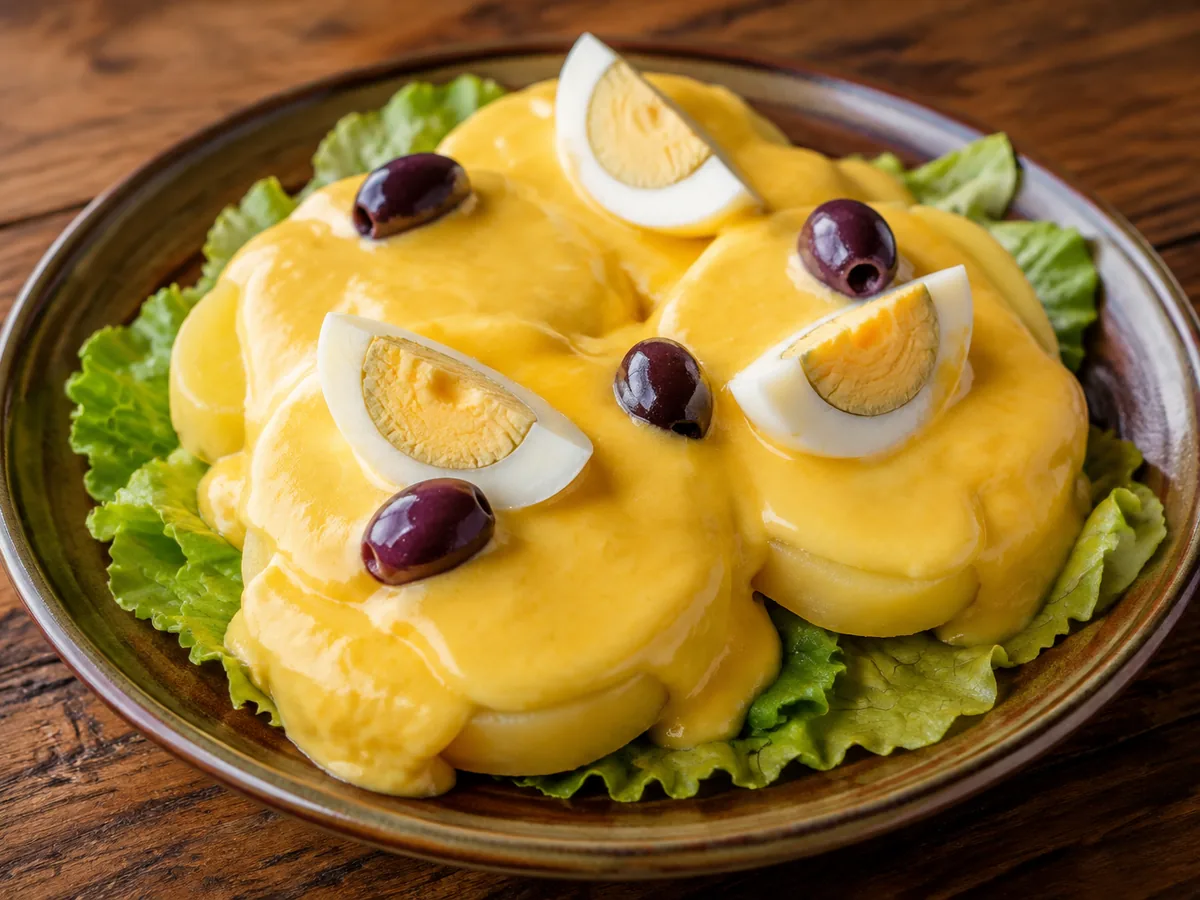
Cold potatoes should never taste like an afterthought, and this plate exists to prove it.
Yellow-fleshed potatoes are boiled until a knife slips through with almost no push, then blanketed in a thick, sunny emulsion of ají amarillo, queso fresco, milk and pulverised crackers, blended until the spoon leaves a slow ribbon. That sauce is the dish, not a garnish.
The plate stays cool or at room temperature on purpose: warm sauce would dull the chile’s fruit and turn the cheese pasty, while chilled potatoes under a velvet coat of huancaína feel like the right answer to a hot afternoon.
Potatoes and plate
- 800 g–1 kg1.75–2.2 lbYellow or Yukon Gold potatoes, scrubbed4–6 medium
- 18 g1 TbspKosher salt, for the boiling water
- 4 large4 largeEggs
- 8–128–12Black olivesbotija if you can find them; Kalamata as a stand-in
- 1 small head1 small headButter lettuce or romaine hearts, leaves separated and dried
- Sweet paprika, or a pinch of chopped parsley, optional for colour
Huancaína sauce (emulsion)
- 45–60 ml3–4 TbspAjí amarillo pasteor to heat preference
- 200 g7 ozQueso fresco, crumbledabout 1½ cups loosely packed; mild feta rinsed of brine can stand in if needed
- 120–180 ml½–¾ cupEvaporated milk or whole milkstarting low
- 30–40 g1–1.4 ozSoda crackers, or 1 small slice of white bread with crusts removed, tornabout 6–8 crackers
- 60–80 ml¼–⅓ cupNeutral oil, vegetable or light olive, streamed in
- 1 small clove1 small cloveGarlicoptional, but classic in many homes
- ½ tsp½ tspKosher saltplus more to taste
- Freshly ground black pepper, a few grinds
- 2–3 ml½ tspLime juiceoptional, if the sauce tastes flat
Why crackers, and why oil
The cracker soak is why the sauce thickens without flour: hydrated crumbs act as a binder and give the emulsion body that clings to potato instead of sliding off like thin cheese milk. The oil makes it an emulsion — a closer cousin to a spicy cheese aioli than to nacho cheese. It carries the ají aroma and creates the glossy cling.
On the potatoes
Use waxy-leaning yellows. Starting them in cold water matters: it cooks the centres evenly so the outsides do not collapse while the middles stay hard.
Keep it cool
Cool or room temperature, deliberately. Ice-cold dulls the aroma and fridge-cold sauce needs a few minutes on the counter, while piping hot is the wrong register entirely for this plate.
Equipment
- Medium pot for the potatoes
- Second pot for the eggs
- Blender, preferred for a smooth emulsion, or a food processor
- Mixing bowl and colander
- Serving platter
Method
Boil the potatoes20–30 min
Place the whole potatoes in a pot and cover with cold water by about 2.5 cm (1 in). Add the tablespoon of salt. Bring to a boil over high heat, then reduce to a steady simmer, with the water about 95–100 °C / 203–212 °F.
Cook until a thin knife meets almost no resistance in the centre — typically 20 minutes for smaller potatoes, up to 28–30 for large ones.
Drain, and let them sit until cool enough to handle, or rinse briefly under cool water if you need to peel sooner. Peel while warm, when the skins slip, or leave thin-skinned potatoes unpeeled for rustic slices.
Cut into thick rounds about 1.5–2 cm (½–¾ in) and spread them on a plate so the steam escapes. Warm, steamy potatoes under cold sauce make condensation and a watery film.
Cover whole potatoes with cold water by 2.5 cm (1 in); add 1 Tbsp salt. Boil, then simmer at 95–100 °C / 203–212 °F until knife-tender, 20–30 minutes. Drain, cool enough to handle and optionally peel. Slice 1.5–2 cm (½–¾ in) thick; spread to release steam and cool.
Boil the eggs9–12 min
For classic firm yolks that slice clean, lower the eggs into already-boiling water, cook 10–11 minutes, then transfer to an ice bath for 5 minutes. Peel under a trickle of water.
For slightly jammy centres — a small departure — stop at 8–9 minutes.
Slice into halves or quarters just before plating so the cut surfaces stay moist.
Lower eggs into boiling water and cook 10–11 minutes for firm yolks, or 8–9 minutes for jammy centres. Transfer to ice water for 5 minutes, peel under running water and halve or quarter just before plating.
Build the cracker base2 min
In the blender jar, combine the crackers or torn bread, the garlic if using, and about 60 ml (¼ cup) of the milk.
Let it sit 1–2 minutes so the starch softens.
Combine crackers or torn crustless bread with optional garlic and 60 ml (¼ cup) milk in the blender. Leave 1–2 minutes to soften the crumbs before blending the sauce.
Emulsify the huancaína sauce5–7 min
Add the crumbled queso fresco, ají amarillo paste, salt and pepper to the blender. Blend on medium until mostly smooth — it will look thick and slightly grainy at first.
With the blender running on low-medium, stream in the oil slowly, as if making mayonnaise. You should hear the pitch of the motor change as the mixture loosens, then tighten again into a glossy, pourable cream. Scrape down once.
Add the remaining milk a tablespoon at a time until the sauce ribbons off a spoon and coats the back. Too thick and it sits like frosting; too thin and it floods the lettuce. The target is closer to a thick salad dressing or thin hummus — roughly the flow of warm honey that still holds a soft peak for a second.
Taste. The ají should read fruity and warm, the cheese salty-milky, the crackers neutral. If the heat is shy, another teaspoon of paste; if it is salty, a splash more milk; if it is dull, that optional drop of lime brightens it without turning it into ceviche sauce.
Blending warms the sauce slightly. If your kitchen is hot, chill it 15–20 minutes before plating so it sets a little and tastes cleaner.
Blend soaked crumbs with queso fresco, ají, salt and pepper until mostly smooth. On low-medium, slowly stream in oil; scrape once. Add remaining milk tablespoonwise until glossy and spoon-coating. Adjust with ají for heat, milk for saltiness or optional lime for brightness. Chill 15–20 minutes in a hot kitchen.
Assemble cool or room-temperature plates5 min
Line each plate, or a large platter, with lettuce leaves. They are not decoration only — they keep the sauce from pooling into a slick, and add a crisp, watery crunch against the rich emulsion.
Arrange overlapping potato rounds. Spoon or ladle the huancaína generously so every slice gets a coat, with a little extra pooling on the lettuce.
Nest the egg halves and olives around or on top, and dust with a whisper of paprika if you want colour contrast against the yellow.
Serve at cool room temperature or lightly chilled. Do not microwave the finished plate; heat breaks the emulsion's shine and makes the cheese smell sharper.
Line plates with dry lettuce, overlap cooled potato rounds and generously coat every slice with sauce. Arrange eggs and olives around or on top; add optional paprika. Serve cool or lightly chilled; do not microwave the assembled plate.
On the plate
Think composed salad, not hot entrée. The eye should catch three yellows — potato flesh, sauce, egg yolk — then black olives and green lettuce for contrast. The sauce should look opaque and sunny, not translucent.
Offer extra sauce in a small bowl; people who love huancaína always want more. This is often a first course before a grilled meat or a stewed main, but with good bread it can be lunch.
Check that the sauce looks opaque and sunny over the yellow potatoes, with egg yolks, black olives and green lettuce visible. Offer extra sauce separately; serve as a cool starter or with bread for lunch.
Sensory checkpoints and why they matter
- Potato doneness: a knife glide, not a crumble. Undercooked cores taste chalky under cold sauce and cannot be fixed once plated.
- Sauce sound while blending: a smooth whir after the oil streams in. Sputtering and separation mean the oil went in too fast, or the mixture was too cold and stiff — stop, add a spoon of milk, blend, and resume slowly.
- Sauce look: glossy yellow-orange from the ají, not pale white. Pale usually means timid paste.
- Sauce on a cold spoon: coats evenly. Watery edges mean under-emulsified, or over-milked.
- Plate temperature: cool to the touch. Hot potatoes weep into the sauce and thin it at the contact line.
- Smell: mild chile fruit and fresh cheese, not a raw garlic punch. One clove is plenty; more turns the sauce sharp.
Check tender potatoes that hold their shape and glossy sauce coating a cold spoon evenly. If the blender sputters or sauce separates, stop, add a spoon of milk, blend and resume oil slowly. Let potatoes cool fully before saucing to prevent watery edges.
Why the method is ordered this way
The potatoes start first because they need the longest passive time, and the eggs share that kitchen window. The cracker soak before blending prevents sandy bits. Cheese and ají join before the oil so there is a flavourful base to emulsify into, and the oil streams last for stability.
Cooling the potatoes before saucing protects the texture. Lettuce goes down before potatoes so the structure of the plate holds. Eggs and olives finish the look and add fat and salt contrast against the mild potato.
Drag a fork through sauce-coated potato and catch a bit of egg and olive in the same bite: soft starch, creamy heat and briny pop, without any stove drama at the table. That calm is the point — all the work happened in the boil and the blender, and the plate simply waits, cool and ready.
Start potatoes first and cook eggs alongside. Soak crumbs before adding cheese and ají, then stream oil slowly. Cool potatoes before layering over lettuce; finish with sauce, eggs and olives. Let refrigerator-cold sauce stand a few minutes to restore its aroma.
Storing it
The sauce keeps in a sealed jar in the refrigerator up to 3 days. It thickens when cold, so loosen it with a spoon of milk and stir before using. Boiled potatoes keep peeled and sliced up to 2 days chilled and lightly covered, and eggs peel and chill up to 2 days. Assemble shortly before serving for the best texture, because dressed lettuce wilts. Do not freeze the sauce — the dairy and emulsion separate into grainy sadness. Leftover assembled plates are edible the next day but the lettuce suffers; scrape the sauce and potatoes into a container and rebuild on fresh greens if you care about crunch.
Troubleshooting
- The sauce broke, or looks curdled.
The oil went in too quickly, or the blender was overloaded. Transfer it to a bowl. In a clean blender, start with 1 tablespoon of milk and 1 tablespoon of the broken sauce, blend, then gradually feed the rest back in as if repairing mayonnaise.
- The sauce is too thick to pour.
Blend in milk 1 tablespoon at a time. Crackers keep swelling as the sauce sits, so thin it slightly more than you think if you are serving in 30 minutes.
- The sauce is too thin.
Add another cracker or a bit more cheese and blend. Chill 20 minutes; cold firms it.
- A grainy cheese texture.
Blend longer, or force it through a fine sieve for banquet smoothness. Some artisan queso fresco stays rustic, and that is acceptable for home plates.
- Bland sauce.
Salt, more ají, or a touch of lime. Also check that your paste is actually ají amarillo, not a milder substitute labelled generically as "yellow chile."
- The potatoes fall apart.
Overboiled, or a very floury variety. Use waxy-leaning yellows and pull them as soon as the knife test passes.
- A watery plate.
The potatoes were plated steaming hot, or the lettuce was wet. Dry the greens thoroughly and cool the potatoes first.
- Too spicy.
Cut the paste with more cheese and milk, and serve mild avocado slices alongside to buffer the heat.
Substitutions
Traditional spine: boiled potatoes; an ají amarillo, cheese and milk sauce thickened with crackers or bread; an oil emulsion; hard-cooked egg; black olives; a lettuce bed; served cool or at room temperature. Huancayo roots, now a national standard across Peru.
Acceptable home departures
Evaporated milk for silkier body, which is very common. A blender instead of grinding on a batán. Yukon Golds when Peruvian yellow potatoes are unavailable. Rinsed mild feta when queso fresco is missing — rinse it well to drop the brine.
Departures that change the identity
Serving the sauce hot over mashed potatoes. Replacing ají amarillo with a mayo-heavy "yellow" dressing and calling it huancaína. Skipping the emulsion oil and serving thin cheese milk. Those are other potato salads; keep the name honest.
Scaling
How much sauce per person
Plan on roughly 80–100 ml (⅓–scant ½ cup) each if people like it lavish. This recipe scales to that for four, with a little left in the blender jar.
What to serve it with
- Extra sauce in a small bowl — people who love huancaína always want more
- Good bread, if you are making it lunch rather than a first course
- A grilled meat or a stewed main to follow, if this is the starter
- Avocado slices, to buffer the heat for anyone who wants it milder
Questions
Crackers or bread?
Both work. Soda crackers give a clean, slightly salty binder; soft white bread gives a rounder, milder body. Start with the amounts listed — brands differ in absorbency.
Can I make the sauce ahead?
Yes, up to a day. Chill it covered, then stir and adjust the thickness before plating. The flavour actually settles nicely after an hour in the fridge.
What can stand in for queso fresco?
Mild farmer cheese, or well-rinsed feta. Avoid sharp cheddar, which is the wrong flavour, and cream cheese alone, which is too tangy-sweet and the wrong structure.
What if ají amarillo paste is hard to find?
Look in Latin markets, frozen or jarred. Without it the sauce loses its defining fruit-heat. A mix of yellow bell pepper roasted soft plus a milder yellow chile is a pale stand-in, not a true swap — label your plate honestly if you go that route.
Why oil in a cheese sauce?
It is an emulsion, a closer cousin to a spicy cheese aioli than to nacho cheese. The oil carries the ají aroma and creates the glossy cling.
Must it be cold?
Cool or room temperature, yes. Ice-cold dulls the aroma, and fridge-cold sauce needs a few minutes on the counter. Piping hot is the wrong register for this plate.
Botija olives?
Briny, purple-black Peruvian olives are ideal, and Kalamata is the usual substitute. Avoid bland canned black olives if you have a choice; they add colour without much personality.