Arroz con Pollo Peruano
Bone-in chicken browned for fond, then rice cooked in a blended cilantro and ají amarillo sofrito that stains every grain deep herb green. Beer, stock and peas, finished with salsa criolla — green rice, never yellow, and not the Cuban cousin.
- Prep
- 50 min
- Cook
- 35 min
- Serves
- 4–6 servings
- Difficulty
- Medium
Researched · Kitchen testing pending
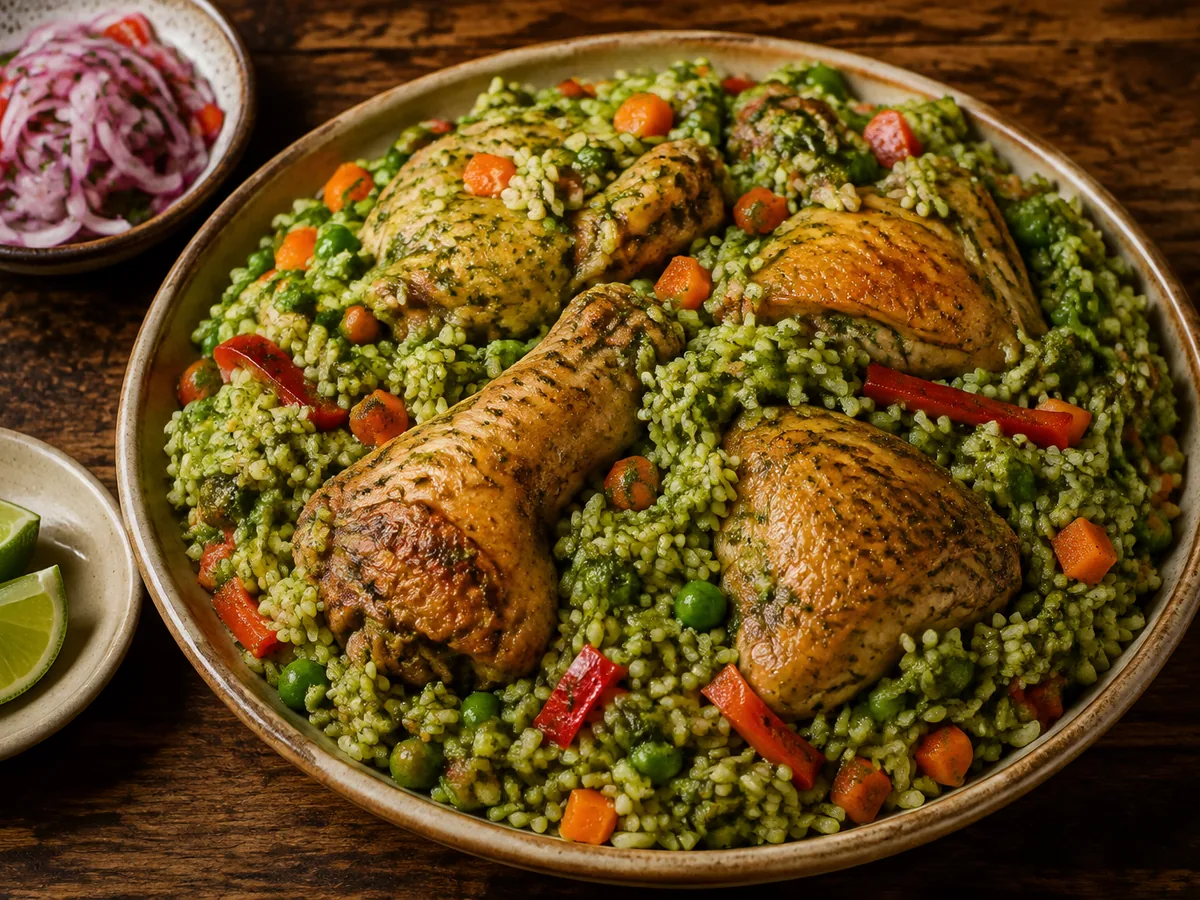
Cilantro paste hits the hot oil and the kitchen turns green before the rice ever sees the pot. That smell is the tell: this is Peruvian arroz con pollo, not the yellow Cuban cousin it gets confused with at potlucks.
The Cuban plate leans on saffron or bijol, beer, and a sunny turmeric-gold grain. This one builds a blended cilantro and ají amarillo sofrito that dyes the rice a deep herb green and tastes of chile fruit, beer and chicken stock in the same bite. Bone-in chicken browns first, then the rice cooks in the fond, so every grain carries meat and chile instead of sitting next to a separate stew.
A green mound beside a glazed thigh, hit with onion-lime salsa: cilantro and ají in the first breath, chicken in the second, and no confusion with any yellow rice from somewhere else.
Chicken
- 1.2–1.4 kg2½–3 lbBone-in, skin-on chicken piecesthighs and drumsticks preferred; cut breasts into large chunks if using
- 9 g1½ tspKosher salt
- 2 g1 tspGround cumin
- ½ tsp½ tspFreshly ground black pepper
- 30 ml2 TbspNeutral or light olive oil, for browning
Green sofrito base (the green that defines the dish)
- 120–140 g4–5 ozCilantro, leaves and tender stems, washed and roughly choppedabout 2 large bunches; reserve a small handful of leaves for finishing
- 1 medium1 mediumRed onion, roughly chopped for the blenderabout 150 g / 5 oz
- 3–4 cloves3–4 clovesGarlic
- 45–60 ml3–4 TbspAjí amarillo pastestart with 3 Tbsp; add more if you want the heat forward
- 60–80 ml¼–⅓ cupBeer or water, to help the blender catch
- 60 g2 ozSpinachoptional — deeper colour without changing the flavour much; traditional in many Lima homes
Rice and cooking liquid
- 400 g2 cupsLong-grain white rice, rinsed until the water runs mostly clear and drained well
- 1 medium1 mediumRed onion, finely diced for the potabout 150 g / 5 oz
- 1 medium1 mediumCarrot, diced smallabout 100 g / 3½ oz
- 100 g⅔ cupFrozen peasno need to thaw
- 80 g½ cupRed bell pepper, diced, or ají panca strips if available
- 60 ml¼ cupBeer, lager or light Peruvian-styleoptional, but classic for aroma
- 700–800 ml3–3½ cupsChicken stock, warmstart with 700 ml and add as needed
- 2 g1 tspGround cumin
- 6 g1 tspKosher saltplus more to taste
- 1 leaf1 leafBay leaf
- 30 ml2 TbspOilonly if the pot looks dry after browning
- 15 ml1 TbspLime juice, from ½ limeoptional, at the end
To serve
- Salsa criolla — thin red onion, lime, cilantro and chile — on the side
- Avocado slices, or a simple tomato salad
- Extra cilantro leaves
The green paste is the identity
Do not swap it for tomato paste, saffron or yellow food colouring. Those lead you toward other rice-and-chicken traditions. If the paste looks khaki instead of green, it was under-blended or made mostly from stems without enough leaf.
Rinse the rice
Surface starch makes sticky clumps that fight the fluffy green ideal of this pot. Rinse until the water runs mostly clear, then drain well.
Distinct from the Cuban and other yellow versions
Cuban arroz con pollo typically goes gold from saffron or bijol, often includes beer and bell peppers, and reads savoury-yellow on the plate. Peruvian arroz con pollo is defined by the cilantro and ají amarillo green paste, and the colour alone should settle arguments. If your pot is yellow, you cooked something else — delicious, maybe, but different.
Equipment
- Wide heavy pot or Dutch oven with a tight lid, 4–5 L / 4–5 qt
- Blender
- Tongs and a wooden spoon
- Measuring cup
- Plate for resting the browned chicken
Method
Season and brown the chicken15–20 min
Pat the chicken dry and season all sides with the 9 g (1½ tsp) salt, the cumin and the black pepper.
Heat 30 ml (2 Tbsp) oil in the pot over medium-high until it shimmers — around 180–190 °C / 355–375 °F if you measure, though it is not required. Lay the pieces skin-side down without crowding, working in two batches if needed. Brown 4–6 minutes per side until deep golden and the skin releases cleanly.
You want fond on the bottom: browned bits, not black ash. Transfer the chicken to a plate. Pour off excess fat if more than about 2 tablespoons remain, but keep the fond.
Why brown first: the rice will cook in that chicken fat and those stuck juices. Pale chicken steamed only in green liquid tastes boiled; browned chicken tastes roasted even after it finishes in the rice.
Dry chicken and season with 9 g (1½ tsp) salt, cumin and pepper. Heat 30 ml (2 Tbsp) oil to 180–190 °C / 355–375 °F. Brown skin-down without crowding, 4–6 minutes per side. Remove; retain browned fond and about 2 tablespoons fat.
Blend the green paste5 min
In the blender, combine the cilantro, roughly chopped onion, garlic, ají amarillo paste, beer or water, and the spinach if using. Blend until smooth and vividly green, about 45–90 seconds, scraping down once.
The paste should pour like a thick smoothie, not sit like a chunky pesto. Taste a drop: a salty-bitter note from the cilantro stems is normal, and the ají should read fruity and warm, not only hot.
Reserve a handful of cilantro leaves. Blend remaining cilantro, roughly chopped onion, garlic, ají paste, beer or water and optional spinach for 45–90 seconds, scraping once. Aim for a smooth, vivid-green paste that pours like a thick smoothie.
Soften aromatics and fry the paste8–10 min
If the pot is dry, add up to 30 ml (2 Tbsp) oil. Over medium heat, cook the finely diced onion and carrot with a pinch of salt until the onion turns translucent and sweet, 4–5 minutes. Add the diced pepper.
Stir in the green paste. It will spit and darken slightly as water cooks off — keep stirring for 4–6 minutes until the raw blender smell softens and the oil starts to separate in tiny beads at the edges. That separation means the sofrito is cooked enough to perfume the rice instead of tasting grassy-raw.
Add the teaspoon of cumin and stir for 30 seconds. Pour in the 60 ml beer if using, scraping the fond hard, and let it reduce by about half, 1–2 minutes.
If dry, add up to 30 ml (2 Tbsp) oil. Soften diced onion and carrot with salt over medium heat 4–5 minutes; add pepper. Fry green paste, stirring, 4–6 minutes until oil beads appear. Stir in 1 tsp cumin 30 seconds; add optional 60 ml beer, scrape fond and reduce by half, 1–2 minutes.
Toast the rice2–3 min
Add the drained rice and stir constantly so every grain gets a green coat. Toast 2–3 minutes, until the edges look slightly translucent and the pot smells nutty under the cilantro.
Toasting keeps the finished rice separate instead of gluey.
Rinse rice until water runs mostly clear and drain well. Stir it constantly into the cooked paste for 2–3 minutes, coating each grain green, until edges turn slightly translucent and the aroma becomes nutty.
Add stock, chicken, and simmer25–35 min
Pour in 700 ml (3 cups) warm stock and add the bay leaf. Stir once, scraping any paste from the corners. Taste the liquid — it should be pleasantly salty, like a good soup, because the rice will drink it.
Nestle the browned chicken into the rice, skin up where possible, along with any juices from the plate. Bring to a lively simmer, with the liquid around 95–100 °C / 203–212 °F, then reduce to low so bubbles gently break the surface. Cover tightly.
Cook 18–20 minutes without lifting the lid constantly. At 18 minutes, peek quickly: the rice should have absorbed most of the liquid, and the chicken should register at least 74 °C / 165 °F at the thickest bone-adjacent point. If the pot looks dry and the rice is still chalky in the centre, add 60–100 ml (¼–scant ½ cup) hot stock, cover, and cook 5 minutes more. If liquid still pools and the rice is soft, uncover, raise the heat slightly, and cook off the excess for 2–3 minutes, stirring gently once.
In the last 5 minutes of covered cooking, scatter the peas over the top and cover again so they heat through bright green without turning grey from a long boil.
Add 700 ml (3 cups) warm stock and bay; stir, scrape corners and taste for salt. Nestle chicken and juices skin-up. Bring to 95–100 °C / 203–212 °F, lower heat, cover and cook 18–20 minutes; chicken must reach 74 °C / 165 °F. Add peas for the last 5 minutes. If rice is dry and chalky, add 60–100 ml (¼–scant ½ cup) hot stock and cook covered 5 minutes; if soft but wet, uncover 2–3 minutes.
Rest, fluff, and finish10 min
Kill the heat and leave the lid on for 8–10 minutes. The rest redistributes steam so the bottom does not stay wet while the top stays tight.
Lift the lid and remove the bay leaf. Fluff the rice gently with a fork from the edges toward the centre, turning green grains over the chicken without shredding the meat. Squeeze the optional lime over the pot and fold once, then scatter the reserved cilantro leaves.
The chicken should pull from the bone with a fork but still hold its shape on the plate. The rice should be separate and stained deep green-olive, tasting of cilantro, ají, cumin and stock — never yellow, never saffron-forward.
Rest off heat, covered, 8–10 minutes. Remove bay and gently fluff rice from edges inward without shredding chicken. Fold in optional lime juice once; scatter reserved cilantro. Grains should separate and chicken should pull easily from the bone.
On the plate
Serve family-style from the pot, or mound the rice on each plate with a piece of chicken on top or tucked beside it.
Spoon salsa criolla over the chicken so the onion and lime cut the rich green starch. Avocado cools the ají.
The plate should look unmistakably green. If a guest asks where the "yellow rice" is, you cooked the Peruvian version correctly.
Serve from the pot or mound the green rice on plates with chicken on top or alongside. Spoon salsa criolla over the chicken and add avocado slices to balance the ají.
Sensory checkpoints and why they matter
- Paste colour in the blender: bright green. A brownish paste means old cilantro, or over-processing with heat from a weak blender — use cold herbs and enough liquid.
- Sofrito in the pot: after frying, the raw "lawn clippings" smell fades to cooked herb and chile. If it still smells like a smoothie, cook 2 minutes more.
- Rice after toasting: each grain visible and green-coated, not a wet clump.
- Simmer sound: a soft ticking under the lid, not a hard boil that breaks grains and toughens chicken.
- Final rice: tender with a slight bite, no hard white cores and no mush.
- Chicken juices: clear when pierced near the bone, meat opaque.
- Aroma at the table: cilantro and ají amarillo first, then chicken and cumin — not tomato, not saffron, not turmeric.
Use cold herbs and sufficient liquid for bright-green paste. If fried sofrito still smells raw, cook 2 minutes more. Keep the covered simmer gentle; check separate, tender grains without hard cores and opaque chicken with clear juices.
Why the method is ordered this way
Seasoning and browning build fond before any wet paste hits the pot. Blending next means the sofrito is ready the moment the aromatics soften, with no dead time while onions burn and you hunt for the blender.
Frying the paste before the rice drives off water so the green flavour concentrates. Toasting the rice in that paste coats the starch with fat and chile. Warm stock and nested chicken finish together, so the grain absorbs meat juices instead of plain water. Peas go in late so they stay bright.
Resting is non-negotiable for even texture, and fluffing only after the rest keeps the grains intact.
Brown chicken before adding wet ingredients; blend the paste before softening aromatics. Fry paste before toasting rice, then cook with warm stock and chicken. Add peas late, and complete the covered rest before fluffing to preserve whole grains.
Storing it
Cool within 1 hour and refrigerate in shallow containers up to 3 days. Reheat covered with a spoon of water or stock over low heat, or microwave under a damp towel so the rice does not harden. Chicken reheats best to 74 °C / 165 °F. Freeze up to 1 month and thaw overnight in the fridge; the texture softens after freezing but the flavour holds. Salsa criolla is always fresh — do not store it on top of leftover rice.
Troubleshooting
- The rice is still hard after the liquid is gone.
The heat was too high and steam escaped, or the lid was loose. Add a splash of hot stock, cover, and give it 5–8 minutes on the lowest heat, then rest again.
- The rice is mushy.
Too much liquid, or over-stirring after cooking. Next time rinse better, measure the stock from the low end, and fluff once only after the rest. For this batch, spread it on a sheet pan for 5 minutes to let steam escape, then return it to the pot.
- The green is dull or khaki.
The paste was undercooked before the rice went in, or the cilantro was stem-heavy and yellowing. Spinach in the blend helps the colour next time; fry the paste longer, until the oil beads.
- Too spicy.
Use less ají paste next round, and serve with extra rice and avocado. Dairy on the side buffers the heat without rewriting the dish.
- Bland.
Salt the cooking liquid more aggressively. Stir a spoon of ají paste into a ladle of hot rice and fold it back, then finish with lime and salsa criolla.
- The chicken is dry.
Prefer thighs, do not boil hard, pull when just done and rely on the rest.
- A burned bottom.
Heat too high, or stock too low. Transfer the unburned rice to another pot immediately and do not scrape black into the serving. Next time use a heavier pot and a lower flame after the simmer starts.
- It tastes like Cuban arroz con pollo.
You used saffron, bijol or turmeric and skipped the cilantro-ají blend. Make the green paste and fold a cooked batch through the leftover rice if you must salvage it — but start honest next time.
Substitutions
Traditional spine: chicken browned; cilantro, often with spinach, blended with onion, garlic and ají amarillo; rice cooked in that green base with stock and often a splash of beer; peas; cumin; served with salsa criolla. The rice is green, not yellow.
Acceptable home departures
Boneless thighs for easier eating. Jarred ají amarillo paste instead of fresh blended ají. Frozen peas. Beer omitted and replaced with stock. A Dutch oven instead of a classic aluminium pot. Spinach for colour when the cilantro bunches are thin.
Departures that change the identity
Saffron, annatto or turmeric as the main colour. A tomato-heavy sofrito with no cilantro paste. Yellow "arroz con pollo" seasoning packets. Those are fine dinners — they are not Peruvian arroz con pollo. Keep the names honest.
Scaling
If you only have breast meat
Breast-only pots dry out faster. Nestle the breast pieces later, after the rice has had 8–10 minutes alone, and check early.
On the pot
A heavier pot and a lower flame after the simmer starts are the best insurance against a burned bottom.
What to serve it with
- Salsa criolla on the side — thin red onion, lime, cilantro and chile
- Avocado slices, which cool the ají
- A simple tomato salad
- Extra cilantro leaves
Questions
Long-grain or short-grain rice?
Long-grain white is the usual home choice, for separate grains. Some cooks like medium-grain for a slightly stickier pot; reduce the liquid a touch if you switch.
Can I use boneless skinless chicken?
Yes. Brown it anyway, but shorten the covered simmer and check early so it does not dry. Bone-in stays juicier and flavours the rice more.
What if I have no ají amarillo paste?
The dish loses its Peruvian centre without it. A roasted yellow bell pepper blended into the cilantro gives colour and sweetness but not the same fruit-heat — say so if you serve that version.
Is the beer necessary?
No. It adds aroma and a slight bitterness that balances the cilantro. Stock alone works.
Why rinse the rice?
Surface starch makes sticky clumps that fight the fluffy green ideal of this pot.
Can I make it ahead?
Cook completely, cool, and reheat with a splash of stock. Fresh cilantro and salsa criolla at serving wake it up. The green dulls slightly overnight; still good for lunch.
How green should it look?
Think cooked herbs and olive, not neon. If it looks like yellow rice with parsley sprinkled on top, the paste never made it into the grain.
What if my cilantro tastes soapy?
That is a genetic taste difference for some people. You can lean harder on spinach and a bit more ají for colour and chile, but cilantro is traditional — this may simply not be your dish, and that is fine.