Suspiro de Limeña
Lima's spoon dessert — dense, caramel-sweet manjar blanco cooked down from milk and sugar, under a cool cloud of port-scented Italian meringue, dusted with cinnamon. Not flan, not brigadeiro. A layered glass of sigh, eaten slowly and cold.
- Prep
- 15 min
- Cook
- 50 min
- Serves
- 6 generous glasses, or 8 smaller cups
- Difficulty
- Medium
Researched · Kitchen testing pending
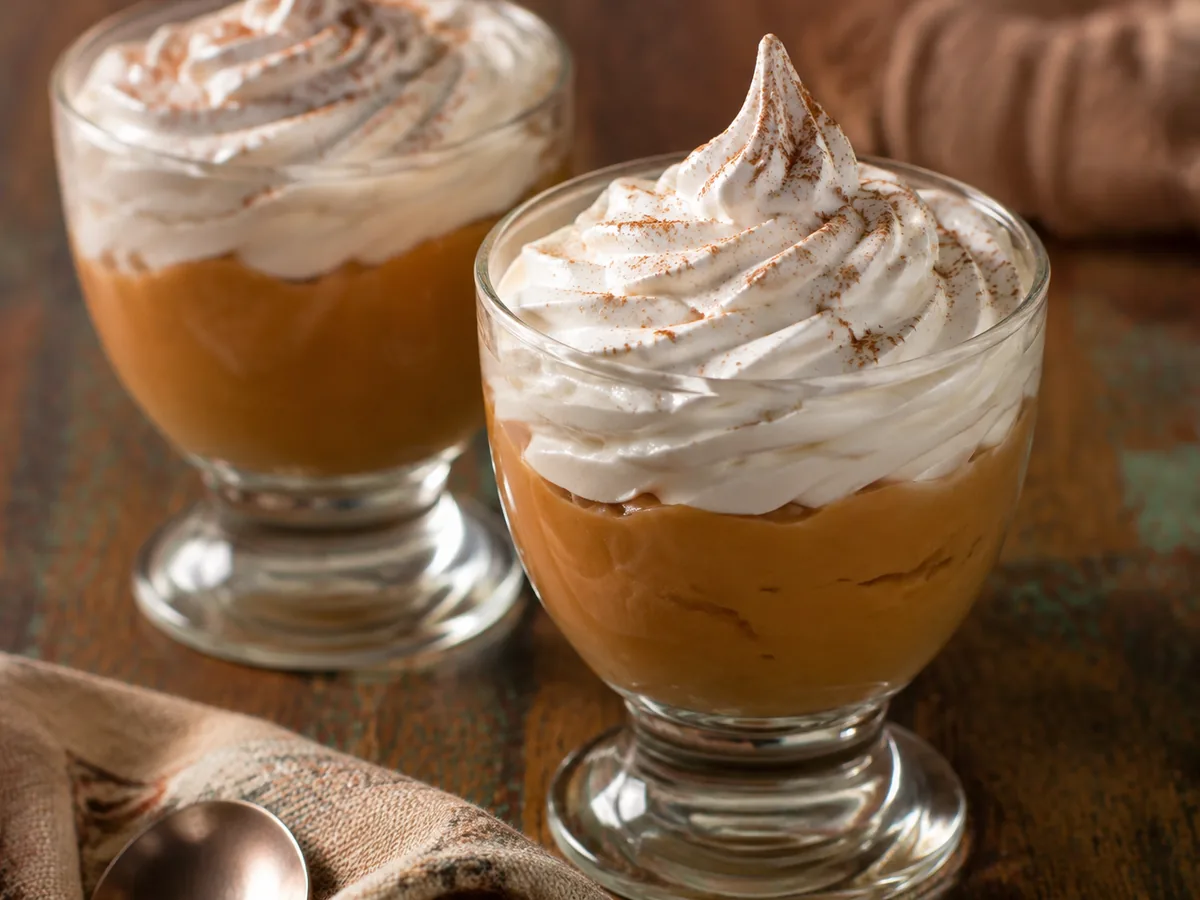
The spoon should sink through a cool cloud of wine-scented meringue before it hits dense, caramel-sweet manjar blanco that stretches slightly as you lift. That soft resistance is the sign a suspiro de limeña is right, and the reason neither the dulce de leche base nor the port meringue can be rushed.
This is Lima’s classic spoon dessert: a cooked milk caramel cushion finished with Italian-style meringue flavoured with port, or another sweet wine, and dusted with cinnamon. It is not Brazilian brigadeiro, not flan, and not a baked custard in a ramekin. It is a layered glass of sigh — suspiro — meant to be eaten slowly, cold or cool, with a small spoon.
When the cinnamon dust floats down and the first spoonful finds that port cloud over slow-cooked manjar, it becomes clear why Limeños treat this as a dessert with a name worth protecting. Keep the base milk-deep and the meringue glossy and wine-bright, serve it in clear glasses, and let people go quiet for a minute. That quiet is the suspiro.
Manjar blanco base
- 1 L4 cupsWhole milk
- 400 gabout 2 cupsGranulated sugar
- 5 ml1 tspPure vanilla extract, or ½ vanilla bean scraped
- 1.25 ml¼ tspBaking sodahelps browning and reduces the risk of curdling
- 1 g⅛ tspFine salt
- 397 g14 ozSweetened condensed milkoptional — for the labelled weeknight hybrid, in place of part of the sugar and milk; see the substitutions section
Port-wine meringue
- 90 g3 largeEgg whites, at cool room temperature
- 200 g1 cupGranulated sugar
- 60 ml¼ cupWater
- 45–60 ml3–4 TbspRuby or tawny portruby is fruitier, tawny nuttier — both work
- 1.25 ml¼ tspCream of tartar, or a few drops of lemon juicestabilises the whites
- Pinch of salt
Finish
- Ground cinnamon, for dusting
- Optional — a few drops of port on each serving just before dusting, for aroma
Why this dessert works
Manjar blanco brings milk sugars cooked down until the lactose browns and the texture turns spoonable and glossy. The meringue on top is not a raw egg-white fluff; it is a cooked sugar syrup whipped into whites, so the foam is stable, glossy and safe to hold. Port in the syrup gives the top a rose-amber perfume that cuts the dairy sweetness, and cinnamon on the surface is traditional punctuation — it smells warm the moment the glass approaches your nose.
Temperature contrast is the point
Cool base, cloudlike top. If both layers are warm and soupy, you have pudding with foam, not suspiro.
Why baking soda in the milk
A small pinch encourages browning and can reduce curdling in a long milk cook. More is not better.
Passive time, counted separately
The manjar cools 10–15 minutes before portioning, then chills 20–30 minutes uncovered so a slight skin forms, and the assembled glasses want at least 2 hours — overnight is preferred for clean layers. All of that is hands-off and sits outside the times quoted above; the whole thing runs roughly 3–4 hours of clock time.
Equipment
- Heavy-bottomed saucepan, 2.5–3 L / 2½–3 qt, for the manjar — thin pans scorch
- Wooden spoon or heatproof spatula
- Candy thermometer, strongly recommended for the syrup
- Stand mixer or hand mixer
- Six to eight clear glasses, coupe cups or small bowls — clear shows the layers
- Fine-mesh strainer, optional, for lumps
Method
Start the manjar blanco45–60 min
Combine the milk, sugar, baking soda, salt and vanilla. If you are using extract you may add it near the end to preserve the aroma; if you are using a bean, add the pod and seeds now.
Set over medium heat and stir until the sugar dissolves and the mixture steams. Do not walk away early — milk foams up aggressively when the baking soda activates.
Once it reaches a lively simmer, drop the heat to medium-low. You want steady bubbles, not a rolling boil that scorches the bottom. Stir every 1–2 minutes at first, then more often as it thickens — every 30–60 seconds in the last 15 minutes. Scrape the bottom and corners; browned bits there taste bitter if they burn.
Sensory timeline: around 15 minutes the colour is still ivory and the smell is sweet milk. By 30 minutes it turns café-con-leche and smells like caramelising lactose. By 45–55 minutes it should coat the spoon thickly — draw a line through the film on the spoon's back and the line holds for a second.
The target texture is warm dulce de leche that will firm further as it cools. Undercook it and the base weeps in the glass; overcook toward candy and it sets too stiff to sigh under the spoon. The volume reduces by roughly a third to almost half. A ready manjar often sits around 105–110 °C / 221–230 °F depending on altitude and sugar ratio, but trust viscosity more than a single number.
Remove from the heat and fish out the vanilla pod if used. If you see small lumps, whisk vigorously or push it through a strainer. Stir in the vanilla extract now if you held it back.
Cool 10–15 minutes until warm, not lava-hot — pouring boiling manjar into glasses can crack thin glass, and will melt the meringue later.
Heat milk, sugar, baking soda, salt and vanilla pod/seeds over medium, stirring until dissolved; watch for foaming. Lower to medium-low at a simmer. Scrape every 1–2 minutes, then every 30–60 seconds during the last 15 minutes. Cook until caramel-coloured and thickly spoon-coating, usually 45–55 minutes, around 105–110 °C / 221–230 °F; judge viscosity first. Remove pod, whisk or strain lumps, add reserved vanilla extract and cool 10–15 minutes before filling glasses to avoid cracking.
Portion the base5 min
Divide the warm manjar among the glasses, filling each about halfway to two-thirds, and smooth the tops gently.
Let them cool toward room temperature, then refrigerate uncovered for 20–30 minutes so a slight skin forms. That skin helps the meringue sit cleanly instead of sinking.
To work ahead, cover once cool and chill up to a day before topping.
Fill glasses halfway to two-thirds with warm manjar and smooth gently. Cool toward room temperature, then refrigerate uncovered 20–30 minutes until a light skin forms. For advance preparation, cover once cold and refrigerate up to a day before topping.
Make the port sugar syrup8–10 min
In a small clean saucepan, combine the 200 g sugar with 60 ml water. Stir only until the sugar is moistened, then stop stirring to avoid crystallisation.
Bring to a boil over medium-high heat and clip on a candy thermometer. Cook until the syrup reaches 115–118 °C / 240–244 °F, the soft-ball range — the classic Italian meringue zone that cooks the whites.
Meanwhile, warm the port gently in a cup; do not boil it hard or you lose the aroma. The cleaner approach is to cook the syrup with water to temperature, then off the heat carefully stir in 30 ml (2 Tbsp) warm port — the syrup may hiss — and reserve the remaining port to drizzle later if you want a stronger wine note.
Why this temperature: below about 112 °C / 234 °F the meringue stays soft and can weep. Above about 121 °C / 250 °F you edge toward a denser, marshmallow-chewy foam that fights the "sigh" texture. Stay in the soft-ball window.
Moisten 200 g sugar with 60 ml water in a clean saucepan; stop stirring. Boil over medium-high to 115–118 °C / 240–244 °F. Gently warm port without boiling; off heat, carefully stir 30 ml (2 Tbsp) into syrup, watching for hissing. Reserve remaining port for optional finishing. Below about 112 °C / 234 °F the syrup gives a soft, weeping foam; above 121 °C / 250 °F it becomes denser and chewy.
Whip the whites and combine8–12 min
Make sure the mixer bowl and whisk are spotless and grease-free — fat kills foam.
Beat the egg whites with the cream of tartar and a pinch of salt on medium until foamy, then on medium-high to soft peaks that flop gently when you lift the whisk. Do not take them to stiff dry peaks before the syrup arrives; slightly soft peaks accept hot syrup better.
With the mixer running on medium-high, pour the hot syrup in a thin, steady stream down the side of the bowl — not onto the whisk, or you get spun sugar threads. Continue beating until the bowl feels only slightly warm to the touch and the meringue is very glossy with stiff, billowy peaks, usually 5–8 minutes.
It should smell sweet and eggy-clean with a lift of port, and taste sweet and wine-kissed, not grainy.
If you did not add port to the syrup, beat in 15–30 ml (1–2 Tbsp) at the end on low, adding slowly so the foam does not collapse. Too much liquid at the end softens the cloud; better a modest wine note than a deflated top.
In a grease-free bowl, beat whites, cream of tartar and salt from foamy to soft peaks. At medium-high, stream hot syrup down the bowl side, avoiding the whisk. Beat 5–8 minutes until barely warm, glossy and stiff. If syrup contained no port, slowly beat in 15–30 ml (1–2 Tbsp) on low.
Top the glasses5 min
Spoon or pipe the meringue over the chilled manjar, making soft peaks and swirls. The traditional look is generous and cloudlike, not a flat smear.
Dust lightly with ground cinnamon through a small sieve, from high up so it snows rather than lands in a layer. A drop of port on top before the cinnamon is optional, for perfume.
Serve immediately for maximum loft, or chill 30–60 minutes if you prefer colder layers. Long refrigeration compresses the meringue slightly; it still tastes excellent within a day.
Spoon or pipe billowy meringue over chilled manjar. Add optional drops of port, then lightly sift cinnamon over the peaks. Serve immediately for maximum loft or chill 30–60 minutes for colder layers; longer refrigeration compresses the foam slightly.
Sensory checkpoints you can trust
- The manjar smells like toasted milk caramel, not scorched milk.
- It falls from the spoon in a slow ribbon, not a watery pour.
- The meringue shines like wet porcelain. Dull foam means underwhipped, or syrup too cool.
- First spoonful: cool cinnamon on the nose, then wine-sweet foam, then dense milk caramel that coats the tongue.
- No rubbery gel — that is flan territory — and no chocolate-cocoa candy chew, which is brigadeiro territory.
Check that manjar smells of toasted milk caramel and falls in a slow ribbon without scorching or watery flow. Meringue should be glossy and airy, not dull or grainy. Serve with a cool, dense caramel base beneath the wine-scented foam.
Storing it
Assembled glasses refrigerate covered for up to 24 hours; use a tall container or tent them so the peaks are not crushed. They are best within 12 hours for loft.
Manjar alone keeps in a jar in the fridge up to 5 days — press plastic wrap onto the surface to limit the skin, or accept the skin and stir. Meringue alone does not store well, so make it the day you serve. Do not freeze assembled suspiro; the meringue turns watery and spongy on thawing. Leftover egg yolks can go into another dessert the same day, or be frozen with a pinch of sugar and labelled.
Troubleshooting
- The manjar scorched.
The heat was too high, or the stirring too rare. Transfer it immediately to a clean pan without scraping the black layer, and whisk in a splash of milk if it is slightly bitter. Prevention beats rescue.
- The manjar is grainy.
Sugar crystallised, or milk proteins seized. Whisking off the heat can help mild grain. Next time dissolve the sugar fully before simmering, and measure the baking soda — too much can give the milk an odd texture.
- The manjar is too thin after chilling.
Undercooked. Return it to the pan and reduce further before topping, or accept a saucier base and use taller glasses.
- The manjar is too stiff.
Over-reduced. Warm gently with a spoonful of milk to loosen before portioning.
- The meringue weeps beads of syrup.
The syrup was undercooked, the foam underwhipped after the syrup went in, or the kitchen humid. Re-whip briefly if it is still warm; next time hit 115 °C / 240 °F or above and beat until cool and glossy.
- The meringue collapses onto the manjar.
The base was too hot, or the meringue underwhipped. Chill the manjar longer, and whip to stiff glossy peaks.
- An eggy or sulphur smell.
The whites were overbeaten to dry clumps before the syrup, or the eggs were old. Stop at soft peaks pre-syrup, and use fresh eggs.
- The port flavour is invisible.
The wine was cold and scant, or low quality. Warm it, use the full 3–4 Tbsp across syrup and finish, and choose a port you would sip.
- The cinnamon tastes bitter.
You dumped a thick layer. Dust from high up through a mesh so it snows lightly.
- The layers look muddy.
You poured meringue while the manjar was hot and liquid. Cool and briefly chill the base first.
Substitutions
Traditional: suspiro de limeña is a Lima dessert attributed in popular culinary history to a nineteenth-century poet's household, though the stories vary. It classically pairs manjar blanco with port-flavoured meringue and cinnamon, served in glasses as a soft spoon dessert, often after a rich meal. The manjar is cooked from milk and sugar, sometimes with condensed milk in modern home kitchens, and the meringue is cooked with syrup rather than left as a loose raw French meringue.
What this version does
Clear metric and US measures, a thermometer window for the syrup, and both a fully from-milk manjar path and an optional condensed-milk hybrid for weeknights. Italian meringue technique, so nobody serves unstable raw foam. The port stays modest so the dessert reads balanced rather than boozy. No baking, no gelatin, no chocolate coating — those moves push it toward other desserts.
Condensed-milk hybrid, an honest shortcut
Simmer 1 can of sweetened condensed milk with 250 ml (1 cup) whole milk, a pinch of baking soda and vanilla over low heat for 20–30 minutes until thick, stirring constantly. It will not taste identical to long-cooked manjar, but it layers correctly under meringue once cooled. Label it a weeknight cousin, not a museum replica.
What this is not
A flan called suspiro, or a brigadeiro dressed in cinnamon and claimed for Lima. Different sweets, different structures.
Scaling
How far ahead for a dinner party
Cook the manjar in the morning or the night before. Whip and top the meringue within 1–2 hours of serving for the best texture, and chill the glasses so the base is cold when the cloud goes on.
What to serve it with
Serve cold or cool, in clear glasses, with a small spoon. It is a dessert to eat slowly, usually after a rich meal.
- Clear glasses or coupe cups, so the layers show
- Small spoons — this is a spoon dessert, not a slice
- A drop of port over the meringue before the cinnamon, for perfume
Questions
Can I use store-bought dulce de leche?
Yes, for a weeknight. Choose a thick, plain dulce de leche or manjar, warm it slightly to loosen, portion, chill, then top with homemade port meringue. The texture may be firmer or sweeter than long-cooked milk manjar — taste, and thin with a spoon of warm milk if needed.
Is there an alcohol-free version?
Replace the port with a dealcoholised wine syrup, or with 30 ml (2 Tbsp) grape juice plus 2.5 ml (½ tsp) vanilla and a drop of almond extract. It will not taste the same, but the structure holds. Say so when you serve it.
Can I torch the meringue?
Lightly, for aroma — but traditional suspiro is not a crème brûlée shell. If you torch it, keep it pale gold and still dust the cinnamon.
Is the meringue safe?
Italian meringue cooks the whites with hot syrup; that is the point of the thermometer step. Skip the temperature control and you lose both the stability and the safety rationale.
Can I pipe fancy designs?
Yes, with a large star tip — but keep the volume generous. A skimpy decorative smear misses the cloud-to-caramel ratio that makes the dessert sigh.
Is it gluten-free and nut-free?
As written it typically is. Check the port and vanilla labels if you are cooking for allergies, and avoid cross-contact in the kitchen.