South America · 25°16′S 57°38′W · Kitchen testing pending
Paraguay
Cassava and maize, two Indigenous American staples, in almost everything
The ten
Ranked by what people actually name first
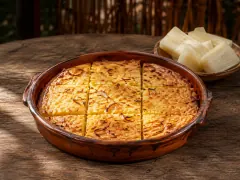 Sopa ParaguayaThe world's only solid soup, and it began as a mistake. President López's cook put too much corn flour into his milk-and-cheese broth in the 1850s, poured the thickened batter into a clay tray and pushed it into the tatakuá. Whipped egg whites are what keep it a sponge rather than a brick.
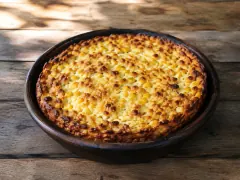 Chipa Guasú"The big chipa" in Guaraní, and the summer counterpart to sopa paraguaya — fresh choclo instead of dry corn flour. The kernels are pulsed coarse, never puréed, because rupturing every cell releases water that weeps out of the custard as it bakes.
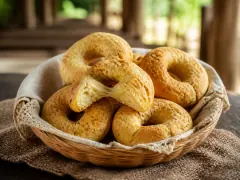 Chipa AlmidónChipa is life in Paraguay — kneaded by whole families around wood-fired tatakuás at Easter and sold from linen-wrapped baskets balanced on chiperas' heads. Pure cassava starch, lard, eggs and cheese, scented with crushed anise and blasted at 230 °C so the shell crisps before the centre can dry.
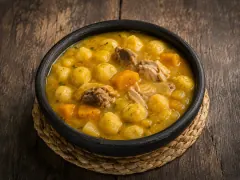 Vori Vori de PolloThe name is Guaraní, a diminutive of "ball" said twice to mean many of them — thirty-five or forty cornmeal-and-cheese dumplings dropped into a golden chicken broth. As they poach they shed starch into the pot, and a clear soup turns velvety without a spoonful of flour.
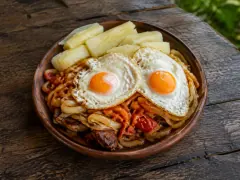 Bife KoyguaKoygua is Guaraní for hidden, and the steak is exactly that — seared ninety seconds a side, then buried under a blanket of slow-stewed onions, tomato and pepper, with fried eggs on top whose yolks run into the pan juices. Chaco ranch-hand food, and it takes forty-five minutes.
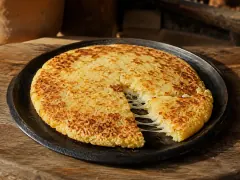 Mbeju MestizoGuaraní for "flat cake", and older than the Spanish arrival by centuries. It never becomes a dough — cold lard is rubbed into cassava starch and corn flour until the mixture is damp sand, tipped loose into a screaming cast-iron pan, and pressed just enough to bond. Three minutes a side.
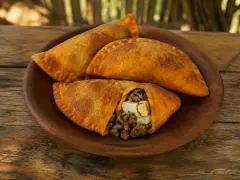 Pastel Mandi'oThe monarch of the San Juan bonfire nights in June. No wheat anywhere — the dough is boiled cassava mashed while still steaming, kneaded with toasted corn flour, lard and eggs into something elastic enough to roll to 3 mm without tearing, then folded round spiced beef and deep-fried until it blisters.
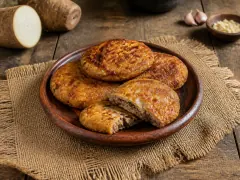 Pajagua MascadaThe other San Juan festival patty, named for the Payaguá, the river navigators of the Paraguay whom early Spanish chroniclers feared. Cooked spiced beef is kneaded straight into hot mashed cassava, so the gelatinised starch wraps the meat and binds it — no flour, no breadcrumbs — then shallow-fried to a chestnut shell.
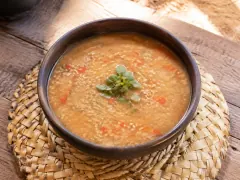 So'o JosopyGuaraní for "pounded meat broth", and the trick is counter-intuitive: raw lean beef is whisked into cold water with corn flour before it ever meets heat. Stirred continuously as it climbs to 75 °C, the proteins set as a velvety suspension of microscopic particles instead of seizing into meatballs.
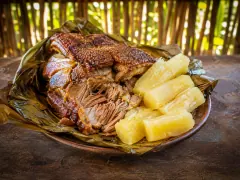 Kure Akãngue YvyguyYvyguy is Guaraní for "under the earth" — meat wrapped in banana leaves, buried in a pit over red-hot coals and sealed under warm soil for hours. In a kitchen it becomes four hours at 150 °C for the collagen, then a 230 °C blast that flashes the water under the dried skin into glass-brittle crackling.
Paraguay is the only country in the Americas where an indigenous language is spoken by the majority, and the food carries the same double inheritance. Half these dishes still go by their Guaraní names — mbeju, vori vori, so’o josopy, kure akãngue yvyguy — and the two ingredients underneath almost all of them are cassava and maize, both cultivated in the Americas long before Spanish colonisation, usually working together in the same bowl.
Cassava does structural work that wheat does elsewhere. Boiled and mashed while still steaming, its ruptured cells release amylopectin into a paste sticky enough to bind cooked beef into patties with nothing else added, which is pajagua mascada, or to knead with corn flour into a gluten-free dough that rolls to three millimetres without tearing, which is pastel mandi’o. Both are fried at the June bonfires of San Juan. Dried and milled into pure starch it becomes chipa and mbeju — where the mixture never becomes a dough at all, but a damp sandy meal that only coheres in the pan.
Corn takes two forms and they are not interchangeable. Harina de maíz paraguaya is par-toasted before milling, so its starch is already gelatinised and drinks warm milk without going gummy — that is what makes sopa paraguaya, the famous solid soup, and what binds the vorí dumplings. Fresh choclo is the summer opposite: pulsed coarse and never puréed, because rupturing every cell releases water that weeps out of chipa guasú as it bakes.
The most interesting technique here has no starch in it at all. So’o josopy whisks raw lean beef into cold water before it meets any heat, then climbs slowly to a simmer with continuous stirring. Meat dropped into hot broth seizes into rubbery clumps; dispersed cold and heated gently, the same proteins set as a suspension of microscopic particles and the soup turns silky. It is centuries old, it was made with a stone pestle in a wooden angu’a, and it is a better piece of protein chemistry than most things written down since.