South America · 4°56′N 52°20′W · Kitchen testing pending
French Guiana
Awara palm, roucou and a court-bouillon that bites
The ten
Ranked by what people actually name first
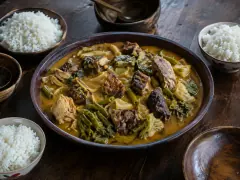 Bouillon d’AwaraThe Easter stew of French Guiana. Awara palm paste opened into a quiet simmer, then twice-desalted pig tails, smoked hock and belly for two hours, free-range chicken for one, cabbage, yardlong beans and cassava leaves, and last the smoked fish, cracked mangrove crabs and prawns under two whole habaneros, rested and brightened with lime.
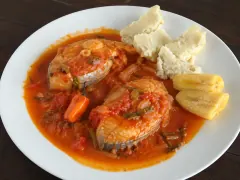 Pimentade de PoissonCayenne's fiery court-bouillon. Sea fish steaks marinated in lime and garlic, then poached below the boil in a sauce of sweated onion and cive, double tomato paste, ripe tomato, thyme and an allspice leaf, with a pin-pricked habanero floated whole and lifted out before the last squeeze of lime goes in.
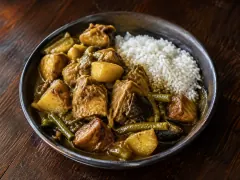 Colombo GuyanaisTamil curry in a Creole pot. Pork shoulder marinated in toasted colombo powder, lime and garlic, browned, then braised with mustard seed under a whole habanero, with potato, chayote and green mango going in first and eggplant and zucchini last, so the mango's acid hurries the meat along and the sauce stays loose.
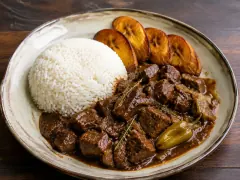 Fricassée de BicheForest meat, bronze-red. Venison or wild boar marinated overnight in lime, aged rum and garlic, seared in roucou oil with a little caramelised cane sugar, built up with red onion, sweet seasoning peppers and tomato paste, deglazed with more rum and braised under a whole habanero until fork-tender, then reduced to a glossy coat.
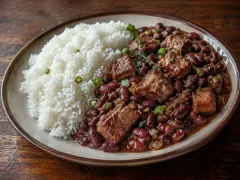 Riz Créole et Haricots RougesThe daily plate. Soaked red kidney beans simmered with a blanched smoked pork hock, rendered lardons, onion, garlic, cive, thyme and bay until tender, a fifth of them crushed against the pot to thicken the sauce, a whole habanero floated in for the last stretch, and served beside dry long-grain rice steamed on its own.
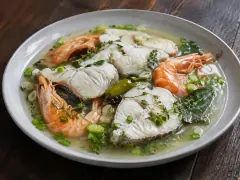 Blaff de Poissons et CrevettesThe fisherman's clear broth. Fish steaks and head-on prawns marinated twenty minutes in lime, garlic and salt, then dropped into a boiling broth of allspice leaves, thyme, onion, ginger and cracked pepper with a whole habanero, the heat cut to a poach the moment it returns to the boil, and finished with more lime.
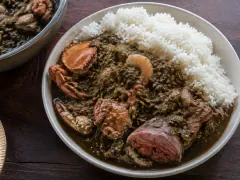 Calou de GuyaneThe okra-led calou. Salted beef blanched and simmered with rendered smoked pork belly, onion, cive, garlic, thyme and an allspice leaf until tender, then thin-sliced okra and halved mangrove crabs, and prawns with a whole habanero for the last minutes, finished with lime into a glossy stew bound by the okra's own body.
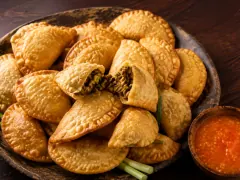 Pastels GuyanaisThe aperitif turnover of Cayenne and Kourou. A short dough of flour, cold butter and an egg yolk rolled under two millimetres and cut into 24 rounds, filled with beef cooked down with onion, cive, garlic, thyme, a little habanero, tomato paste and lime, sealed into half-moons and fried at 180 °C until blistered gold.
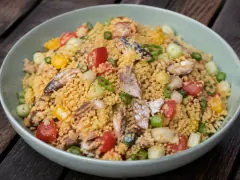 Salade de CouacAmerindian cassava, dressed. Coarse toasted couac hydrated with a warm dressing of water, lime, olive oil and garlic until moist and distinct, then folded with flaked smoked fish, diced cucumber and tomato, red onion, cive, sweet seasoning peppers and parsley, and rested chilled so the grains keep a slight bite.
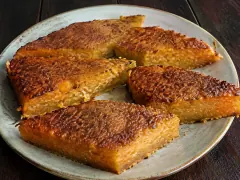 Gâteau Bâtard TourtaniThe territory's dessert, named the bastard cake. Raw white sweet potato grated fine and folded into a custard of coconut milk, dark cane sugar, butter, eggs, aged agricultural rum, vanilla, nutmeg, cinnamon and lime zest with a little flour, baked slowly in a sugared pan until deep brown at the edges, cooled fully and cut into diamonds.
French Guiana is a department of France on the northeast shoulder of South America, and its cooking comes from three peoples who met on its rivers. Amerindian nations, the Wayana, Kali’na and Palikur, learned to press the prussic acid out of bitter cassava and toast it into couac. Bushinengue Maroons who escaped the plantations built river kingdoms on the Maroni and smoked game and fish over wood. Creole cooks on the coast fused French court-bouillon and fricassée technique with African legume stews and the colombo curry brought by Tamil indentured workers after 1848.
The pantry is orange and sharp. Awara palm fruit is boiled, pounded and pressed into a fatty orange paste that becomes bouillon d’awara, the Easter stew of smoked pork, chicken, fish and mangrove crab that a Creole proverb says will bring you back to Guiana. Roucou, the annatto seed, bloomed in oil, colours the game fricassée. Lime juice and a whole habanero, floated unbroken, define the pimentade and the blaff, the two court-bouillons that bracket every fish landed at Cayenne.
The technique that recurs is the whole pepper. In stew after stew a habanero goes in intact, sometimes pricked once with a pin, so its floral oils reach the broth and its capsaicin does not. The other is acid before heat: fish is marinated in lime until its surface tightens, so it holds together in a boiling pot, and green mango goes into the colombo to lower the pH and hurry the collagen along.