Salade de Couac
Amerindian cassava, dressed. Coarse toasted couac hydrated with a warm dressing of water, lime, olive oil and garlic until moist and distinct, then folded with flaked smoked fish, diced cucumber and tomato, red onion, cive, sweet seasoning peppers and parsley, and rested chilled so the grains keep a slight bite.
- Prep
- 25 min
- Serves
- 4 to 6 servings
- Difficulty
- Medium
Researched · Kitchen testing pending
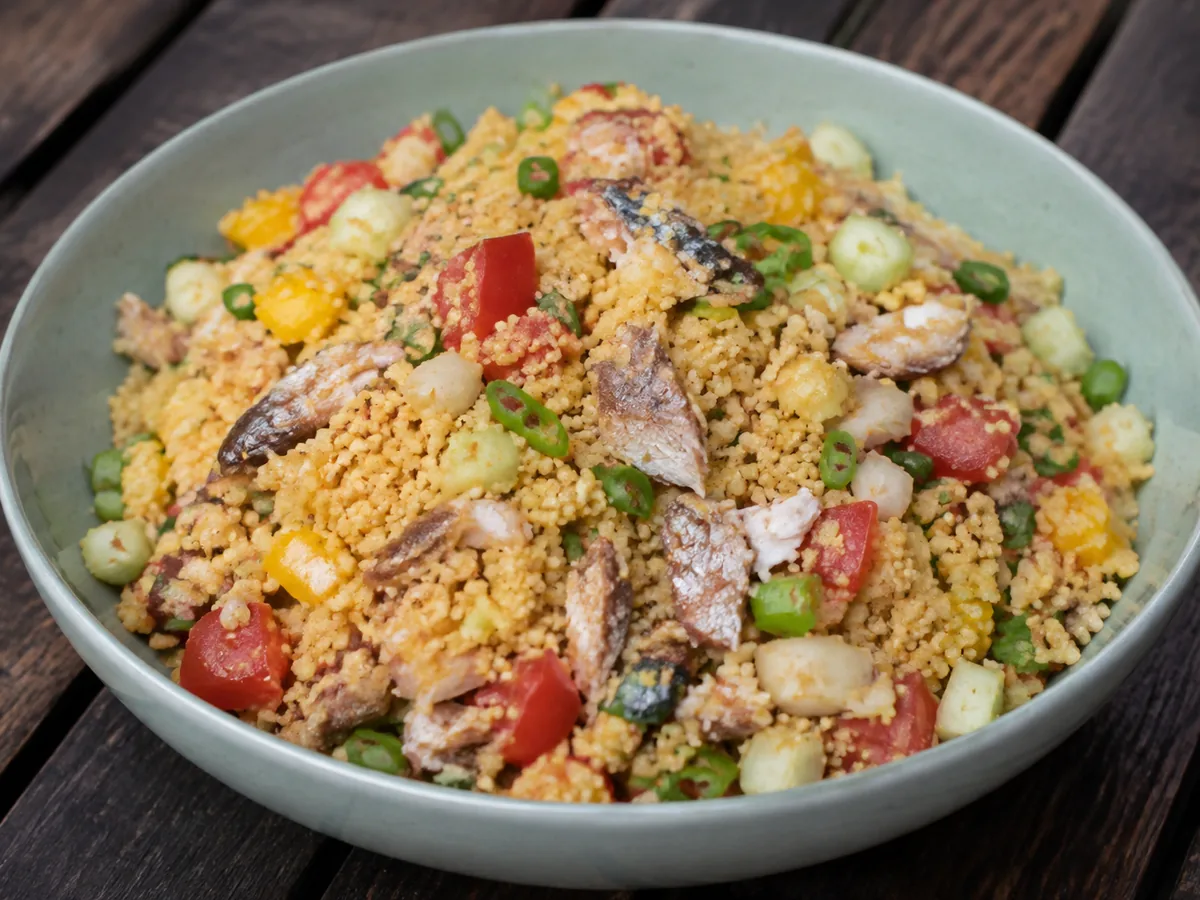
Couac is the ancestral heritage staple of French Guiana, perfected thousands of years ago by Indigenous Amerindian nations (Wayana, Kali’na, Palikur) and embraced across Creole and Bushinengue foodways. Derived from bitter cassava (Manihot esculenta), the tubers are peeled, grated, pressed inside a woven snake-press (couleuvre) to extract toxic prussic acid, and toasted dry over wide clay or iron griddles (platine) into coarse, golden-yellow semolina grains. While couac is traditionally eaten dry sprinkled over stews, Salade de Couac (often called Couac Salade) is a celebrated Creole picnic and barbecue dish. The crunchy toasted cassava grains are rehydrated in fresh lime juice, extra virgin olive oil, and tomato water, then tossed with crisp cucumbers, sweet peppers, scallions, and flaked smoked fish or sea prawns, creating a tropical salad akin to an Amazonian tabbouleh.
- 300 g2 cupsCouac de Guyane (coarse toasted cassava semolina / farinha de mandioca torrada)
- 200 ml3/4 cupEau tiède (warm filtered water) or light fish stock for hydration
- 75 ml5 tbspJus de citron vert (fresh lime juice)
- 75 ml5 tbspHuile d'olive vierge extra (extra virgin olive oil)
- 250 g9 oz (or cooked sea prawns)Poisson fumé (smoked machoiran or smoked haddock/cod), flaked
- 200 g1 mediumConcombre (cucumber), peeled, seeded, cut into 1/4-inch dice
- 250 g2 mediumTomates mûres (ripe tomatoes), seeded and cut into 1/4-inch dice
- 100 g1 smallOignon rouge (red onion), finely minced
- 30 g1/4 cupCiboulette or cive créole, finely chopped
- 25 g5 small peppersPiments végétariens (sweet seasoning peppers), seeded and finely minced
- 15 g1/4 cupPersil plat frais (fresh flat-leaf parsley), chopped
- 5 g1 cloveGousse d'ail (garlic clove), grated to a fine paste
- 6 g1 tsp (to taste)Gros sel marin (coarse sea salt)
- 2 g1/2 tspPoivre noir fraîchement moulu
Culinary science
The food science of Salade de Couac hinges on controlled starch hydration. Couac consists of pre-gelatinized, toasted cassava granules with an extremely low moisture content (under 10%). If soaked in excessive water, the starches swell into an unpalatable, gummy porridge. However, if dressed with a blend of warm water, fresh lime juice, and lipid oil, the grains absorb liquid slowly while the fat coats the surface. This balanced hydration swells the granules by roughly 40% in volume while preserving a distinct al dente, couscous-like crunch. Furthermore, resting the salad for 15 minutes allows the couac to draw in the cell water released by salted diced tomatoes and cucumbers through osmosis, locking vegetable freshness directly into the starch grains.
Five-taste audit
Salt: Coarse sea salt and savory cured salinity from flaked smoked fish absorbed into the cassava grains. Fat: Extra virgin olive oil coating each hydrated grain, carrying garlic and herb flavors. Acid: Bright, electric citric acidity from generous fresh lime juice, balancing the nutty dry starch. Heat / Pungency: Raw garlic paste, minced red onion, sweet aromatic piments végétariens, and black pepper. Umami: Smoked fish glutamates and roasted nutty flavors from the toasted cassava semolina.
Equipment
- A large shallow wooden calabash ('coui') or glazed earthenware bowl, tossing with two wide wooden spoons.
- A wide stainless steel or glass mixing bowl.
Method
Make the dressing
Whisk warm water, lime juice, olive oil, grated garlic, salt and pepper until lightly emulsified.
Whisk warm water, lime juice, olive oil, grated garlic, salt and pepper until lightly emulsified.
Hydrate the couac
Put couac in a wide bowl. Pour over three quarters of the dressing while tossing continuously. Rest 10 minutes, then rake apart with a fork.
Put couac in a wide bowl. Pour over three quarters of the dressing while tossing continuously. Rest 10 minutes, then rake apart with a fork.
Prepare the vegetables
Seed cucumber and tomatoes thoroughly, then dice them evenly. Mince onion, cive, seasoning peppers and parsley.
Seed cucumber and tomatoes thoroughly, then dice them evenly. Mince onion, cive, seasoning peppers and parsley.
Fold the salad
Add vegetables and smoked fish to the couac. Fold gently with the remaining dressing rather than compressing the grains.
Add vegetables and smoked fish to the couac. Fold gently with the remaining dressing rather than compressing the grains.
Rest and adjust
Rest 15 minutes chilled. The grains should be moist and distinct with a slight bite. Add lime, salt or a spoonful of warm water only after tasting.
Rest 15 minutes chilled. The grains should be moist and distinct with a slight bite. Add lime, salt or a spoonful of warm water only after tasting.
Serve cool
Serve cool but not ice-cold, within two hours of adding the vegetables.
Serve cool but not ice-cold, within two hours of adding the vegetables.
Storing it
Storage and reheating
Refrigerate promptly and use within 1 day because cut cucumber and tomato continue releasing water. Do not freeze.
Troubleshooting
- Gummy couac
Too much liquid was added at once. Dress in stages and fluff before adding vegetables.
- A watery salad
Cucumber and tomatoes were not seeded, or the salad stood too long after salting.
- Hard dry grains
The couac needs a little more warm water and resting time, not more oil alone.
Substitutions
Ingredient substitutions
| Ingredient | Replace with | Culinary impact and technique adjustment |
|---|---|---|
| Couac de Guyane | Brazilian Farinha de Mandioca Torrada or coarse yellow Gari: | Coarse toasted farinha is the closest texture; gari may be sharper and should be hydrated gradually. |
| Poisson fumé | Smoked trout, smoked mackerel, or peeled poached shrimp: | Smoked mackerel is richer, trout milder and poached shrimp lacks smoke; adjust salt and oil accordingly. |
| Piments végétariens | Sweet mini peppers or Cubanelle pepper: | Mini peppers or Cubanelle bring sweetness but less floral aroma; do not compensate with excessive habanero. |
Scaling
Half batch
Use a medium bowl and add dressing in the same gradual manner; the rest time remains 15 minutes.
Double batch
Mix in two wide bowls. A deep crowded bowl compresses hydrated couac and makes even dressing difficult.
What to serve it with
- Grilled or fried fish
- Boucané chicken or pork
- A picnic plate with avocado and boiled plantain
Questions
Is couac safe to make from raw cassava at home?
Use commercially prepared toasted couac. Do not improvise the detoxification of bitter cassava from raw roots.
Can the salad be made ahead?
Prepare dressing and vegetables ahead, but hydrate and combine the couac within a few hours of serving.
Can I omit smoked fish?
Yes. The salad becomes a vegetable side; increase salt modestly and serve it beside another savoury protein.