South America · 4°42′N 74°04′W · Kitchen testing pending
Colombia
Regional cooking so distinct the country barely agrees on a dish
The ten
Ranked by what people actually name first
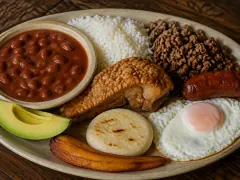 Bandeja PaisaAntioquia on a plate — red beans in their own liquor, white rice, powdered or grilled beef, blistered chicharrón, grilled chorizo, a runny-yolked egg, sweet maduro, a thick arepa and avocado to cool the fat. A composed tray, not a stew.
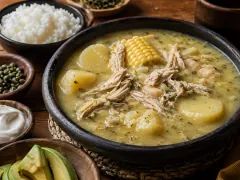 Ajiaco SantafereñoBogotá in a pot — chicken, three potatoes doing three different jobs, corn on the cob, and guascas until the kitchen smells like the highlands. Cream, capers and avocado go on the side so each person finishes their own bowl. Not Cuban ajiaco.
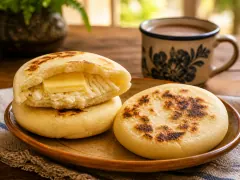 Arepa de MaízWarm water into masarepa, a short knead, a rest, then a plancha until the disk wears toasted leopard spots. Colombian arepas are simple corn disks with butter, cheese, hogao or egg — not stuffed Venezuelan pockets, and not a sandwich you hide the corn inside.
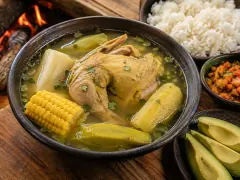 Sancocho de GallinaA clear, chicken-rich broth with soft roots and sweet-starchy green plantain — hen or chicken, yuca, plantain, potato, corn on the cob and cilantro at the end. One coherent Valle-leaning pot, with the vegetables staggered so nothing turns to sludge.
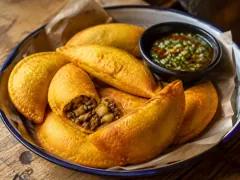 Empanadas ColombianasYellow masarepa dough sealed by hand around a meat-and-potato filling built on hogao, then plunged into hot oil until the shell blister-crisps. Fried, corn-forward, and served with ají — not an Argentine baked wheat empanada wearing a different name.
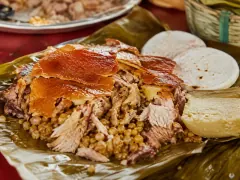 LechonaTolima's festival roast, scaled to a home oven — a skin-on pork shoulder packed with yellow rice, peas and pork bits, roasted low until both meat and stuffing are safely hot, then blasted so the skin blisters into shatter sheets.
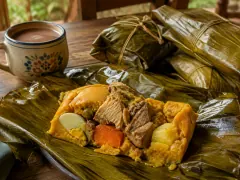 Tamal ColombianoTolima-style parcels wrapped in banana or bijao leaf — masa seasoned with hogao and meat broth rather than whipped lard, filled with pork, chicken, potato, carrot and peas, then steamed until the masa pulls clean from the leaf. Not the corn-husk Mexican cousin.
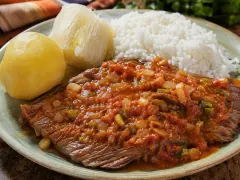 Sobrebarriga a la CriollaBeef flank given a long, honest simmer until it slices in soft ribbons, then finished in a cooked criolla of tomato, onion, garlic, cumin and cilantro until the sauce clings instead of puddling. The Bogotá Sunday plate — and not ropa vieja.
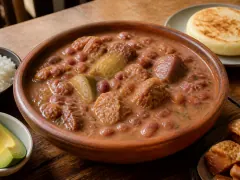 Frijoles AntioqueñosCargamanto beans simmered soft with hogao bloomed in the pot, optional pork for collagen, carrot for sweetness and often a coin of ripe plantain. The beans plate itself — a deep bowl with rice and avocado, not the crowded bandeja tray.
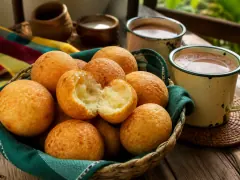 BuñuelosFresh cheese bound with cornstarch and yuca starch, rolled into spheres and fried until the shell blisters gold and the centre opens into a light hollow. A savoury-leaning cheese fritter with a sweet edge — not a yeast doughnut hole, and not a syrup soak.
One sauce runs through most of this list, and learning it unlocks half the country. Hogao is onion and ripe tomato cooked slowly in fat with garlic, scallion and a little cumin until it turns jammy and the oil beads at the edge. It seasons the beans, it goes into the empanada filling, it hydrates tamal masa, it sits on the arepa. Skip it and the same dishes turn into boiled legumes with onion floated on top.
The regions genuinely disagree, and the ten are chosen so you can taste the argument. Antioquia sends the bandeja paisa and the bean pot underneath it. Bogotá sends ajiaco, thickened by three different potatoes doing three different jobs, and sobrebarriga under a cooked criolla. Tolima sends lechona and the tamal. Valle sends the sancocho. No two of those kitchens would fully endorse each other’s seasoning.
Corn arrives as precooked masarepa rather than nixtamalised masa, which is the detail that most often trips up cooks arriving from Mexico. The same flour makes the breakfast arepa, the fried empanada shell and the tamal bed — three textures from one bag, decided entirely by hydration and heat.
Three of the ten spend most of their effort insisting they are not something else. These empanadas are fried corn, not baked wheat from the Southern Cone. This ajiaco is chicken, potato and guascas, not the Cuban root stew that shares its name. This sobrebarriga is sliced under tomato and cumin, not shredded into ropa vieja. The naming matters here more than in most countries, and the recipes say so out loud.