Sobrebarriga a la Criolla
Beef flank given a long, honest simmer until it slices in soft ribbons, then finished in a cooked criolla of tomato, onion, garlic, cumin and cilantro until the sauce clings instead of puddling. The Bogotá Sunday plate — and not ropa vieja.
- Prep
- 50 min
- Cook
- 2 hr 40 min
- Serves
- 6 generous plates
- Difficulty
- Medium
Researched · Kitchen testing pending
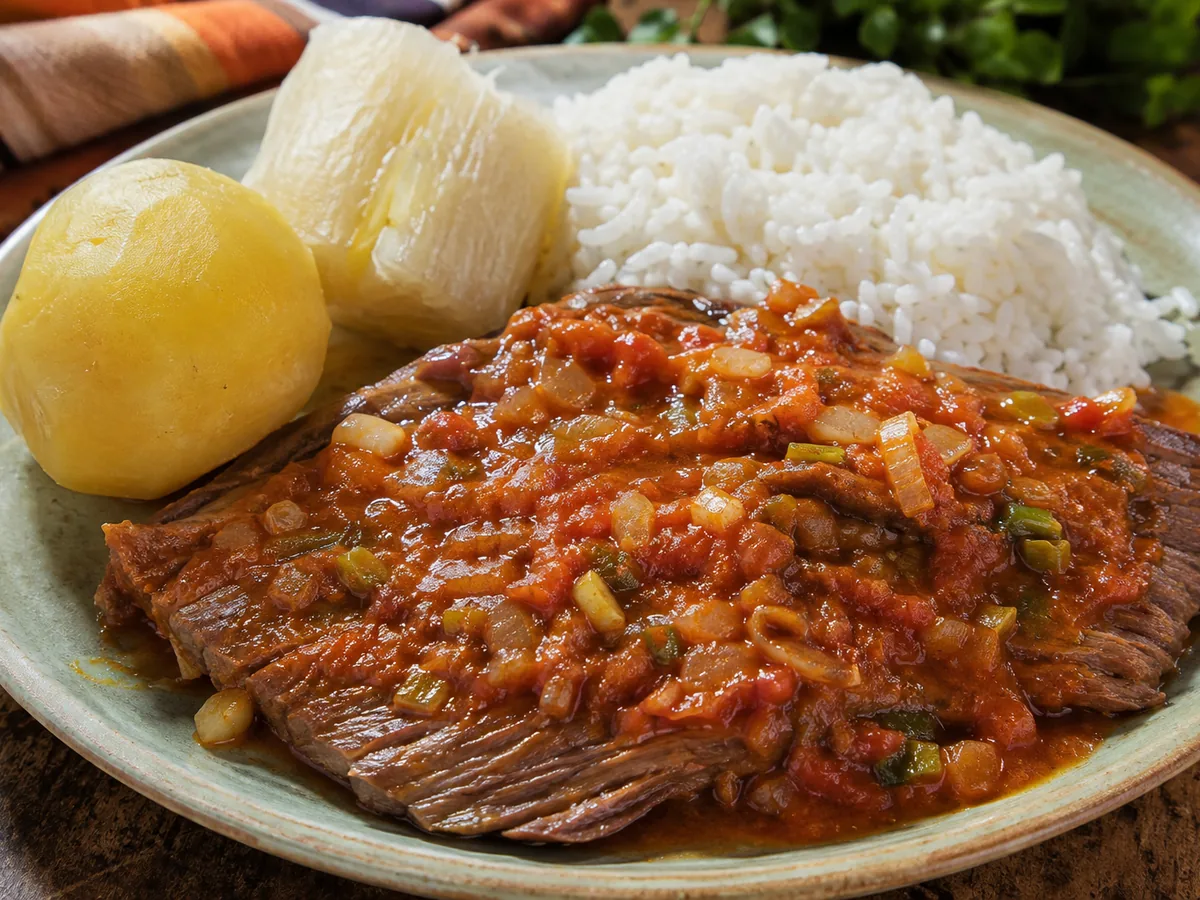
Fork-tender flank is not a personality trait of the cut. It is what happens when you give sobrebarriga a long, honest simmer before it ever sees the tomato-onion sauce.
This is the Bogotá Sunday plate: beef that slices in soft ribbons, then finishes in a criolla of tomato, onion, garlic, cumin and cilantro until the sauce clings instead of puddling like soup. Flash-searing flank does not get you there.
It is also not ropa vieja. Here the meat usually stays in slices or broad pieces under the sauce, rather than being shredded into rags — unless the cook prefers it that way.
Beef and first simmer
- 1.5 kgabout 3⅓ lbSobrebarriga (beef flank or belly flap), silver skin trimmedleft in 1–2 large pieces
- 1 large1 largeWhite or yellow onion, peeled and halvedabout 300 g / 10.5 oz
- 4 cloves4 clovesGarlic, smashed
- 2 leaves2 leavesBay leaves
- 2 g1 tspWhole black peppercorns
- 2 g1 tspGround cumin
- 12 g2 tspKosher salt
- 1 small bunch of cilantro stems, tied — the leaves are reserved for the sauce
- 2–2.5 L8–10 cupsWater or light beef stock, to cover by 2–3 cm / ¾–1¼ in
Criolla sauce
- 45 ml3 TbspNeutral oil, or beef fat skimmed from the simmer
- 2 large2 largeWhite or yellow onions, sliced pole-to-pole into 5 mm / ¼ in half-moonsabout 500 g / 1.1 lb total
- 11Red bell pepper, sliced into stripsabout 180 g / 6 oz; optional, but common in home pots
- 18 g6 clovesGarlic, minced
- 700 g1½ lbRipe tomatoes, seeded and choppedpeel if tough; or 800 g / 28 oz canned whole peeled tomatoes, crushed by hand
- 30 g2 TbspTomato paste
- 2 g1 tspGround cumin
- 1 g1 tspDried oregano, crumbled
- 5 g1 tspKosher saltplus more to taste
- Freshly ground black pepper
- 400–500 ml1⅔–2 cupsReserved simmering liquid, fat skimmed and warm
- 20 g⅔ cup loosely packedCilantro leaves, chopped and divided
- 10 ml2 tspWhite vinegar or fresh lime juiceonly if the sauce tastes flat at the end
- 1 small1 smallAjí or serrano, minced, or a pinch of red pepper flakesoptional — criolla here is savoury-aromatic first, not a chile bomb
To serve (the Bogotá home plate)
- 300 g1½ cups rawWhite rice, cooked
- Boiled potatoes — papa criolla if you can find them, otherwise small yellow potatoes — or boiled yuca
- Ripe avocado, sliced
- Extra cilantro
- Hogao or bottled ají on the table, if that is your house habit
Choose a real sobrebarriga
In Colombian butchery, sobrebarriga is the flank and belly area: a fibrous, flavourful sheet with long grain and enough connective tissue to reward time. In many North American markets, ask for flank steak — the closest everyday label — or beef flap or bavette if the flank looks thin and lean. A very thick flank with a fat cap behaves beautifully. Skirt steak cooks faster and can turn stringy under a three-hour braise. Brisket flat works as a supermarket stand-in; it tastes more pot-roast than Bogotá café, and is still honest if you say so.
Leave it in large pieces
Cubes make stew. Trim only thick waxy surface fat and tough silver skin that will never melt; a little fat bastes the broth.
Why long heat works
Collagen in this cut needs sustained temperatures near a simmer, roughly 85–95 °C / 185–203 °F in the liquid, long enough to unwind into gelatin. Hard boils tighten the muscle fibres and emulsify scum into cloudy broth. Patience is the tenderiser, not a meat mallet.
Criolla means cooked, not raw
In this context criolla is a cooked tomato-onion sauce, not a raw salsa criolla. Soft onions, sweet tomato, cumin warmth, cilantro at the end.
Equipment
- Heavy pot or Dutch oven, 6–7 L / 6–7 qt, for the simmer
- Wide skillet for the criolla, or the same pot cleaned if you prefer one vessel
- Tongs and a sharp knife
- Fine mesh strainer or a ladle for skimming
- Meat thermometer, optional but useful
Method
On the simmer — timed method until fork-tender2 hr – 2 hr 30 min
Place the beef in the pot with the onion halves, smashed garlic, bay leaves, peppercorns, cumin, salt and cilantro stems. Cover with water or light stock by 2–3 cm (¾–1¼ in).
Bring to a boil over medium-high heat and skim the foam aggressively for the first 10 minutes. Drop to a gentle simmer — small bubbles breaking lazily, the liquid around 90–95 °C / 195–205 °F. A partial lid, left ajar, is fine.
Cook 2 to 2½ hours, turning the meat once or twice. Start checking at 1 hour 45 minutes: a fork should slide in with little resistance, and a corner of the meat should pull into soft fibres without crumbling into mush. If the centre still fights the fork, keep going in 15-minute steps. Thickness and the exact cut drive the clock more than any recipe card.
Lift the beef to a board. Strain and reserve the liquid, discarding the spent aromatics, and skim the fat from the broth — keeping a few spoonfuls for the sauce if you like beefy depth. Tent the meat loosely so it does not dry while you build the criolla.
Sensory check: properly simmered sobrebarriga smells clean and beefy, not sour, and the surface looks matte and relaxed. Undercooked meat springs back hard; overcooked meat shreds if you sneeze near it — still usable sliced thick with gentle hands, but aim for fork-tender with shape.
Internal temperature is a secondary cue: well past medium, often 90–95 °C / 194–203 °F in the thickest part once the collagen has yielded. Do not pull at 57 °C / 135 °F steak doneness. That is a different dish.
Keep trimmed beef in large pieces; add onion, garlic, bay, peppercorns, cumin, salt and cilantro stems. Cover by 2–3 cm (¾–1¼ in) water or stock. Boil and skim 10 minutes; simmer gently at 90–95 °C / 195–205 °F for 2–2½ hours, turning once or twice. Check from 1 hour 45 minutes, extending by 15 minutes until fork-tender. Tent beef; strain and skim reserved broth. The fork-tender centre often reaches 90–95 °C / 194–203 °F; do not stop at steak doneness of 57 °C / 135 °F.
On the criolla — tomato, onion, garlic, cumin, cilantro30–40 min
Heat the oil, or reserved beef fat, in a wide pan over medium until it shimmers, around 160–170 °C / 320–340 °F.
Add the sliced onions and a pinch of salt. Cook 10–12 minutes, stirring, until soft, translucent and sweet at the edges — not fried brown into jam, not raw-crunchy. Add the bell pepper if using and cook 4–5 minutes more.
Add the minced garlic and stir 30–45 seconds until fragrant, without blackening it.
Stir in the tomato paste and fry it for 1 minute so it darkens slightly and loses its tinny rawness. Add the chopped tomatoes, cumin, oregano, salt and black pepper, and cook 8–10 minutes until the tomatoes break down and the mixture looks saucy rather than like watery salsa.
Pour in 400 ml (1⅔ cups) warm reserved broth and simmer 8–12 minutes, until the sauce coats a spoon and tastes rounded. Add more broth if it tightens too far, or reduce if it tastes thin. Fold in half the cilantro.
Taste now: salt, cumin, sweet onion, tomato fruit. A few drops of vinegar or lime only if the sauce feels flat or canned — acid wakes it, but it should not taste like ceviche.
Heat fat to 160–170 °C / 320–340 °F. Soften salted onions 10–12 minutes; add optional pepper 4–5 minutes, garlic 30–45 seconds and tomato paste 1 minute. Add tomatoes, cumin, oregano, salt and pepper; cook 8–10 minutes. Add 400 ml (1⅔ cups) warm broth; simmer 8–12 minutes until spoon-coating. Adjust thickness, fold in half the cilantro and add vinegar or lime only if flat.
On the finish — meat meets sauce8–12 min
Slice the beef against the grain into 1–1.5 cm (⅜–⅝ in) slabs, or into broad serving pieces. Some Bogotá homes shred it lightly; slices that still read as steak under the sauce are the default here, unless the meat wants to fall apart.
Nestle the slices into the criolla and spoon sauce over the top. Simmer gently together 8–12 minutes so the beef drinks the tomato-onion liquor and the sauce picks up the meat juices. Keep the liquid at a soft bubble, not a furious boil that shreds the slices. Finish with the remaining cilantro.
If the sauce looks greasy, blot it with a spoon. If it looks sparse, add a ladle of broth and reduce 3 minutes.
The plate goal is meat glazed and sauced, with rice ready to catch the runoff — not a soup bowl with a beef island.
Slice beef across the grain into 1–1.5 cm (⅜–⅝ in) slabs. Nestle in criolla, spoon sauce over and simmer gently 8–12 minutes. Add remaining cilantro; skim excess fat. If sauce is sparse, add a ladle of broth and reduce 3 minutes.
Sensory checkpoints and temperatures
- Simmer sound: quiet ticking, not a rolling roar.
- Fork test: it slides through with a slight gelatinous give, the grain visible and soft.
- Criolla colour: brick-red to deep orange-red and glossy, with the onion soft and pale gold in the mix.
- Aroma at the finish: cumin and cooked tomato first, then beef, then cilantro.
- Serving heat: sauce and meat around 70–75 °C / 160–170 °F on the plate, so the fat stays fluid and the rice does not chill the bite.
- Avocado: cool contrast, added at the table so it does not cook in the pan.
Check beef yields easily to a fork while retaining soft, visible fibres. The criolla should be glossy red with tender onions and cooked-tomato, cumin and cilantro aromas. Serve meat and sauce around 70–75 °C / 160–170 °F; add cool avocado at the table.
Why the method is ordered this way
The simmer first builds tenderness and a seasoned broth you will reuse — water poured down the drain is flavour lost. The criolla comes second so the onions soften in clean fat without competing with scum from the boil.
Finishing the sliced meat in the sauce marries the two stages, so the plate tastes like one idea rather than boiled beef with a separate tomato topping. Sides stay parallel, so rice and avocado hit the table hot and cool in the right places.
Spoon criolla over soft slices, park avocado and potato beside the rice, and the first breath should be cumin-tomato, with beef that gives without a knife fight. Patient simmer, then sauce — nothing fancier than it needs to be.
Simmer beef first and reserve its seasoned broth for criolla. Soften onions separately, then finish sliced beef in the sauce. Prepare sides alongside; serve sauced meat with hot rice, boiled potatoes or yuca, and cool avocado.
Storing it
Cool within 1–2 hours. Refrigerate the meat and sauce together in shallow containers up to 3–4 days at or below 4 °C / 40 °F. The flavour improves on day two, so this is a legitimate make-ahead. Reheat gently on the stove to at least 74 °C / 165 °F, loosening with a splash of reserved broth or water. Freeze up to 2 months and thaw overnight in the fridge. Potatoes and avocado are always fresh at service — do not freeze them in the sauce. Leftover broth makes an excellent soup base; refrigerate 3 days or freeze.
Raw beef handling
Clean boards and knives before cutting the vegetables for the criolla mise. Do not leave the simmer pot overnight at room temperature.
Troubleshooting
- The meat is still tough after 2 hours.
An unusually thick or lean cut, or too cool a simmer. Keep going and check every 15 minutes. A pressure cooker can finish a stubborn piece in 35–45 minutes under pressure if you are out of time — release naturally for better texture.
- The meat is dry and stringy.
Boiled hard, or cooked far past tender without enough liquid. Slice thicker and sauce generously. Next time keep a true gentle simmer and pull at the first honest fork-tender moment.
- The sauce is watery.
The tomatoes were too wet, or not reduced. Simmer uncovered until it coats. Tomato paste helps the body.
- The sauce tastes flat or canned.
More salt, a pinch of cumin, cilantro, and a few drops of acid. Fry the paste longer next time, and use ripe fresh tomatoes when possible.
- The sauce is bitter.
Burnt garlic, or scorched tomato paste. Start the criolla over; do not try to hide burnt flavours with sugar alone.
- Too greasy.
Skim the broth better before adding it, and blot the finished pan. Flank with a heavy fat cap needs assertive skimming.
- Bland beef.
Under-salted simmer water. Season the cooking liquid like a light soup from the start; the sauce cannot fully rescue unsalted meat.
Substitutions
Traditional spine: sobrebarriga simmered until tender in aromatic water, then finished in a cooked criolla of onion, tomato, garlic, cumin and cilantro, and served with rice, potato or yuca, and avocado. A Bogotá and Andean home classic.
Acceptable departures
Bell pepper in the sauce. Canned tomatoes off-season. Flank or flap as labelled at a US butcher. Light shredding if the meat demands it. A pressure cooker for the simmer stage when weeknight time is gone. Beef stock instead of water for a deeper broth.
Identity-breakers
Quick grilled flank with pico de gallo called "a la criolla." Heavy cream sauces. Mexican chile-colorado braises sold under this name. Skipping the simmer and serving chewy medium-rare flank under tomato — that is steak with salsa, not this dish.
Not ropa vieja
Shredding to threads and loading in olives, capers and wine is a different Caribbean logic. This criolla stays tomato, onion, cumin and cilantro, and Colombian in seasoning.
Scaling
For 3–4
About 800 g–1 kg (1¾–2¼ lb) beef, and half the criolla. Simmer time may drop slightly if the piece is thinner — trust the fork, not a blindly halved clock.
For 10–12
2.5–3 kg (5½–6½ lb) in two pieces, or two pots, so the liquid circulates. Make the criolla in a wide pan in batches if needed, so the onions soften instead of steaming. The sauce volume should look abundant; this plate wants leftovers spooned over rice.
Make-ahead
Simmer the beef one day, chill it in a little broth overnight, slice it cold for cleaner cuts, and finish it in fresh criolla the next day. Excellent for guests.
What to serve it with
- White rice, to catch the criolla
- Boiled papa criolla, yellow potatoes or yuca — soft starch against the sauced beef
- Ripe avocado slices
- A simple green salad or steamed cabbage, for something sharp and light
- Hogao or ají on the side, for extra allium heat
- Beer, or a simple red wine; cold tinto afterwards if that is your rhythm
Do not bury the plate under melted cheese. Let the beef and criolla stay the point.
Questions
Flank or brisket?
Flank, or sobrebarriga proper, is the target. Brisket works as a substitute with a slightly different grain and flavour — say so at the table.
Can I use a slow cooker?
Yes, for the simmer: low for 7–8 hours, or high for 4–5, until fork-tender. Build the criolla on the stove and finish the sliced meat there so the sauce reduces properly. Slow cookers alone often leave sauces thin.
Do I shred or slice?
Slicing against the grain is the default. Light shredding is a home variation when the meat is falling apart — still sobrebarriga a la criolla if the sauce is right.
What if I have no fresh tomatoes?
Canned whole peeled tomatoes, crushed and cooked down until they no longer taste like the can. Avoid watery bottled salsa as the sauce base.
Is cumin required?
Yes, for this profile. Without cumin it becomes generic stewed beef in tomato. Toast and grind whole seeds if you want more perfume.
Can I add potatoes to the sauce pot?
You can simmer boiled potato halves in the criolla for the last 10 minutes so they stain red. Keeping them separate keeps them intact for the plate.
How do I reheat without drying it out?
A covered pan on low heat with a splash of broth, stirred gently. In a microwave, cover it and put a spoon of sauce on top.
What internal temperature means done?
For this braise, fork-tender matters more than a steak number. Expect high internal temperatures when the collagen yields — that is correct.