South America · 16°30′S 68°09′W · Kitchen testing pending
Bolivia
Four thousand metres up, and the potatoes are freeze-dried
The ten
Ranked by what people actually name first
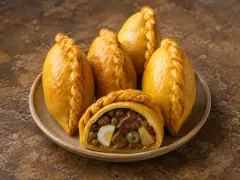 Salteñas BolivianasLa Paz eats these before ten in the morning and never with a knife and fork. The filling is a beef stew set solid with gelatin overnight, so it can be spooned into raw dough as a cold jelly; twelve minutes at 260 °C sets the crust before that jelly melts back into soup inside it.
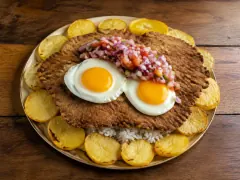 Silpancho CochabambinoQuechua for "thin, flattened meat", and it is not an exaggeration. A 150 g steak is buried in breadcrumbs and hammered until it spreads from 10 cm to 25 cm across and 2 mm thick, then flash-fried in ninety seconds over rice, sautéed potatoes, two fried eggs and raw locoto salsa.
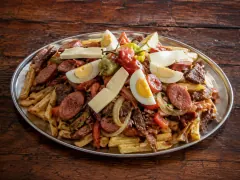 Pique MachoCochabamba's communal challenge platter, invented in the 1970s and named for the nerve it takes to finish one. Beef strips and sausage seared in a smoking pan with locoto rings, deglazed with cold lager, then poured over twice-cooked thick-cut fries so the crust drinks the spicy jus without collapsing.
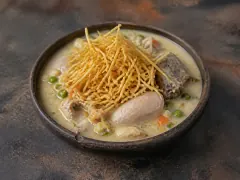 Sopa de ManíNot a peanut butter soup. Raw white peanuts are soaked, slipped out of their skins and blended with cold water into a milky suspension, then simmered in beef and chicken broth until their native starch granules swell and emulsify the whole pot into a pale, velvety potage. Crowned with a nest of fried potato needles.
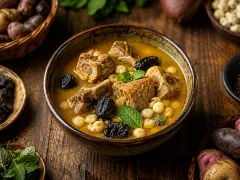 Fricasé PaceñoLa Paz market stalls start serving this at six in the morning. Pork ribs and belly simmered ninety minutes in a golden ají amarillo broth with garlic, cumin and a tied bundle of mint, alongside black chuño — potatoes freeze-dried on Altiplano nights centuries before anyone had a freezer.
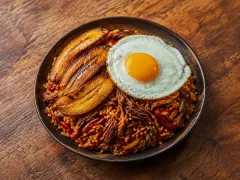 Majadito CruceñoOut in the Santa Cruz lowlands the highland potato gives way to cattle and rice. Charque — beef salted and dried under tropical sun — is boiled to draw the salt out, hammered until the fibres shred to cotton, then fried in achiote oil with rice that toasts in the red fat before it drinks the beef broth.
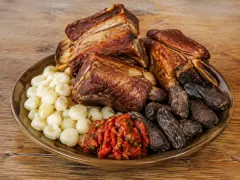 Chicharrón CochabambinoNot pork rinds. Two kilos of bone-in rib and belly go into a wide pan with water and chicha de jora and simmer uncovered until every drop of liquid has gone — at which point the pot temperature jumps from 100 °C to 175 °C and the pork starts frying in the tallow it just rendered.
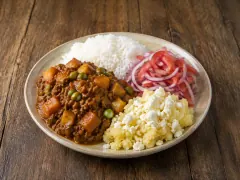 Saice ChapacoTarija's contribution, from the vineyards and river valleys of the Chapacos. Beef hand-diced rather than minced, simmered with sun-dried red ají cooked until its oil separates, sweet peas and potato — served against two starches at once, white rice and chuño phuti scrambled with egg and fresh cheese.
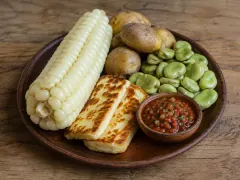 Plato PaceñoA plate with a date on it. When the 1781 siege of La Paz broke, the city had eaten every animal inside the walls and lived on what the mountain farms grew — giant-kernel choclo, potatoes in their skins, broad beans, and slabs of fresh cheese seared in foaming butter. It has stayed vegetarian ever since.
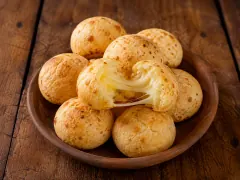 CuñapéFour o'clock coffee in Santa Cruz. Zero flour, zero gluten — cassava starch and dry salted cheese at 1.25 parts cheese to 1 part starch, bound with egg and butter. A thumbprint pressed into the base gives the steam somewhere to go, so the globes puff instead of splitting.
Bolivia cooks across an absurd vertical range — Amazonian lowland, the fertile valleys of Cochabamba, and Altiplano above 4,000 metres — and the altitude drove the technology. The oldest item in this kitchen is chuño: native potatoes left out through −15 °C nights, trodden by foot, and dried under high-altitude sun. The freeze-thaw ruptures the cell walls and polyphenol oxidase darkens the starch, producing something chewy and spongelike that keeps for years and drinks up broth in a way no fresh potato can. It turns up here rehydrated in fricasé paceño, scrambled with egg and cheese as chuño phuti beside saice chapaco, and piled next to chicharrón.
Three dishes on this list are really lessons in what starch does under heat. Sopa de maní uses raw, unroasted white peanuts — soaked, skinned, and blended with cold water into a colloidal suspension. Poured into simmering bone broth the native granules swell while the peanut proteins and fats emulsify with the meat collagen, and the pot turns opaque and velvety without a spoonful of flour. Cuñapé goes the other way: cassava starch is over 80% branched amylopectin and gelatinises at only 60–65 °C, so kneaded with dry cured cheese it hydrates without ever forming gluten. And majadito toasts its rice in achiote oil first, which par-cooks the surface starch so the grains take up charque broth while releasing just enough amylose for the creamy finish.
The two-day dishes are the ones worth planning around. Salteñas are an engineering problem: the filling is a beef stew set solid overnight with gelatin, so it can be spooned into raw dough as a cold jelly and sealed, then blasted at 260 °C for twelve minutes — long enough for the crust to set rigid, not long enough for the jelly to melt through the seams. Chicharrón cochabambino runs two thermodynamics through one pot with nothing added: ribs and belly simmer uncovered in water and chicha until every drop has gone, at which point the pot climbs from 100 °C to 175 °C and the pork confits in the tallow it just rendered.
The seasoning is consistent across all of it. Sun-dried ají amarillo and ají colorado bring fruity warmth and colour rather than raw burn, and both want several minutes in hot oil to strip their bitterness. Cumin is dry-toasted whole. The heat that does bite comes at the table, from llajwa — locoto, tomato and citrusy quirquiña ground on a granite batán — which is set beside almost every plate here, including plato paceño, the vegetarian harvest platter that La Paz has eaten since the siege of 1781.