South America · 10°30′N 66°55′W · Kitchen testing pending
Venezuela
The arepa, split open and filled a hundred ways
The ten
Ranked by what people actually name first
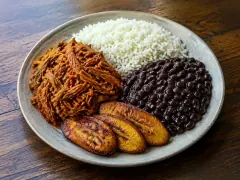 Pabellón CriolloThe national platter, and four cultural threads on one plate — flank steak braised at a sub-boil then pulled into threads, black beans sweetened with papelón and simmered until the liquor turns velvety, white rice, and plantains fried only when the skins have gone black.
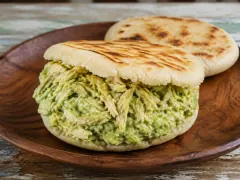 Arepa Reina PepiadaNamed in 1955 for Venezuela's first Miss World. Precooked white cornmeal hydrated and rested five minutes so it never cracks, seared on a smoking budare into a rigid shell, baked until it rings hollow, then split and packed with poached chicken folded through mashed Hass avocado.
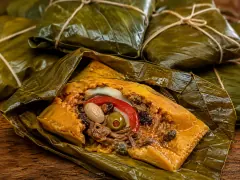 Hallacas NavideñasVenezuela's most complex undertaking, assembled every December at family hallacazos. Annatto steeped in warm lard to draw out its crimson, a three-meat guiso chilled overnight until it sets, and each parcel tied inside smoked plantain leaves that perfume the dough as it boils.
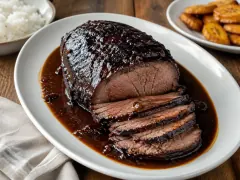 Asado Negro CaraqueñoEye of round dropped into papelón taken past caramel to a smoking black foam, which stains the beef pitch-black in minutes. Two and a half hours of braising in its wine marinade turn that burnt sugar into a glossy mahogany sauce that is bittersweet, not burnt.
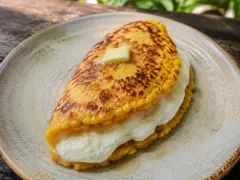 Cachapas con Queso de ManoNo flour at all — just tender sweet corn cut from the cob and pulsed coarse, so kernels stay visible in the batter. Griddled at a steady medium-low until the surface craters, then folded over a thick round of fresh cheese that softens into stretchy layers in about a minute.
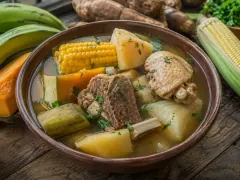 Sancocho de Res y GallinaWeekend cooking on riverbanks and in backyards — beef short ribs and stewing hen simmered until their collagen dissolves into amber broth, then tropical roots staged by starch density so yuca, ñame, ocumo and auyama each finish intact rather than dissolving into sludge.
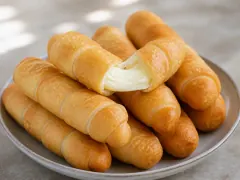 TequeñosNo Venezuelan celebration starts without them. Dough ribbons wound around cheese batons like a mummy, each turn overlapping by half so no steam escapes, then three minutes in clean 175 °C oil until the pastry blisters and the salty cheese inside pulls into strings.
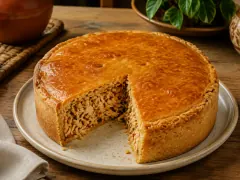 Polvorosa de PolloNamed for polvo, dust — a pâte sablée so rich in butter and lard that it shatters into sand under the fork. Inside, a colonial-era sweet-savoury chicken guiso with Moscatel, papelón, capers, olives, raisins and a whisper of clove, cooked down until nothing runs.
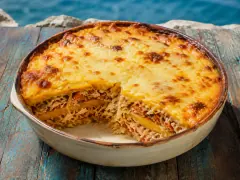 Pastel de ChuchoMargarita Island's stratified casserole of sea and land — poached stingray flaked and stewed with ají dulce, capers and papelón, layered between planks of fried black-ripe plantain, bound with an egg-and-cream custard and baked under a blanket of salty white cheese.
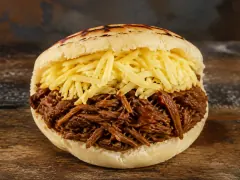 Arepa PelúaLa pelúa — the hairy one — is the midnight order at every Venezuelan arepera. Flank steak braised ninety minutes and pulled along the grain into long threads, packed steaming into a blistered corn cake and buried under coarse-grated yellow Gouda that melts at the base and stays sharp on top.
Venezuela cooks with maize the way France cooks with wheat. Precooked cornmeal — Harina P.A.N., invented in Maracay in 1960 — is already gelatinised in the bag, so it hydrates into a workable dough in five minutes instead of the overnight nixtamalisation its ancestors required. That single convenience is why the arepa is eaten three times a day here, and why two of the ten dishes on this list are arepas: the reina pepiada, named in 1955 for the country’s first Miss World, and the pelúa, the midnight order at every arepera. The same flour, differently handled, becomes the tender masa coloured with annatto that wraps a hallaca.
Sugar does structural work in this kitchen, not just sweetening. Papelón — raw cane pressed into blocks, molasses and minerals still in it — turns up across half these recipes, and in asado negro it is taken past caramel to a smoking black foam that stains a whole eye of round pitch-black in four minutes. That is pyrolysis rather than scorching: unrefined sucrose breaking down into maltol and furans, which then drive Maillard reactions against the beef’s amino acids. The same sugar appears in gentler doses in the sweet-savoury guisos of polvorosa de pollo and pastel de chucho, a colonial Spanish inheritance that pairs raisins, capers and olives with braised meat and fish.
Two dishes are built on staging rather than on any one technique. Sancocho de res y gallina puts short ribs and stewing hen into cold water together because their collagen needs the same ninety minutes, then adds the tropical roots in three waves ordered by starch density — plantain and yuca first, ñame and ocumo next, auyama last — so each finishes intact instead of dissolving. Hallacas are the extreme case: an entire family works an assembly line of stewed guiso, seasoned masa, plantain leaves and adornos, and the parcels are tied and boiled in batches, once a year, at Christmas.
The rest of the list is about contrast held on one plate. Cachapas take fresh corn pulsed coarse, never puréed, and fold the griddled cake over a round of queso de mano that softens without liquefying. Tequeños wind pastry ribbons around batons of firm salted white cheese with a half-width overlap, so nothing escapes into the fryer. And pabellón criollo — shredded beef, black beans, white rice and fried sweet plantain, plated in quarters that never touch — is the national platter precisely because it keeps its four elements distinct.