South America · 34°54′S 56°11′W · Kitchen testing pending
Uruguay
Argentina's neighbour, and its fiercest rival at the grill
The ten
Ranked by what people actually name first
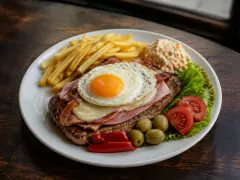 ChivitoThe national sandwich, invented in 1944 when a bar in Punta del Este had no goat. Tenderloin pounded to 4 mm and seared for a minute in foaming butter, stacked with ham, melted cheese, bacon and a runny egg, served in a toasted roll or over a mountain of twice-fried chips.
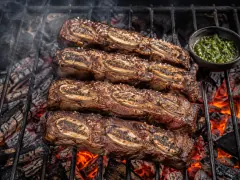 Asado de TiraCross-cut short ribs over hardwood embers, seasoned with nothing but coarse salt. They cook bone side down for most of the time so the bones carry the heat gently into the meat, then flip once onto the fat cap to crust, and come to the table under a chimichurri made the day before.
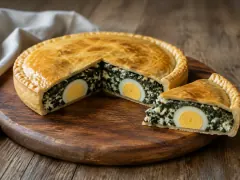 Torta PascualinaThe Genoese Easter pie that became an everyday Uruguayan staple. A lard-laminated crust around Swiss chard wrung bone-dry and mixed with ricotta and aged cheese, with six raw eggs cracked into wells in the filling so they set into whole yellow discs as it bakes.
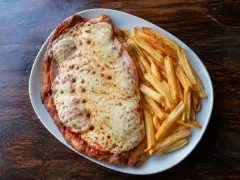 Milanesa a la NapolitanaA daily obsession on both banks of the Río de la Plata. Lean beef pounded to 4 mm, breaded with a mustard-stabilised egg wash, fried at 180 °C until it crackles, then topped with tomato sauce, ham and mozzarella and run under the grill until the cheese blisters, with hand-cut chips beside it.
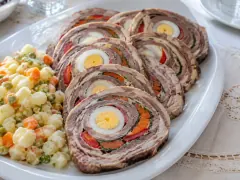 Matambre ArrolladoThe "hunger killer", the thin muscle over the ribs, tamed two ways. Rolled around whole eggs, carrot and red pepper, tied, poached for two hours and pressed cold so it slices into mosaic rounds, or laid flat and braised in milk until the milk reduces to sweet caramelised curds.
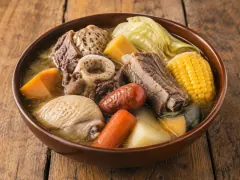 PucheroThe winter feast pot. Marrow-bone shanks, short ribs, a stewing hen, chorizos and a slab of bacon started in cold water and held at a sub-boil, with each vegetable entering at the moment its starch can take it. The broth is served first in mugs, then the meats and vegetables on platters.
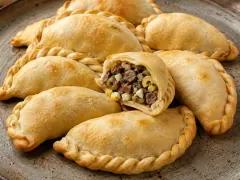 Empanadas CriollasStrictly savoury, no raisins. Beef cut by hand into 5 mm dice, cooked in tallow with a mountain of sweet onion, paprika and cumin, chilled overnight, then folded into a warm lard-and-brine dough, sealed with a rope repulgue and baked hot until the seams blister.
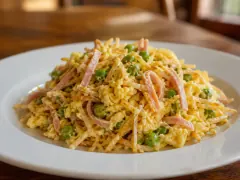 Revuelto GramajoThe Montevideo café scramble. Matchstick potatoes fried crisp, ham ribbons and peas warmed in butter, then eight eggs poured over, a count of three, and the pan pulled off the flame so the residual heat sets them into loose, glossy curds around the crunch.
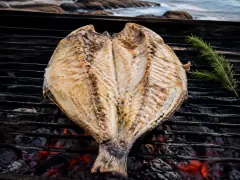 Corvina Negra a la ParrillaBlack drum split open down the backbone and grilled scale side down over hardwood embers, the scales left on as armour against the coals. For half an hour it is basted with warm salmuria, a brine of salt, garlic, oregano and lemon, using a rosemary sprig as the brush, then flipped for three minutes to sear.
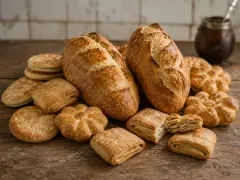 Pan de Grasa con BizcochosThe bread of the mate hour. A yeast dough enriched with melted beef tallow, then laminated with more softened tallow, which has a higher melting point than butter and no water, so it folds at room temperature. Half becomes two blistered loaves, half becomes flaky salted bizcochos.
Uruguay has four cattle for every person and eats more grass-fed beef per head than any country on earth. The cooking follows from that. Native hardwood, coronilla and espinillo, is burned down in an iron basket until the embers drop, and the embers are raked under a sloped grate. Cross-cut short ribs go on bone side down with nothing but coarse salt, and the bone carries the heat up into the meat while the fat renders. It is the same fire Argentina cooks over, and the two countries argue about who does it better.
Away from the grill, the cooking is Italian. Genoese immigrants brought the Easter pie that became pascualina, its chard and ricotta filling studded with whole eggs cracked raw into wells before the lid goes on. Milanesa is the Milanese cutlet, pounded thin and breaded, then buried under tomato sauce, ham and mozzarella in a 1940s accident that both sides of the river now claim. Even the café scramble, revuelto gramajo, is a study in egg coagulation: the pan comes off the flame the moment the eggs go in.
The fat that makes Uruguayan baking Uruguayan is beef, not butter. Grasa de pella, the suet from around the kidneys, has a higher melting point than butter and no water in it, so it can be laminated into a yeast dough at room temperature without tearing. That is what gives pan de grasa and the morning bizcochos their shattering crust, and why they taste faintly of roast beef.
The chivito, a stack of pounded tenderloin, ham, bacon, melted cheese, a fried egg and pickled peppers, was invented in 1944 when a customer at a Punta del Este bar asked for baby goat and there was none in the kitchen. It became the national sandwich anyway. And when the winter wind comes off the Atlantic, the answer is puchero, a staged boil of marrow bones, short ribs, hen and chorizo where each vegetable enters the pot at the moment its starch can take it.