North America · 19°26′N 99°08′W · Kitchen testing pending
Mexico
Corn, chilli, and the deepest bench in the hemisphere
The ten
Ranked by what people actually name first
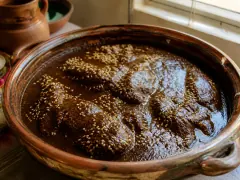 Mole PoblanoMulato, ancho and pasilla toasted and blended with nuts, seeds and fruit, then fried hard before any stock goes near it. Chocolate is a late seasoning, not the headline.
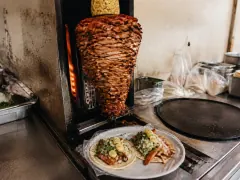 Tacos al PastorPork in a guajillo-achiote adobo, cut thin and cooked until the edges char against pineapple sugar. The trompo is the ideal; the skillet is a labelled substitute, not a quiet equivalent.
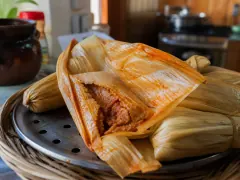 Tamales de PuercoMasa whipped with lard until a lump floats in cold water, pork cooked down in guajillo-ancho chile rojo, and a long steam. When they are right, the tamal pulls clean from the husk.
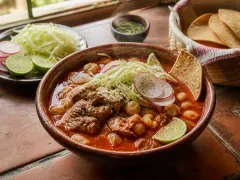 Pozole RojoNixtamalised hominy and pork under a guajillo-ancho liquor that is toasted, soaked, blended, strained and fried before it ever meets the caldo. The garnish table is not decoration — it is half the dish.
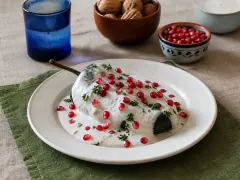 Chiles en NogadaPuebla's Independence-season plate — roasted poblano, fruit-studded pork-and-beef picadillo, and a cold peeled-walnut cream freckled with pomegranate and parsley. The nogada is served cold on purpose, and the egg bath is a labelled regional fork, not the identity.
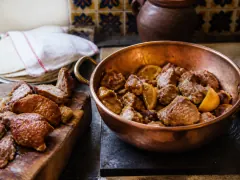 CarnitasMichoacán pork cooked gently in its own lard until the collagen gives, then driven hot so the edges crisp while the inside stays spoon-tender. Orange is a perfume in the fat, not a Cuban mojo bath — and the final dry heat is the step a slow cooker cannot do for you.
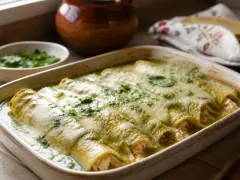 Enchiladas VerdesCharred tomatillo salsa verde, corn tortillas given a ten-second pass through hot oil so they roll without dissolving, poached shredded chicken, then crema, white onion and queso fresco over the top. Not suizas, not red — green from start to finish.
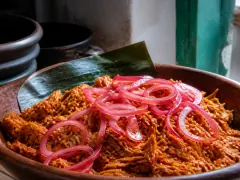 Cochinita PibilYucatán pork stained brick-red by achiote and sour orange, wrapped in banana leaf so it steams in its own marinade until it pulls into long juicy strands. Pit-style logic in a home oven — with pickled red onions on the table before anyone asks.
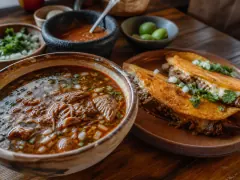 BirriaA chile braise that gives two plates from one pot — shredded meat and a clear red consomé. Guajillo, ancho, vinegar, oregano and a light clove note. Goat is the Jalisco classic; beef chuck is the home reality, labelled as such.
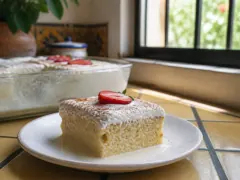 Pastel de Tres LechesA pale sponge that only becomes itself after it drinks a cold bath of evaporated milk, condensed milk and whole milk, then sits until the crumb is heavy and cold. The soak is the method, not a garnish — overpour and you get soup, underpour and you get dry cake with a wet top.
Almost every dish on this list starts by doing something to a dried chilli, and what you do to it is the whole argument. Toast it, soak it, blend it, strain it, then fry the purée in fat before it ever meets the liquid — that sequence builds mole poblano, pozole rojo and birria alike, and skipping the last step is the difference between a sauce that tastes blended and one that tastes finished.
The ten are deliberately not all from one map. Puebla sends mole and chiles en nogada, the second tied so tightly to the late-summer walnut and pomegranate harvest that it is barely worth cooking out of season. Michoacán sends carnitas, pork cooked gently in its own lard and then driven hot, because the crisp is the point. Yucatán sends cochinita pibil — achiote, sour orange, banana leaf, and nothing to do with Cuban lechón. Jalisco sends birria. Central Mexico sends tamales and the trompo-turned pastor.
Maize does the other half of the work, and it rarely looks the same twice. Nixtamalised and ground wet into masa for tamales. Nixtamalised and left whole as hominy in pozole. Pressed into tortillas that get a ten-second pass through hot oil so they survive a bath of salsa verde. Learn what nixtamalisation is for and half this list stops being mysterious.
One dessert closes it, and it is the honest one: tres leches, a plain sponge whose entire identity is the cold milk it drinks overnight.