Tamales de Puerco
Masa whipped with lard until a lump floats in cold water, pork cooked down in guajillo-ancho chile rojo, and a long steam. When they are right, the tamal pulls clean from the husk.
- Prep
- 2 hr 15 min
- Cook
- 3 hr
- Serves
- About 28–32 medium tamales
- Difficulty
- Hard
Researched · Kitchen testing pending
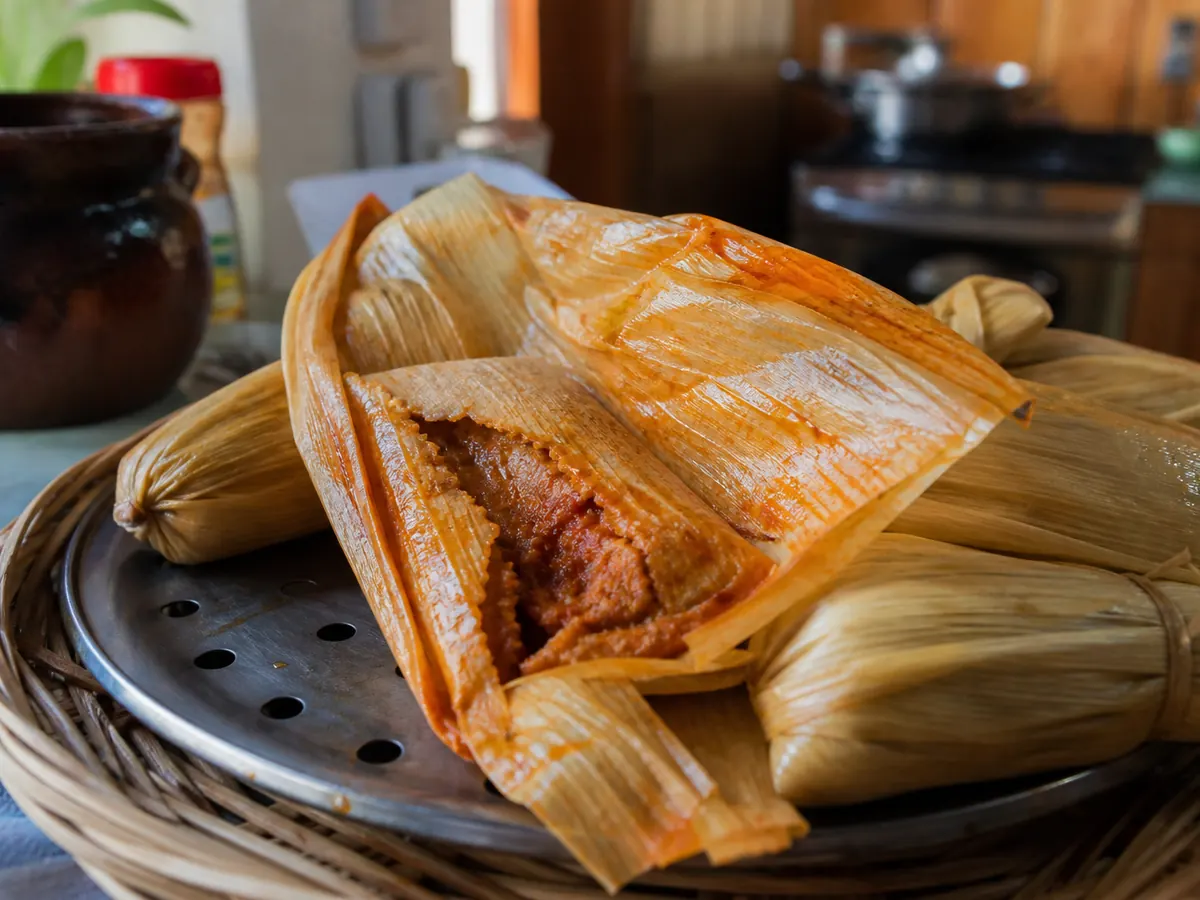
Pork tamales fail when the masa is dense — too little fat beaten in, or not enough air. Central Mexican tamales de puerco en chile rojo use masa whipped with lard until a lump floats in cold water, corn husks, and a pork filling cooked in guajillo-ancho sauce. When they are right, the tamal pulls clean from the husk.
What follows is the home version, built for a tray that pulls clean from the husk, with masa that tastes like corn and lard rather than paste. It uses masa harina labelled for tortillas and tamales when fresh nixtamal masa is unavailable, and it calls out the baking-powder departure for lighter masa if you do not want to whip lard alone for twenty minutes.
A good pork tamal smells like corn steamed with chile and fat. When the husk peels back and the masa stays behind in one soft cylinder, you are done arguing with technique. Make a full batch — half batches still take most of the time.
Corn husks
- 40–45 husks40–45 husksDried corn husks (hojas de maíz)about a 250–300 g / 9–10 oz package; extras cover tears and double wraps
Pork and chile rojo filling
- 1.4 kg3 lbBoneless pork shouldercut into 5 cm / 2 in chunks
- 1 medium1 mediumWhite onion, halvedabout 200 g / 7 oz
- 6 cloves6 clovesGarlic, smashed
- 2 leaves2 leavesBay leaves
- 10 g2 tspKosher saltplus more to taste
- 2–2.5 L8–10 cupsWater, to cover by 3 cm / 1¼ in
- 6 chiles6 chilesDried guajillo chilesabout 45 g / 1½ oz; stems and seeds removed
- 3 chiles3 chilesDried ancho chilesabout 40 g / 1½ oz; stems and seeds removed
- 2 peppers2 peppersChipotle peppers in adobooptional, for deeper smoke; about 20 g / ¾ oz
- ½ tsp½ tspDried Mexican oregano
- ¼ tsp¼ tspGround cumin
- 15 ml1 TbspApple cider or white vinegar
- Black pepper, freshly ground
Masa
- 500 gabout 4 cupsMasa harina labelled for tortillas or tamalesnot plain cornmeal, and not polenta
- 500–600 ml2–2½ cupsWarm pork broth from the simmer, strainedheld at about 50–55 °C / 120–130 °F
- 250 g1 cup + 1 TbspFresh pork lard (manteca), at cool room temperaturesoft, not liquid
- 10 g2 tspKosher salt
- 8 g2 tspBaking powdera departure for lighter masa; traditional float-test batches can omit it if you whip long enough
On the two unit systems
Metric and US cups both appear so you can scale without a conversion spiral mid-spread.
Passive time, counted separately
The husk soak is at least 30 minutes, or overnight in cool water if you start the night before. It is hands-off and sits outside the active and cooking times quoted above.
Equipment
- Wide steamer pot with a rack that sits above 3–4 cm / 1½ in of water
- Kitchen scale
- Stand mixer, or a strong arm and a large bowl
- Blender
- Tongs
- Kitchen twine, optional, for messy folders
Method
Soak the husks30 min, or overnight
Pull the husks apart and dunk them in a large bowl or a clean sink of warm water. Weight them with a plate so they stay submerged. Soak at least 30 minutes until pliable and matte-green, not brittle. Overnight in cool water is fine if you start the night before; drain and pat just before spreading so water does not thin the masa.
Keep the best wide husks for wrapping, and tear thin ones into strips for ties if you like tied parcels.
On the soak: a stiff husk cracks when you fold, and leaks filling into the steamer. Soft husks behave like damp paper — cooperative, not soggy.
Separate husks, submerge in warm water and weigh down for at least 30 minutes until pliable, or soak overnight in cool water. Drain and pat dry just before spreading. Reserve wide husks for wrapping and thin strips for optional ties.
Simmer the pork1 hr 30 min – 1 hr 45 min
Put the pork chunks, onion halves, smashed garlic, bay leaves and 10 g (2 tsp) salt in a heavy pot. Cover with water by about 3 cm (1¼ in). Bring to a boil over medium-high, then drop to a steady simmer — small bubbles, not a rolling boil, around 90–95 °C / 195–205 °F. Skim the foam in the first 10 minutes.
Cook until a fork slides through a chunk with little resistance, 90–105 minutes depending on chunk size. The meat should shred with tongs but still hold some structure; dry, stringy pork was overcooked or boiled hard.
Lift the pork to a bowl. Strain the broth through a fine mesh and discard the solids. Measure out 500–600 ml (2–2½ cups) of broth for the masa and keep it warm. Reserve the rest for thinning the chile sauce and for steaming, or for soup later. Taste the broth — it should taste of pork and salt, clean, not muddy. Shred the pork with two forks into bite-size strands while it is still warm.
Why the gentle simmer: aggressive boiling emulsifies fat into a cloudy broth and tightens the muscle fibres. Gentle heat keeps the broth clear for the masa and the meat juicy for the chile bath.
Cover pork, onion, garlic, bay and 10 g (2 tsp) salt with water by 3 cm (1¼ in). Bring to boiling, then simmer at 90–95 °C / 195–205 °F, skimming for the first 10 minutes, until fork-tender, 90–105 minutes. Remove and shred warm. Strain broth; reserve 500–600 ml (2–2½ cups) for masa and the rest for sauce or steaming.
Build the chile rojo25 min
While the pork cooks, or right after, toast the stemmed and seeded guajillos and anchos in a dry skillet over medium heat 20–30 seconds per side until they smell fruity and deepen a shade. Do not blacken them; scorched chile tastes bitter and will stain the whole batch. Cover the toasted chiles with just-boiled water and soak 15–20 minutes until soft and leathery. Drain, reserving a splash of the soaking water.
Blend the softened chiles with 2 of the garlic cloves from the broth pot if you still have them, or 2 fresh, plus the oregano, cumin, vinegar, the chipotles if using, 250 ml (1 cup) warm pork broth and a pinch of salt until completely smooth, 60–90 seconds. Strain through a medium mesh into a saucepan, pressing with a spoon; discard the tough skins and seeds. You want a thick, pourable purée the colour of deep brick red.
Warm 15 ml (1 Tbsp) lard, or a spoon of fat skimmed from the broth, in a wide skillet over medium heat. Pour in the strained chile; it should hiss and darken slightly. Frying the sauce for 4–6 minutes cooks out the raw chile flavour and concentrates sweetness. Stir often.
Add the shredded pork and enough broth to make a moist, spoonable filling — not soup, not dry shreds. Simmer 8–10 minutes so the meat drinks the sauce. Taste for salt, a little acid from the vinegar, and heat that builds slowly. Cool to warm before filling; hot filling melts masa and causes leaks.
Sensory check: proper chile rojo smells like dried fruit and smoke, not dusty cupboard. On the tongue it should coat without pastiness.
Toast seeded chiles over medium 20–30 seconds per side without blackening. Soak in just-boiled water 15–20 minutes; drain, reserving a splash. Blend 60–90 seconds with 2 cooked or fresh garlic cloves, oregano, cumin, vinegar, optional chipotles, 250 ml (1 cup) warm broth and salt; strain. Fry in 15 ml (1 Tbsp) lard over medium 4–6 minutes, stirring. Add pork and broth for a moist, spoonable filling; simmer 8–10 minutes, season and cool to warm.
Whip the masa15–20 min
In a stand mixer with the paddle, or a wide bowl and a wooden spoon, beat the lard alone on medium-high until it looks fluffy and pale, 3–5 minutes. It should hold soft peaks when you lift the paddle — air is the point.
Mix the masa harina with the salt, and the baking powder if using. Add the dry mix to the lard in three additions, alternating with warm broth, scraping the bowl. Aim for a soft, spreadable dough like thick hummus or loose cookie dough — not stiff clay, not batter. Total liquid varies with masa brand and humidity; start with 500 ml (2 cups) and add by the tablespoon.
The float test, the traditional cue: drop ½ teaspoon of masa into a cup of cold water. If it floats, air is trapped and steam will lighten the tamal. If it sinks, beat 2–3 minutes more and retest. Baking powder is the honest departure when arms or time run short; it helps lift but does not replace fat aeration entirely — still whip the lard first.
Fresh nixtamal masa from a tortillería, if you can get it, usually needs less liquid and more salt tasting; masa harina needs full hydration and a short rest. Read your bag: masa harina for tortillas or tamales works, while "instant corn masa mix" of unknown purpose often fails. Do not use polenta or cornmeal — they are not nixtamalised, and will taste raw and gritty.
Rest the finished masa 10 minutes covered with a damp cloth. It should smell cleanly of corn and pork fat.
Beat soft, non-liquid lard 3–5 minutes until fluffy. Mix masa harina, salt and optional baking powder; add in three batches alternating with broth at 50–55 °C / 120–130 °F. Start with 500 ml (2 cups), adding tablespoons until spreadable. Drop ½ teaspoon dough into cold water; if it sinks, beat another 2–3 minutes and retest. Use nixtamalized masa, not cornmeal or polenta. Rest 10 minutes under a damp cloth.
Spread, fill, fold40–50 min
Set up a board: drained husks, masa, filling, a spoon, and a damp towel over the masa so it does not crust.
Take one husk, smooth side up, wide end toward you — or away; consistency matters more than dogma. Spread 2–2½ tablespoons (about 40–50 g) of masa in a thin rectangle on the wide half, leaving a 2–3 cm (¾–1¼ in) border at the bottom and sides, and a longer empty strip at the pointed top for folding. Masa should be thin enough that you see a hint of husk shadow; thick walls stay dense.
Spoon 1½–2 tablespoons of pork filling down the centre of the masa. Fold one long side over the filling, then the other, so masa meets masa and seals the seam. Fold the pointed end up toward the open top. Stand the tamal open-end up in the steamer, or lay them slightly tilted. Tie with a husk strip if the fold will not hold. Leave a few husks aside to line and cover the top of the stack.
On the spread: uneven thick masa cooks into a doughy belt on one side and a tear on the other. Thin, even spread plus a sealed seam is why the finished tamal pulls clean from the husk.
Keep masa covered with a damp towel. Spread 2–2½ Tbsp (40–50 g) thinly on a husk’s smooth wide half, leaving 2–3 cm (¾–1¼ in) side and bottom borders and a longer bare tip. Add 1½–2 Tbsp filling centrally. Fold long sides to seal masa together, then fold the tip up. Tie if needed; reserve husks for lining and covering.
Steam1 hr 15 min – 1 hr 30 min
Pour 3–4 cm (1½ in) of water into the steamer base; the water must not touch the tamales. Line the rack with a few husks. Stand the tamales upright, open end up, packed snug but not crushed so steam can move between them. Cover with more husks and the lid. Bring to a boil, then maintain a lively steam — you should hear it, and the lid should feel hot. Start timing when the steam is steady.
Steam 75–90 minutes. Check the water at 40 minutes and add boiling water down the side if it is low — never cold water, which collapses the steam and shocks the masa. At 75 minutes, pull one tamal and cool it 2–3 minutes. Unwrap: the masa should release cleanly from the husk in one piece, and feel set and tender, not like wet paste. If it sticks in patches, steam 10–15 minutes more and retest.
Why the pull-clean test: sticky masa is undercooked starch still glued to cellulose. Extra steam gelatinises and sets it. Oversteamed tamales dry at the edges; understeamed ones paste and cling.
Turn off the heat and rest the pot, lid on, 10–15 minutes. They firm as they cool slightly, and are easier to unwrap without tearing the surface.
Add 3–4 cm (1½ in) water below the rack, never touching tamales. Line with husks; stand tamales open-end-up without crushing, cover with husks and lid. Steam steadily 75–90 minutes; check water at 40 minutes and top up with boiling water down the side. At 75 minutes, cool one tamal 2–3 minutes and unwrap: masa must release cleanly. If sticky, steam another 10–15 minutes and retest. Rest off heat, covered, 10–15 minutes.
Storing it
Cool completely. Refrigerate in an airtight container up to 4 days. Freeze wrapped tamales, still in their husks, in freezer bags up to 3 months, pressing out the air. Reheat from the fridge by steaming 15–20 minutes, or wrap in a damp paper towel and microwave 1–2 minutes, checking halfway. From frozen, steam 25–35 minutes without thawing. Do not refreeze thawed tamales. Leftover filling keeps 3 days refrigerated and makes excellent tacos or tortas.
Troubleshooting
- Masa sticks to the husk.
Understeamed, or the husks went on wet. Steam longer, and pat the husks dry before spreading.
- Dense, heavy tamal.
Too little air in the fat, or the masa was dry. Whip the lard longer, use the float test, and add broth by the spoonful.
- Filling leaks.
Overfilled, or the filling went in hot. Cool the filling, use less, and fold a better seam.
- Bland masa.
Undersalted, or the broth was weak. Salt the masa aggressively, and use pork broth rather than water.
- Bitter chile.
The dried chiles burned. Toast gently, and discard any blackened pieces.
- Dry pork.
A hard boil, or overcooking. Simmer gently and pull the pork when it shreds.
- Husks tear.
Not soaked enough. Soak longer, or use a double wrap.
Substitutions
Traditional path: fresh nixtamal masa from a mill, pure lard whipped to float without chemical leavener, pork from a long caldo, chile guajillo-ancho fried in fat, corn husks, and a long steam in a deep pot. No shortcuts on the float test.
Departures for a home kitchen
Masa harina when fresh masa is unavailable, labelled clearly above. Baking powder as optional lift insurance. Chipotle in adobo for a mild smoke note not every CDMX fonda uses. Banana leaves do not appear here; that is a different map.
Neither path is less Mexican
One is closer to market practice; the other gets dinner on a Tuesday steamer without a trip to the mill.
What to serve it with
Serve hot, still in the husk.
- Extra chile rojo on the side, if you held some back
- Pickled jalapeños, or curtido-style onions
- A squeeze of lime
- Coffee or atole, for breakfast batches
- Beer or agua fresca, for evening ones
A dozen disappear faster than you expect.
Questions
Can I use chicken instead of pork?
Yes. Use bone-in thighs, simmer until shreddable, and keep the broth. The timing shortens and the flavour shifts, but it is still chile rojo, still corn husks.
Is vegetable shortening okay?
It will float if whipped, but the flavour goes flat. Lard is the point of a pork tamal. If you must, blend a little butter in for aroma, knowing that is a further departure.
Why masa harina and not cornmeal?
Nixtamalisation — the alkaline cook and peel — changes flavour, nutrition and dough behaviour. Cornmeal has not been through that. It tastes raw and will not bind the same way under steam.
My float test never floats.
Beat longer, confirm the lard was not melted to oil, and check you are not under-aerating a cold, hard fat. Slightly cool room-temperature lard whips best. Add baking powder as backup, and still whip.
Can I assemble a day ahead?
Yes. Fill, fold, refrigerate covered, then steam from cold, adding 10–15 minutes to the steam time. Freeze uncooked only if you accept a slightly wetter texture; freezing after cooking gives a better result.
How do I know the steamer has enough water?
Listen. Silence means a dry pot and scorched bottoms. A soft roar is right. Keep a kettle of boiling water ready.
Are these spicy?
Guajillo and ancho are more fruit than fire. The heat is moderate unless you add chile de árbol or extra chipotle. Adjust for your table.
What about Oaxacan banana-leaf mole tamales?
Different leaf, different sauce architecture, different fold. Seek them as a cousin; do not substitute leaves into this recipe and expect the same cook time or flavour.