Birria
A chile braise that gives two plates from one pot — shredded meat and a clear red consomé. Guajillo, ancho, vinegar, oregano and a light clove note. Goat is the Jalisco classic; beef chuck is the home reality, labelled as such.
- Prep
- 1 hr 15 min
- Cook
- 3 hr 15 min
- Serves
- 8 generous bowls, or about 16 tacos
- Difficulty
- Medium
Researched · Kitchen testing pending
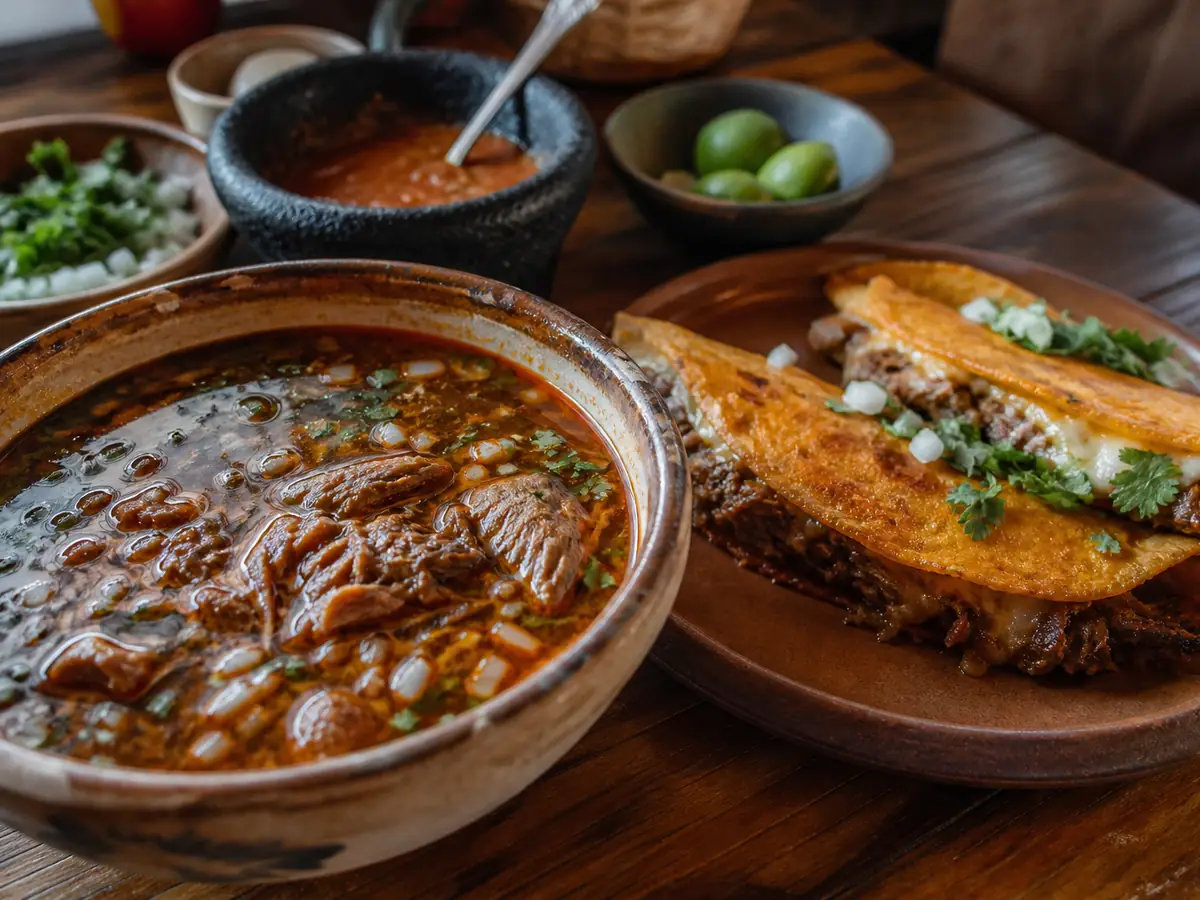
Birria is a chile-braised meat that gives you two plates from one pot: shredded meat and a clear, red consomé. Guajillo steam, oregano, a light clove note — the kitchen should smell like a Jalisco market stall even if you are cooking beef instead of the traditional goat. Goat is the classic; beef is the home reality written here and labelled as such.
This recipe is written the way the pot actually runs: timers on the stove, a thermometer within reach, and notes about what the chile paste should look like when it is ready. Measurements are metric with US in parentheses. Times are real. Temperatures matter because dried chiles burn and meat stalls if the liquid is too hot.
Use goat shoulder when it is available; beef offers a more accessible home route while preserving the same chile-braise structure, and it puts the same ritual within reach of a Tuesday that starts after work. Either way, the dried chiles, the long gentle braise, and a bowl of consomé with onion, cilantro and lime are the heart of it — quesabirria can wait its turn on the side.
Meat — traditional goat path
- 1.8 kg4 lbBone-in goat shoulder or leg, cut into large chunksexcess surface fat trimmed, connective tissue left on
Meat — home and restaurant beef path
- 1.8 kg4 lbBeef chuck roast, cut into 7–8 cm / 3 in chunksor a mix of chuck and short rib for deeper body
- Either way, salt the meat lightly 30 minutes before you sear. Goat tastes cleaner and a little more mineral; beef tastes richer and more familiar on a weeknight table. Label your choice when you serve so guests know what they are eating
Dried chile paste
- 6 chiles6 chilesGuajillo chiles, stems and seeds removed
- 3 chiles3 chilesAncho chiles, stems and seeds removed
- 1–2 chiles1–2 chilesPasilla chiles, stems and seeds removedoptional, for a raisin-dark note
- 1–3 chiles1–3 chilesChiles de árboloptional, for heat — start with one if you are unsure
- 480 ml2 cupsJust-boiled water, for soaking
- 4 cloves4 clovesGarlic, peeled
- 1 small1 smallWhite onion, roughly choppedabout 150 g / 5 oz
- 2 Tbsp2 TbspApple cider vinegar or white vinegar
- 1 tsp1 tspDried Mexican oregano
- 1 tsp1 tspGround cumin
- ¼ tsp¼ tspGround clovesa light touch — too much tastes medicinal
- 1 small stick1 small stickCinnamon, about 5 cm / 2 inor ¼ tsp ground cinnamon
- 1 tsp1 tspKosher saltplus more to taste
- Freshly ground black pepper
Braise liquid and aromatics
- 2 Tbsp2 TbspNeutral oil or lard
- 1.2 L5 cupsBeef or goat stockor water if your stock is weak — you will reduce and season later
- 2 leaves2 leavesBay leaves
- 1 tsp1 tspDried Mexican oregano, added whole to the pot
- Salt to taste at the end
To serve (bowl or tacos)
- Warm corn tortillas
- Finely diced white onion
- Chopped cilantro
- Lime wedges
- Optional sliced radish, and a spoon of the strained chile oil from the top of the consomé
Quesabirria (labelled modern departure)
- The same shredded meat and consomé
- Oaxaca cheese or mozzarella, shredded
- Extra fat skimmed from the consomé, for dipping the tortillas
- Not the lead identity of this recipe — use it for leftovers or a party tray
Choosing your meat path
Goat is the classic; beef is the home reality written here and labelled as such. Either way, salt lightly 30 minutes before the sear, and tell people which one is in the pot.
Passive time, counted separately
The light salting sits for about 30 minutes before searing, and the meat rests 10 minutes off the heat before shredding. Neither is active work, and both sit outside the times quoted above; the whole session runs roughly 4½ to 5 hours.
Why vinegar, in a small amount
It brightens dried chile and helps the paste taste finished rather than muddy. Apple cider or white vinegar both work. Avoid balsamic here.
Equipment
- Dutch oven or heavy pot with a lid
- Blender
- Tongs
- Fine-mesh strainer
- Thermometer, helpful but not mandatory
- Cutting board and a sharp knife
Method
Toast and soak the chiles12–15 min
Set a dry skillet over medium heat. When a drop of water skitters, add the opened guajillos, anchos and any pasilla or árbol. Toast 20–40 seconds per side until they smell fruity and warm — like dried fruit and faint smoke — not bitter. If they blacken or smoke hard they will turn the paste acrid; pull them early and use a fresh chile next time.
Transfer to a bowl, cover with the just-boiled water, and weigh them down with a small plate. Soak 15–20 minutes until soft and pliable, deep red-brown, and smelling sweet-spicy.
Why soak after toasting: heat wakes the oils, and water rehydrates the flesh so the blender can make a smooth paste instead of chile grit.
Salt the meat lightly 30 minutes before searing. Toast opened chiles in a dry skillet over medium heat, 20–40 seconds per side until fragrant, without blackening. Cover with just-boiled water, weigh down and soak 15–20 minutes until pliable.
Blend the paste5 min
Lift the chiles from the soaking liquid, saving about 240 ml (1 cup) of that liquid. In a blender, combine the chiles, garlic, chopped onion, vinegar, oregano, cumin, cloves, cinnamon, salt and pepper, with enough soaking liquid to move the blades.
Blend until the paste looks silky and coats a spoon, with no large flecks. If your blender stalls, add liquid a tablespoon at a time.
Taste a tiny bit: it should be tangy from the vinegar, warm from the spice, and deep from the chile, not raw onion-sharp. If it tastes flat, add a pinch of salt or a few more drops of vinegar.
Reserve 240 ml (1 cup) soaking liquid. Blend chiles with garlic, onion, vinegar, oregano, cumin, cloves, cinnamon, salt and pepper until silky, adding liquid a tablespoon at a time as needed. Adjust salt or vinegar.
Sear the meat15–20 min
Pat the meat dry. Heat the oil or lard in the Dutch oven over medium-high until it shimmers, about 180–190 °C / 355–375 °F if you check with an infrared thermometer — hot enough that a scrap of meat sizzles on contact.
Brown the chunks in batches, 3–4 minutes per side, until you get a mahogany crust, not grey steam. Crowding drops the temperature and steams the meat, so leave space. Transfer the browned pieces to a plate. The fond on the bottom is flavour — do not scrub it away.
Why sear: Maillard browning builds the base of the consomé. Skipping it leaves a thinner, less roasted taste even if the chile paste is perfect.
Pat meat dry. Heat oil or lard over medium-high to shimmering, about 180–190 °C / 355–375 °F. Brown in uncrowded batches, 3–4 minutes per side until mahogany. Transfer to a plate, retaining browned bits in the pot.
Bloom the paste and build the pot8–10 min
Lower the heat to medium. Add the chile paste to the pot and cook, stirring, 4–6 minutes. You want the paste to darken slightly, thicken, and stop smelling raw. It will spit; a splatter screen helps. When a spoon dragged through leaves a brief trail and the kitchen smells like toasted chile and garlic, you are there.
Pour in the stock or water, scraping up every browned bit. Return the meat and any juices, and add the bay leaves and the extra teaspoon of oregano. The liquid should come about three-quarters of the way up the meat — not fully drowning it, or the consomé will stay thin.
Bring it just to a boil, then immediately drop to a gentle simmer. Target a liquid temperature around 90–95 °C / 195–205 °F: small bubbles at the edges, not a rolling boil. A hard boil toughens connective tissue before it melts and clouds the broth.
Over medium heat, stir chile paste 4–6 minutes until darker and thickened; beware splattering. Add stock or water, scrape the bottom, return meat and juices, and add bay and 1 tsp oregano. Liquid should reach three-quarters up the meat. Bring just to boiling, then simmer at 90–95 °C / 195–205 °F.
Long braise until it shreds3 hr – 3 hr 30 min
Cover, leaving the lid slightly ajar if your simmer runs hot. Check every 45 minutes: skim the foam early, stir once so nothing sticks, and add a splash of hot water only if the pot looks dry.
At 2½ hours, test a piece — goat and chuck both need collagen time. Done means a fork twists and the meat starts to pull into strands with little resistance. The internal temperature of large chunks will sit past 90 °C / 195 °F, but the shred test is more useful. If it still fights, give it another 30–45 minutes. Rushing here is how you get chewy birria.
Sensory check: the kitchen should smell of deep red chile and slow meat, not sharp vinegar — that cooks off — and not burnt spice. The surface of the consomé will show a thin orange-red oil. That is good chile fat, not a problem.
Cover, slightly ajar if needed. Check every 45 minutes, skimming early, stirring and adding hot water only if drying. Test at 2½ hours: meat should shred easily, typically above 90 °C / 195 °F internally. If resistant, cook another 30–45 minutes.
Rest, shred, strain20–25 min
Turn off the heat. Lift the meat to a board and rest it 10 minutes so the juices redistribute.
Strain the cooking liquid through a fine mesh into a clean pot or bowl, pressing on the solids. Discard the bay and the spent chile bits. Skim excess fat if you want a cleaner bowl, but save a cup of the red fat if you plan quesabirria later.
Taste the consomé: it should be savoury, chile-forward, lightly acidic, and salted enough that a spoonful alone tastes complete. Adjust with salt, a pinch of oregano, or a few drops of vinegar if it feels dull.
Shred the meat with two forks, discarding bones and large gristle. Moisten the shreds with a ladle of consomé so they stay glossy, and hold them warm on low heat.
Remove meat and rest 10 minutes. Strain broth, pressing solids; discard bay and chile remnants. Skim excess fat, reserving a cup for quesabirria if wanted. Season consomé with salt, oregano or vinegar. Shred meat, discard bones and gristle, moisten with a ladle of broth and keep warm over low heat.
Serve as a bowl or a dipped taco
Bowl, the classic lead: ladle the shredded meat into deep bowls, cover with hot consomé, top with onion and cilantro, and squeeze lime over. Eat with tortillas on the side for scooping.
Tacos, dipped: warm the tortillas on a dry comal until soft and spotted. Fill with meat, onion and cilantro. Dip one edge — or the whole taco if you like mess — into the consomé. Lime over the top. This is still birria; the consomé is the point.
On the table: set a pot of consomé in the centre so people can add more, with bowls of diced onion, cilantro, limes and warm tortillas. If someone asks for salsa, a simple roasted tomato-árbol salsa works, but the consomé already carries chile. Eat soon after shredding; the meat drinks the broth and softens further as it sits.
Serve meat with hot consomé, onion, cilantro, lime and warm tortillas. For tacos, warm tortillas on a dry comal until soft and spotted, fill with meat, onion and cilantro, then dip in consomé. Serve promptly with extra broth.
Quesabirria — labelled modern departure
Delicious, popular, and not the recipe's identity. Label it when you serve it so the traditional bowl keeps its name. It is best made from chilled leftover meat and reserved fat.
Dip, griddle, fold
Dip a tortilla in the reserved chile fat and lay it on a hot skillet. Add cheese and meat, fold, and crisp both sides until the cheese stretches.
Serve with a cup of consomé for dunking.
Dip a tortilla in reserved chile fat and place on a hot skillet. Add cheese and meat, fold and crisp both sides until cheese stretches. Serve with a cup of consomé.
Storing it
Cool the meat and consomé separately within 2 hours. Refrigerate in airtight containers up to 4 days. Fat will rise and seal the consomé, which is useful — leave it until reheating. Freeze the shredded meat in consomé up to 3 months and thaw overnight in the fridge. Reheat gently to a simmer, not a boil, so the shreds stay tender. Tortillas and garnishes are always fresh at service. Quesabirria assembly is best from chilled leftover meat and reserved fat.
Troubleshooting
- The consomé tastes bitter.
The chiles were scorched when toasting, or seeds and veins were left in heavily. Next time toast shorter and seed thoroughly. For this batch, a pinch of sugar and a splash of vinegar can soften the bitterness — do not drown it.
- The meat is tough after 3 hours.
The heat was too high, a rolling boil, or the pieces were very lean. Keep simmering gently another 45–60 minutes with a bit more liquid. Collagen needs time under a soft simmer, not a hard boil.
- The paste is gritty.
Blend longer with more soaking liquid, or strain the paste before blooming. A high-speed blender helps; a cheap one needs patience.
- Too spicy.
You used several chiles de árbol. Dilute with more stock, add a peeled potato chunk for 20 minutes then discard it, and serve with extra lime and onion. Heat fades a little overnight.
- Too mild.
Bloom a spoon of chile paste with one toasted árbol, then stir it into the pot at the end. Or pass árbol salsa at the table.
- The consomé is thin and pale.
You used too much water and did not reduce. Simmer uncovered 15–20 minutes after straining, until it lightly coats a spoon and the colour deepens to brick-red.
- It smells like cloves, or like medicine.
Cut the clove next time; ¼ tsp is the ceiling for this batch size. A cinnamon stick is gentler than ground if you tend to over-measure.
Substitutions
Traditional, the Jalisco classic: goat; dried guajillo and ancho with optional pasilla; vinegar, oregano, cumin, light clove and cinnamon; a long braise; served as a consomé bowl, or meat with broth for tacos. No cheese required. No tripe — that is menudo.
Accepted home and restaurant reality
Beef chuck, sometimes short rib, labelled clearly as beef birria. The same chile logic and the same consomé. This is what most households outside goat-supply regions make, and it is honest when named.
Modern departure — quesabirria
A cheese-crisped taco dipped in fat and served with consomé. It earns its place with leftovers and at parties. It is not the lead identity of this write-up. Call it what it is so the classic plate keeps its name.
Not this dish
Menudo, which is tripe and hominy. Barbacoa, a different pit and steam tradition. Or a quick Instant Pot "birria" that never develops the chile bloom or the connective melt — pressure can work in a pinch, but the paste still wants blooming on the stove first, and a natural release lets the meat rest in the liquid.
Scaling
Slow cooker
Sear and bloom the paste on the stove, then transfer everything to the slow cooker on low for 6–7 hours. Strain and shred as above. The chile bloom step still matters — do not dump raw paste into the cooker.
Oven braise
After building the pot, cover and braise at 160 °C / 325 °F for about 3–3½ hours, checking the liquid level once. Same shred test.
How much consomé per person
Plan about 240–300 ml (1–1¼ cups) of broth plus a generous pile of meat per bowl. For tacos, keep a cup of consomé per diner for dipping.
What to serve it with
- Warm corn tortillas, for scooping or for dipped tacos
- Finely diced white onion and chopped cilantro
- Lime wedges
- Sliced radish, and a spoon of the strained chile oil from the consomé
- A simple roasted tomato-árbol salsa, if someone asks — though the consomé already carries chile
Questions
Can I use only guajillo?
Yes, but ancho adds sweetness and body. All-guajillo tastes brighter and thinner; add a little more onion and a pinch of sugar if needed.
Is vinegar necessary?
Yes, in a small amount. It brightens dried chile and helps the paste taste finished, not muddy. Apple cider or white vinegar both work; avoid balsamic here.
Can I make it a day ahead?
Preferred, actually. The flavours settle overnight. Reheat the meat in consomé, and skim and adjust the salt before serving.
Goat smells strong — what do I do?
Buy fresh, rinse and pat dry, and do not skip the vinegar in the paste. A clean, well-toasted chile base and a proper sear keep goat tasting like birria, not like a barnyard. If you are new to goat, start with beef labelled as such, then try goat when you trust the method.
Can I use a slow cooker?
Sear and bloom the paste on the stove, then transfer everything to the slow cooker on low for 6–7 hours. Strain and shred as above. The chile bloom step still matters — do not dump raw paste into the cooker.
Can I braise it in the oven?
After building the pot, cover and braise at 160 °C / 325 °F for about 3–3½ hours, checking the liquid level once. Same shred test.
How much consomé per person?
Plan about 240–300 ml (1–1¼ cups) of broth plus a generous pile of meat per bowl. For tacos, keep a cup of consomé per diner for dipping.
Is it gluten-free?
Yes, if your stock and tortillas are certified. Corn tortillas are the classic partner.