Central America · 14°37′N 90°31′W · Kitchen testing pending
Guatemala
Maya foundations under Spanish sauces
The ten
Ranked by what people actually name first
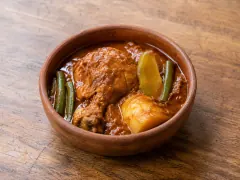 Pepián de PolloDeclared cultural heritage in 2007, and traceable to Kaqchikel Maya ritual. Everything that matters happens on a dry comal — pumpkin and sesame seeds toasted until they pop, chillies blistered for fifteen seconds a side, tomatoes and garlic charred black, and a stale tortilla burnt to give the recado body.
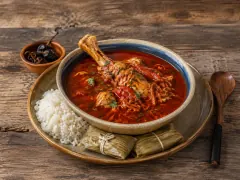 Kak'ikThe sacred turkey soup of the Q'eqchi' Maya of Cobán, national cultural heritage since 2007. Its colour is achiote carotenoids dissolving into the hot surface fat; its heat is chile cobanero, smoke-dried over oak in mountain huts; and the broth stays translucent because it never once comes to a rolling boil.
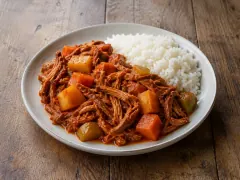 Hilachas ChapinasHilachas means threads, or rags — the long strands flank steak pulls into once seventy-five minutes at a sub-boil have melted its collagen. The shredded beef then braises in a recado of sweet guaque, charred tomato and miltomate, thickened with a spoonful of corn masa rather than flour.
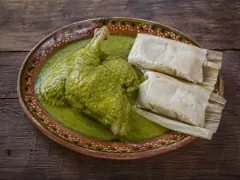 Jocón de PolloThe K'iche' name means roughly "five green ingredients", and keeping it green is the whole discipline. Chlorophyll loses its magnesium to acid and prolonged heat and turns olive-drab, so the herbs go in raw at the end and the sauce simmers strictly eight to ten minutes, never boiling.
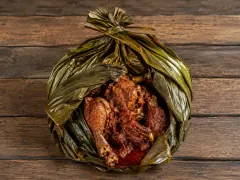 SubanikThe supreme ceremonial offering of Kaqchikel San Martín Jilotepeque, served at weddings, baptisms and cofradía feasts. Beef, pork and chicken are sealed raw with a five-chilli recado inside a bundle of mashán leaves and steamed — the parcel works as a pressure vessel, and nothing escapes it.
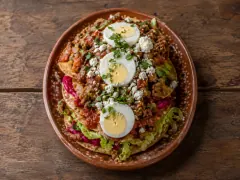 Enchiladas GuatemaltecasNothing rolled and nothing baked — these are towering open-faced tostadas. A bone-dry lettuce leaf goes on first as a hydrophobic shield, so the vinegary beet curtido never touches the fried corn and the base stays shattering-crisp down to the last bite.
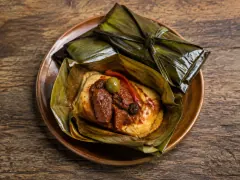 Tamales ColoradosA red lantern outside the door on a Saturday night means fresh tamales. The difference from the Mexican kind is that the masa is cooked *before* it is wrapped — beaten with warm broth and lard until it falls off the paddle in ribbons — so it steams into trembling custard rather than a firm cake.
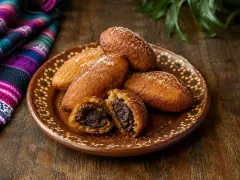 Rellenitos de PlátanoGuatemala's most loved street sweet, and a genuinely surprising one: black beans cooked down with panela, cinnamon and a grated tablet of drinking chocolate, sealed inside a dough of boiled ripe plantain with no flour in it at all, fried and rolled straight into sugar.
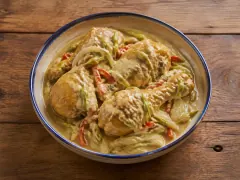 Pollo en Crema y LorocoFrom the dry cattle hills of Zacapa and Chiquimula, where the cream comes unpasteurised. Cultured crema curdles the moment it boils, so the sauce is held at a strict 80 °C sub-boil — and the loroco flower buds go in only for the last eight minutes, before their volatile terpenes can cook away.
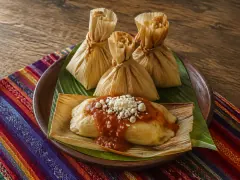 ChuchitosSteam billowing from blanket-wrapped pots in every highland market. The tamal's smaller, firmer sibling — raw masa kneaded with lard rather than pre-cooked, so it sets into something sliceable, tied into a corn-husk pouch like a tiny drawstring sack, and served drowned in tomato sauce and dry salty cheese.
Almost every savoury dish on this list begins the same way: whole tomatoes, miltomates, onion and unpeeled garlic laid on a dry comal and left until the skins blacken. That is a recado, and it is the organising idea of Guatemalan cooking. Nothing is sweated in oil first. The vegetables are charred, blended, and then fried hard in fat until the purée thickens and turns glossy — a step called sazonar el recado that appears in pepián, in jocón, in subanik, in hilachas and in the filling of both tamales here.
What separates one recado from another is the thickener and the chillies, not the method. Pepián is thickened with pepitoria and sesame toasted until they smell of nuts and ground fine, which is a pre-Hispanic technique older than any wheat roux on the continent. Jocón goes green instead, thickened with toasted pumpkin seed and coloured by cilantro and miltomate that must never boil long enough to turn olive. Subanik stacks three dried chillies for depth and then steams rather than simmers. Kak’ik, the Q’eqchi’ turkey broth from Cobán, is the oldest of them and the only one that carries a Maya name straight into the menu — kak for red, ik for chilli.
Corn arrives in two entirely different states, and confusing them ruins the dish. Tamales colorados use masa that is cooked out first into a thick custard before it is wrapped in banana leaf, which is why they eat soft and spoonable. Chuchitos use raw masa kneaded with lard, wrapped in dried corn husks and tied like a drawstring pouch, which is why they set firm enough to slice. Same grain, same country, opposite textures — and the wrapper tells you which one you are holding before you open it.
The two outliers explain the rest. Enchiladas guatemaltecas are not rolled or baked at all but built upward on a fried tostada, with a dry lettuce leaf laid down as a deliberate moisture barrier under a beet curtido stained magenta by vinegar. And rellenitos de plátano seal sweetened black beans, panela and grated drinking chocolate inside a dough of boiled ripe plantain with no flour in it whatsoever. Beans as dessert sounds like a mistake until the first bite, at which point it stops sounding like one.