Caribbean · 18°29′N 69°54′W · Kitchen testing pending
Dominican Republic
Sugar burnt on purpose, and the crust at the bottom of the pot
The ten
Ranked by what people actually name first
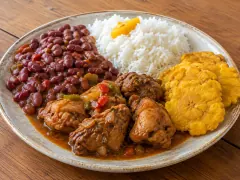 La Bandera DominicanaLunch at noon, in every province. White rice for peace, red beans for the blood of the patriots, dark-glazed chicken for freedom. The chicken gets its colour from sugar taken to a mahogany foam in scorching oil — pyrolysis, not browning liquid — and the best part of the plate is the concón scraped off the bottom of the pot.
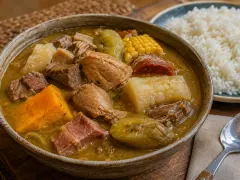 Sancocho de Siete CarnesNew Year's Eve, national holidays, and torrential rain. Seven meats enter the caldero in strict order of how long their collagen needs — beef, ribs and goat alone for the first 45 minutes — and the broth is thickened by mashing cooked plantain and yautía back into it, never by flour.
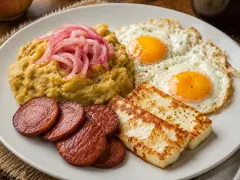 Mangú con Los Tres GolpesThe national breakfast, and the trick is ice water. Beaten into scorching boiled green plantain along with butter, the thermal shock stops the amylose chains realigning, which is the difference between a pillowy purée and a rubbery block ten minutes later. The three hits are fried salami, fried cheese and a sunny egg.
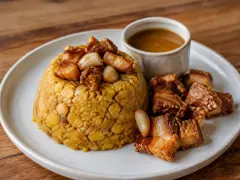 Mofongo Dominicano con ChicharrónA nocturnal institution in the Cibao valley. Green plantains fried to tender but still pale, then pounded in a wooden pilón while scorching hot with garlic paste, pork lard and chicharrón — the fat coats the free amylose so the mass binds into a coarse crumb instead of fusing into rubber.
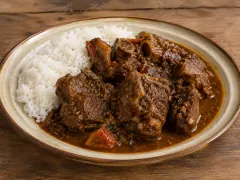 Chivo LinieroIn the semi-arid Línea Noroeste the creole goats graze on wild orégano poleo, so the meat is seasoned before it is ever cooked. Washed with bitter orange, marinated in a fistful of that same oregano, seared in caramelised cane sugar, deglazed with aged dark rum, and braised slow with a whole scotch bonnet floating in it.
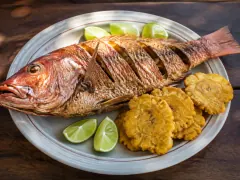 Pescado Frito al Estilo Boca ChicaA whole red snapper, diamond-scored at 45 degrees right down to the spine so 185 °C oil can circulate around the bone, dusted in a paper-thin veil of flour — never a batter — and submerged whole. The fins and tail come out as edible chips; the flesh inside stays pearlescent.
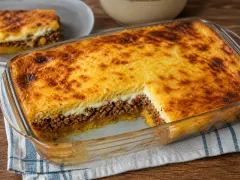 Pastelón de Plátano MaduroA tropical lasagna where the pasta sheets are silky mashed black-ripe plantain. Between them goes a beef picadillo with olives, capers and raisins, cooked down until it is completely dry — any free water and the whole casserole collapses into soup when you cut it — bound with beaten egg and baked under melted cheese.
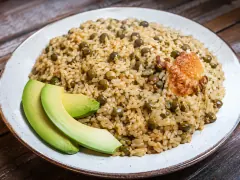 Moro de Guandules con CocoSamaná's rice, cooked in pressed coconut milk rather than broth. Coconut milk is an oil-in-water emulsion, so it goes in at a strict 1:1 with water and never boils hard — and the coconut fats and sugars that sink to the caldero floor toast into concón de coco, the most prized rice crust in the republic.
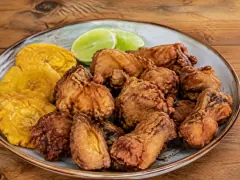 Chicharrón de Pollo DominicanoThe premier social finger food of Santo Domingo and Santiago. Chicken chopped straight through the bone with a cleaver into 4 cm morsels, marinated in garlic, lime, dark rum and salsa china, then dredged in cornstarch rather than flour — no gluten, so the crust sets as a brittle glass film that stays crunchy for hours.
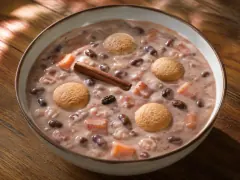 Habichuelas con DulceA dessert made of red kidney beans, and a Holy Week institution shared by the potful between neighbours. The beans are boiled soft, puréed, and pushed through a fine sieve until not one trace of skin remains — that straining is the whole dish — then simmered with coconut milk, evaporated milk, cinnamon, batata and raisins.
Two techniques run through this whole list, and neither is browning in the ordinary sense. The first is sugar taken deliberately past caramel: white sugar dropped into scorching oil and left, without stirring, until it foams dark mahogany at somewhere between 160 and 180 °C. That is pyrolysis, generating furans and maltol, and dropping cold meat in halts it while transferring a bitter-sweet bronze glaze onto the protein. It is how pollo guisado gets its colour on La Bandera, how the goat is sealed in chivo liniero, and how the seven meats of sancocho are started. The window between mahogany and bitter black ash is about ten seconds.
The second is concón — the crust deliberately built against the bottom of the caldero. Rice held against bare aluminium above 120 °C loses its last moisture and the starch pushes through retrogradation and dextrinisation into a rigid sheet, peeled off in shards and served on top. Oil run around the perimeter when the rice is domed is what lets it release. The version everyone argues is best is the Samaná one, where rice simmers in pressed coconut milk and the coconut fats sink and toast into concón de coco.
Plantain does more work here than anywhere. Green and boiled, then beaten with ice water and butter, it becomes mangú — and the ice water is the entire point, because thermal shock plus mechanical shear stops the amylose chains realigning into the rubbery block that mashed plantain otherwise sets into. Green and fried at 165 °C, then pounded hot in a wooden pilón with pork fat and cracklings, the same fruit becomes mofongo. Black-ripe and boiled to a sweet purée, it becomes the layers of pastelón. Green, fried twice at two temperatures, it becomes tostones, which turn up beside almost everything.
The last dish is the strangest and the most loved. Habichuelas con dulce is a dessert built from red kidney beans — boiled soft, puréed, and pushed through a fine sieve until not one fragment of skin survives, then simmered with coconut milk, evaporated milk, cinnamon, clove, batata and raisins until the bean starches thicken it into custard on their own. It is made for Lent and Holy Week, and shared by the potful between neighbours.