Moro de Guandules con Coco
Samaná's rice, cooked in pressed coconut milk rather than broth. Coconut milk is an oil-in-water emulsion, so it goes in at a strict 1:1 with water and never boils hard — and the coconut fats and sugars that sink to the caldero floor toast into concón de coco, the most prized rice crust in the republic.
- Prep
- 20 min
- Cook
- 35 min
- Serves
- 6 servings
- Difficulty
- Medium
Researched · Kitchen testing pending
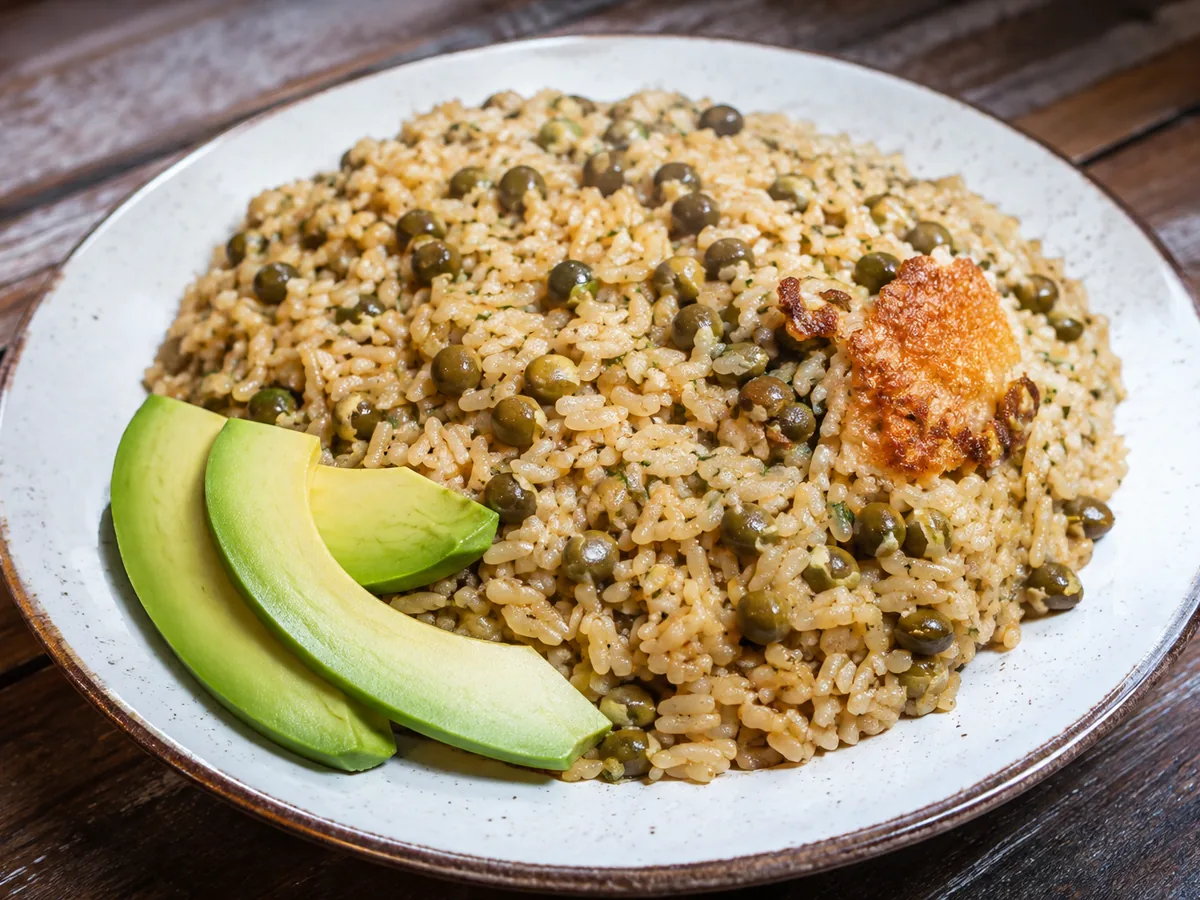
Along the coconut-palmed coastline of the Samaná peninsula, nineteenth-century African-American immigrants — the Samaná Americans — and Afro-Dominican coastal communities fused their grain traditions with the local coconut groves. Moro de guandules con coco is what came of it.
Standard moro across the island uses water or broth. The Samaná version simmers long-grain rice and tender green pigeon peas directly in pressed coconut milk, infused with a sofrito of garlic, cubanelle and wild culantro.
As the rice steams under a sealed lid, the coconut creams caramelise against the hot caldero base into concón de coco — a brittle, nutty, golden-brown crust prized above every other concón in the republic.
Rice and peas
- 600 g3 cupsLong-grain white rice, rinsed until the water runs clear and drained
- 500 g3 cups cookedGreen pigeon peas (guandules verdes), rinsed and drained
- 400 ml1 can (13.5 fl oz)Pure unsweetened full-fat coconut milk, shaken well
- 480 ml2 cupsWarm water
- 18 g1 TbspFine sea salt
Sofrito
- 45 ml3 TbspNeutral vegetable or coconut oil30 ml for the sofrito, 15 ml around the perimeter
- 120 g1 smallRed onion, finely diced
- 100 g1 mediumCubanelle or green bell pepper, finely diced
- 25 g6 clovesGarlic, mashed to a paste with salt
- 20 g4 peppersAjí gustoso peppers, seeded and minced fine
- 30 g2 TbspDouble-concentrated tomato paste
- 15 g4 leavesFresh culantro (recao ancho), bruised and tied into a bundle
- 15 g¼ cupFresh cilantro leaves, chopped fine
- 4 g1 tspWild Dominican oregano (orégano poleo seco), crushed to powder
Why the ratio is fixed
Coconut milk is an oil-in-water emulsion carrying a lot of fat and natural sugar. Boiled too aggressively the emulsion breaks early, free oil coats the raw grains before their interiors hydrate, and the rice ends up chalky in the middle. 400 ml coconut milk to 480 ml water for 600 g of rice, and no more.
Never sweetened coconut cream
Cream of coconut is a dessert product. It turns the pot gummy and sweet. Unsweetened culinary coconut milk, with no added sugar or gums.
The lowest flame you have
Coconut sugars caramelise much faster than plain rice starch. During the 20-minute steam the heat must be at the absolute minimum, or the concón goes from bronze to bitter charcoal.
Peas first, then rice
Sauté the guandules in the sofrito and bring them to the boil in the coconut milk before the rice goes in, then stir once thoroughly. Added after, they sink and scorch.
Seal the pot
Foil or a clean culinary bag under a tight lid traps all the steam at 100 °C, which is what finishes gelatinising the swollen starch granules while the base toasts.
The five tastes on this plate
Salt is dissolved in the boiling coconut milk, balancing its natural sweetness. Fat is coconut lipids with a little oil. Acid is a splash of bitter orange or lime at the finish, against the rich coconut. Heat is garlic, cracked pepper, red onion and mild ají gustoso. Umami is earthy pigeon peas, tomato paste and the toasted coconut-rice crust.
Equipment
- 5 to 6 qt heavy caldero or cast-iron Dutch oven with a tight lid
- Flat metal spoon
- Foil or a clean culinary bag, for the seal
- Stiff metal spatula
Traditionally a heavy cast-aluminium caldero with an aluminium lid — the porous metal is what releases a clean concón. A 5-to-6-quart cast-iron Dutch oven or heavy tri-ply saucepan with a tight lid works in a modern kitchen; with stainless steel, watch the base carefully, because the coconut sugars burn before rice starch would.
Method
Build the sofrito4 min
Heat 30 ml oil in the caldero over medium and sauté the red onion, Cubanelle, ají gustoso, garlic paste and crushed oregano 3 to 4 minutes, until softened and aromatic.
Heat 30 ml oil in the caldero over medium. Sauté red onion, Cubanelle, ají gustoso, garlic paste and crushed oregano 3–4 minutes until softened and aromatic.
Bloom the tomato, coat the peas3 min
Stir in the 30 g tomato paste and fry 1 minute until it turns brick-red.
Add the drained pigeon peas and the culantro bundle and stir 2 minutes to coat them.
Stir in 30 g tomato paste and fry 1 minute until brick-red. Add the drained pigeon peas and the culantro bundle; stir 2 minutes to coat.
Liquids and seasoning5 min
Pour in the 400 ml coconut milk and 480 ml warm water and add the 18 g salt.
Bring to a rapid rolling boil. Taste the liquid — it should read slightly saltier than you want, because the rice will take up a lot of it.
Add 400 ml coconut milk, 480 ml warm water and 18 g salt. Bring to a rapid boil. The liquid should taste slightly saltier than you want; the rice absorbs much of it.
Add the rice and reduce8 min
Add the rinsed drained rice and stir once with a flat metal spoon to distribute the grains and peas.
Cook uncovered over medium-high, stirring once or twice, until the liquid falls below the surface and small steam craters appear — about 6 to 8 minutes.
Add the rinsed, drained rice and stir once with a flat metal spoon. Cook uncovered over medium-high, stirring once or twice, 6–8 minutes, until the liquid falls below the surface and small steam craters appear.
Gather and seal2 min
The moment the surface liquid is gone, gather the rice from the edges into a gentle dome and drizzle the last 15 ml oil around the perimeter.
Turn the burner to its absolute lowest setting.
As soon as the surface liquid is gone, gather the rice into a gentle dome and drizzle the last 15 ml oil around the edge. Turn the burner to its lowest setting.
Steam under a hermetic seal20 min
Lay foil or a clean culinary bag over the pot and press the lid down firmly over it to lock in all the steam.
Steam undisturbed 20 minutes.
Lay foil or a clean culinary bag over the pot and press the lid down firmly to seal in the steam. Steam undisturbed 20 minutes.
Turn, then crisp the concón5 min
Remove the lid and seal, and turn the rice once from the bottom up with a large metal spoon, distributing the peas through the grains.
Cover again and cook 5 minutes over medium-low to develop and crisp the concón de coco.
Uncover and turn the rice once from the bottom up, distributing the peas. Cover again and cook 5 minutes over medium-low to crisp the concón.
Serve
Fluff the rice onto a wide platter, discard the spent culantro bundle, and scatter fresh cilantro.
Peel the crunchy golden concón off the bottom with a stiff spatula and serve it on top. Braised chicken or whole fried snapper alongside.
Fluff onto a wide platter, discard the culantro bundle and scatter fresh cilantro. Lift the golden concón from the bottom with a stiff spatula and serve it on top, with braised chicken or fried snapper alongside.
Sensory cues of doneness
- Visual: fluffy separated grains the colour of pale sand, speckled with plump olive-green peas and green culantro, under an unbroken golden-bronze concón.
- Auditory: steady bubbling while the liquid reduces, then quiet dry hissing from the base through the final 5 minutes.
- Olfactory: toasted coconut, nutty rice, earthy pigeon peas, sweet peppers and pungent culantro.
Look for fluffy, separate pale-sand grains speckled with olive-green peas under an unbroken golden concón. Steady bubbling gives way to a dry hiss from the base in the last 5 minutes; smell toasted coconut, nutty rice and culantro.
Troubleshooting
- Mushy, gummy rice.
Too much water on top of rich coconut milk, or sweetened cream of coconut was used. Hold the 400 ml to 480 ml ratio, and use unsweetened milk only.
- The concón burns to bitter charcoal.
The heat stayed too high through the steam. Coconut sugars caramelise fast — use the lowest flame the burner produces.
- The peas sink and scorch.
They went in after the rice. Sauté them in the sofrito, boil them in the coconut milk, and stir once thoroughly when the rice goes in.
Substitutions
One-to-one global substitutions, with the technique adjustment each one requires.
Ingredient substitutions
| Ingredient | Replace with | Culinary impact and technique adjustment |
|---|---|---|
| Guandules verdes | Green peas, or black-eyed peas | Black-eyed peas are the closest relative to the pigeon pea's earthy firmness |
| Full-fat unsweetened coconut milk | Freshly pressed coconut milk, or coconut cream diluted with water | It must carry no added sugar and no gums |
| Fresh culantro | Cilantro sprigs with a pinch of flat-leaf parsley | Culantro is more heat-stable; add cilantro nearer the end for brightness |
Scaling
Half, for 3 servings
Use 300 g rice, 200 ml coconut milk and 240 ml water in a 3-quart caldero. The 20-minute steam does not change.
Double, for 12 servings
Double everything in a wide 10-to-12-quart caldero, but drop the water to 850 ml rather than 960 — a wide pot traps more steam, and the rice goes soggy otherwise.
What to serve it with
- Pollo guisado dominicano, or pescado frito al estilo Boca Chica
- Sliced ripe avocado and a fresh green salad
- Coconut water from the shell, or a piña colada made with Dominican dark rum
Questions
Can I use dry pigeon peas?
Yes, but soak them overnight and boil them in salted water with garlic and culantro for an hour to an hour and a half until tender first. Use their cooking liquor as part of the water.
How do I press fresh coconut milk the Samaná way?
Grate the white flesh of two dry brown coconuts, pour two cups of warm water over it, massage hard with your hands to release the fats, and squeeze it through cheesecloth. A second cup of water gives a lighter secondary milk.
Does the technique work with black or red beans?
Moro de habichuelas con coco does exist on the coast, but green pigeon peas are the classic partner — their earthy, vegetal, nutty sweetness is what suits the coconut fat.