Caribbean · 23°08′N 82°23′W · Kitchen-tested
Cuba
A cuisine cooked in two countries at once
The ten
Ranked by what people actually name first
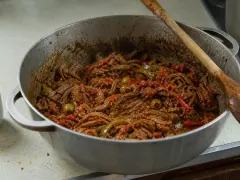 Ropa ViejaBeef simmered until it falls into long rags, then finished in a pepper-onion-tomato sofrito that should stain the rice rather than sit on it.
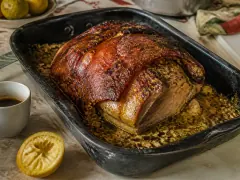 Lechón AsadoThe Nochebuena roast at apartment scale — bone-in shoulder packed overnight in garlic and sour orange, then held long enough for the collagen to give.
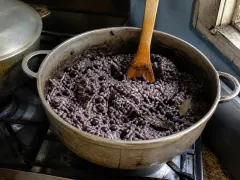 Moros y CristianosBlack beans and long-grain rice cooked in one pot, in the bean liquor, until the grains are stained and still separate. Not beans parked next to rice.
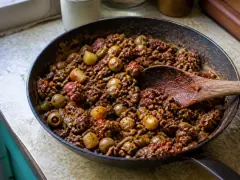 Picadillo a la HabaneraGround beef with sofrito, tomato, dry wine, and green olives — with raisins, because that sweet-salty tug is the Havana habit. Not taco filling.
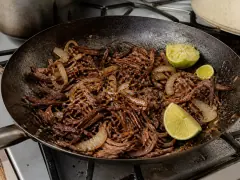 Vaca FritaFlank simmered until it shreds, wrung genuinely dry, then fried hard with onion, garlic, and lime. Crust and citrus — the opposite of ropa vieja.
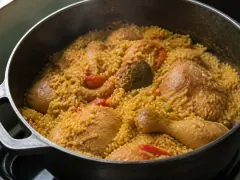 Arroz con PolloA Tuesday pot — bone-in chicken, sofrito in the same fat, medium-grain rice, a bottle of beer, and bija for the yellow. Covered and moist, not paella.
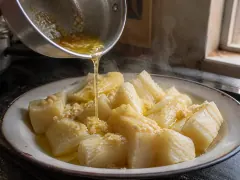 Yuca con MojoCassava boiled until a knife meets no chalk, then hot garlic-citrus fat poured over while it still steams — so the starch drinks it instead of wearing it.
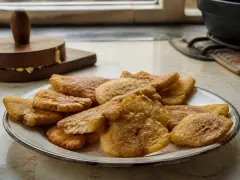 TostonesTwice-fried green plantain, smashed in the middle of the cooking and salted while they hiss. Green, starchy, salted. Never sugared.
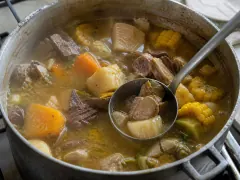 Ajiaco CriolloCuba's mixed-meat, mixed-vianda stew — tasajo, pork, chicken, and roots you let break until the broth thickens itself. A Sunday pot, not a Colombian one.
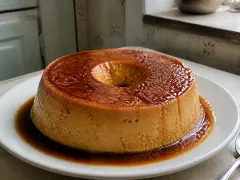 Flan CubanoCondensed milk, evaporated milk, eggs, and vanilla over a dry-sugar caramel, baked in a water bath until the middle still moves. Not crème caramel.
Cuban food is cooked in two kitchens at the same time.
There is the island one, where a pressure cooker sits on the stove because fuel is expensive and a three-hour burner is not always honest, and where tasajo goes into a bowl of water the night before because that is how beef kept when there was no refrigerator to keep it in. Then there is the exile one, where the yuca arrives peeled from the freezer case, the vino seco comes off a shelf in a Latin market, and the sofrito gets made anyway, in a rented kitchen, in a different country.
Both are real. These recipes say which is which instead of pretending the island version is the only honest one.
The other thing you notice, reading ten Cuban dishes in a row, is how often one has to introduce itself by what it is not. Ajiaco is not the Colombian ajiaco. Arroz con pollo is not paella. Picadillo is not Mexican. Flan is not crème caramel. Ropa vieja and vaca frita start from the same cut and end up on opposite sides of the table. That is the tax on being a small island in a crowded sea: a lot of your food spends its life being mistaken for a neighbour’s.
Underneath nearly all of it sits one thing. Onion, green pepper, garlic, and a little fat, cooked down until the water has gone and the sweetness has come up. Get the sofrito wrong and nothing else on this list will taste like much.