Ropa Vieja
Beef simmered until it falls into long rags, then finished in a pepper-onion-tomato sofrito that should stain the rice rather than sit on it.
- Prep
- 40 min
- Cook
- 3 hr 20 min
- Serves
- 6 generous plates, or 8 with rice and beans
- Difficulty
- Medium
Kitchen-tested
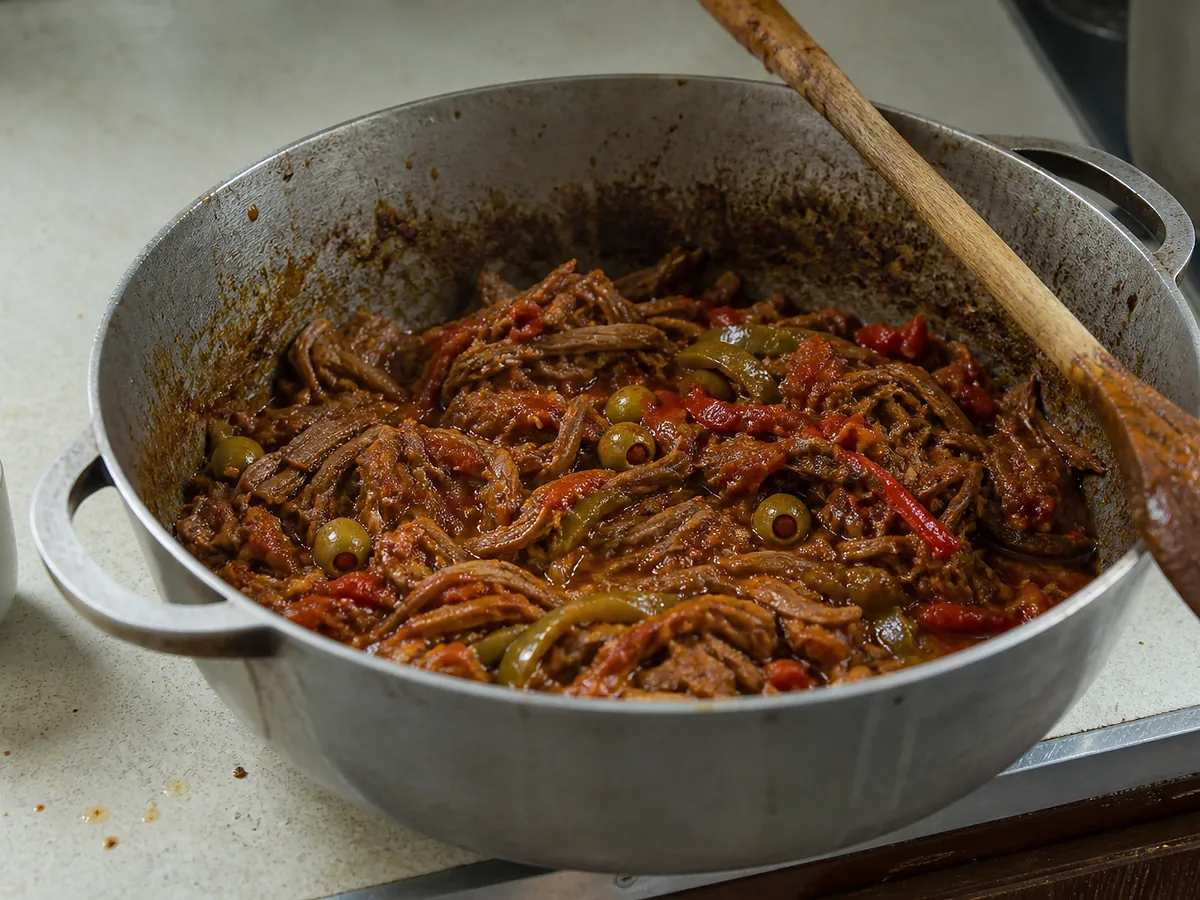
Ropa vieja got its name from the way the beef falls into long, ragged strips — like a shirt washed too many times and pulled apart at the seams. Spanish stew kitchens already used the phrase for meat cooked until it looked like torn cloth; Havana kept the name and made it a Sunday plate.
Shredded falda or brisket in a pepper-onion-tomato sauce that should stain the rice, not sit on it like a separate gravy. I cook it for a Cuban table, not a fusion one.
If you came here looking for vaca frita, stop: that is fried shredded beef, a different dish, and it does not belong in this pot.
Beef and the first simmer
- 1.4 kg3 lbBeef flank (falda) or packer brisket flatsilver skin trimmed, left in 2 or 3 large pieces
- 200 g7 ozYellow onion, peeled and halved1 medium
- 120 g4 ozGreen cubanelle or Italian frying pepperstemmed, left whole
- 4 cloves4 clovesGarlic, peeled and smashed
- 2 leaves2 leavesDried bay leaves
- 10 g2 tspKosher salt, for the pot
- 1.5 L6⅓ cupsWaterenough to cover the meat by 2 cm / ¾ in
Sofrito and sauce
- 45 ml3 tbspLard, or neutral oillard tastes more like a Cuban Sunday
- 500 g1.1 lbYellow onions, sliced pole-to-pole 5 mm thick2 large
- 300 g10 ozGreen cubanelle peppersor 1 green bell plus 1 cubanelle. Stemmed, seeded, in 8 mm strips
- 180 g6 ozRed bell pepperstemmed, seeded, in 8 mm strips
- 80 g3 ozAjíes cachucha8, left whole if small — or 1 extra cubanelle, sliced
- 24 g8 clovesGarlic, minced
- 400 g14 ozRipe tomatoes, peeled, seeded, choppedor canned whole peeled tomatoes, drained and chopped
- 30 g2 tbspTomato paste
- 180 ml¾ cupDry white winea plain table wine, nothing oaky
- 500 ml2 cupsReserved beef simmering liquid, fat skimmedplus more as needed
- 8 g1 tbspGround cuminpreferably from toasted whole seeds you grind
- 4 g2 tspDried oregano, crumbled between your palms
- 2 leaves2 leavesDried bay leaves
- 5 g1 tspKosher saltplus more to taste
- 2 g½ tspBlack pepper, freshly ground
- 80 g½ cupPimiento-stuffed manzanilla olives, drainedwhole or halved. Not kalamata
- 20 g2 tbspCapers, drained
- 15 ml1 tbspWhite vinegar, or olive-jar brineonly if the sauce tastes flat at the end
Yield
6 generous plates, or 8 with rice, beans, and maduros. Better the next day.
On the beef
Falda (flank) is the cut I reach for. The grain is long and obvious, which is the visual joke of ropa vieja: pull along that grain and the meat looks like rags. Brisket flat is the better supermarket stand-in in many North American cities. More collagen is not a flaw — collagen does not become sauce until you hold it near a simmer long enough for the triple helix to unwind into gelatin. Chuck works, and it is in the substitutions table, but it shreds shorter and can taste more pot-roast than Havana. Skip stew cubes; they make lumps, not clothes. Trim only thick waxy fat and silver skin that will never melt.
On the peppers
Ají cachucha is the small, sweet Cuban pepper that smells like a mild habanero without the burn. Use them if a Latin market actually carries them; they perfume the oil. Cubanelle is the everyday substitute on the island and in exile kitchens. Bell peppers are what most people have: green for vegetal backbone, red for sweetness once it collapses. I use both. I do not use jalapeño. Heat is not the point of this sauce.
On the tomato
Fresh ripe tomatoes, peeled and seeded, give fruit and water in the right proportion. In February I use canned whole peeled tomatoes, chopped, cooked down until they stop tasting like the can. Tomato paste is a concentrator, not the sauce. A jar of passata dumped on beef is Italian-adjacent stew.
On the wine, the cumin, and the briny things
Dry white wine is traditional in the Havana version I cook: it lifts the tomato and keeps the sauce from going muddy. The alcohol cooks off; what remains is acid and faint grape. Cumin and oregano are the two dried notes that make this taste Cuban instead of generically braised. Bloom them in the fat of the sofrito so they stop tasting raw. Olives and capers are a Havana habit, not a garnish invented for colour. Some families skip them; I do not. They are the salt-sour punctuation that stops peppers from becoming jam. If your family never put olives in ropa vieja you are not wrong — you are cooking a different house version. Manzanilla with pimiento. Not kalamata.
Equipment
- A wide Dutch oven or heavy cazuela, 6 to 8 L, with a lid — wide matters, because a tall narrow stockpot steams the sofrito instead of letting water leave
- Forks, or your fingers, for shredding
- A fine-mesh strainer and a ladle
Do not blend the sauce. Do not use a slow cooker as the main method; it will not brown the sofrito. Do not use an Instant Pot as the method. A stovetop pressure cooker exists in Cuban kitchens as a weekday shortcut for the first simmer — the timing is in the substitutions as a labelled departure — but the dish is still finished in an open pot so the sauce can reduce.
Method
Simmer the beef until it will shred1 hr 45 min – 2 hr 30 min
Put the flank or brisket in the pot with the halved onion, whole cubanelle, smashed garlic, bay, 10 g salt, and water to cover by 2 cm. Bring it to a boil over medium-high, then drop at once to a lazy simmer — small bubbles, not a rolling boil. Skim the grey foam in the first 10 minutes.
Lid slightly ajar. Flank is often shreddable at about 1 hour 45 minutes; brisket can take 2 hours 15 to 2 hours 30. You are waiting on collagen: in water near 85–95 °C / 185–203 °F it slowly becomes gelatin. Boil it hard and the muscle fibres seize and squeeze out moisture before the connective tissue gives up — dry shreds in thin broth.
Doneness: a fork slides in with little resistance, and when you twist, the grain opens in long sheets. If you have to saw, it is not ready. There is no useful internal-temperature target here; the meat is well past well-done on purpose.
Lift the beef onto a tray. Strain the liquid and discard the spent aromatics. Skim the fat and keep the broth — that liquid is dissolved gelatin, salt, and beef, and tap water will not replace it.
Cover beef, halved onion, whole cubanelle, garlic, bay and 10 g salt with water by 2 cm. Boil, then simmer at 85–95 °C / 185–203 °F with lid ajar, skimming the first 10 minutes. Cook flank about 1 hour 45 minutes, brisket 2 hours 15–30 minutes, until a fork twists open long sheets. Remove beef; strain, skim and reserve broth.
Shred along the grain10 min
Let the beef sit until you can handle it, 10 to 15 minutes. Pull with the grain into strips about 5–8 mm wide. Not minced. Not pulled-pork fluff. Long rags.
Across the grain you get short crumbs and the name stops making sense. Pick out unrenderable gristle. Taste a piece: it should be beefy and a little plain. The sauce will carry it.
Rest beef 10–15 minutes until manageable. Pull along the grain into long strips 5–8 mm wide, removing tough gristle; do not mince or shred into fine fluff.
Build the sofrito until it is sweet18–25 min
Wipe the pot if there is scorch. Add the lard or oil over medium heat. When it shimmers, add the sliced onions and a pinch of salt. Cook 8 to 10 minutes, stirring, until translucent and lightly gold at the edges. Add the cubanelle, bell pepper, and ajíes cachucha. Cook another 8 to 12 minutes — the peppers should collapse, look wet-then-dry, and smell sweet rather than raw and grassy.
This is the step people rush. Onions and sweet peppers are full of water and some sugar; as the water evaporates the sugars concentrate, and amino acids and sugars at the pan surface start browning. The brown fond is flavour, not a mistake, as long as it is brown and not black. If the pan threatens to burn, splash in a spoon of the reserved broth and scrape.
Add the minced garlic and cook 60 to 90 seconds, until you smell it clearly and it no longer tastes raw. Minced garlic burns fast, and acrid garlic will show in every bite.
Clean away any scorch; heat fat over medium. Cook onion with a pinch of salt 8–10 minutes until translucent and lightly golden. Add all peppers; cook 8–12 minutes until collapsed and sweet. If catching, loosen with a spoon of broth. Add garlic 60–90 seconds without burning.
Tomato paste, tomatoes, spices8–10 min
Push the vegetables aside and drop the tomato paste onto the bare metal. Fry it 1 to 2 minutes until it darkens a shade and smells caramelised, not tinny.
Stir in the chopped tomatoes and cook 5 to 7 minutes, until they break down and oil separates in little orange beads at the edges. Sprinkle in the cumin, oregano, and black pepper and stir 30 seconds so the spices bloom in the fat — the fat-soluble compounds in cumin wake up in oil, and dumped into watery tomato at the end they taste like dust.
Push vegetables aside; fry tomato paste on bare metal 1–2 minutes until darker. Add chopped tomatoes and cook 5–7 minutes until broken down with orange oil beads. Stir cumin, oregano and pepper into the fat for 30 seconds.
Wine, reduce, then the beef25–40 min
Pour in the wine. It should hiss. Scrape the browned bits and reduce by about half, 3 to 5 minutes.
Add 500 ml of the reserved broth, two new bay leaves, and the shredded beef. Stir so every rag is coated. The liquid should come about three-quarters of the way up the meat, not drown it. Simmer uncovered over low-medium heat for 25 to 40 minutes, stirring so the bottom does not catch.
Two things are happening: gelatin in the broth and pectin from the peppers thicken the sauce as water leaves, and the shreds drink the sofrito. If the pot looks dry before the sauce tastes concentrated, add broth a ladle at a time. If it looks soupy after 30 minutes, raise the heat slightly.
Finished ropa vieja should mound on a spoon and coat the rice, not puddle. Salt now — the broth was salted and the olives are coming. Taste.
Deglaze with wine and reduce by half, 3–5 minutes. Add 500 ml reserved broth, 2 new bay leaves and shredded beef, liquid reaching three-quarters up the meat. Simmer uncovered over medium-low 25–40 minutes, stirring. Add broth by ladles if drying early; increase heat if soupy after 30 minutes. Stop when sauce mounds on a spoon; taste for salt.
Olives, capers, last acid5 min
Stir in the olives and capers and simmer 5 minutes, so they warm and leak a little brine. I do not cook olives for half an hour; they turn flabby.
Taste. If the sauce is round and sweet but tired, add the tablespoon of vinegar or olive brine — acid keeps sweetness from reading as jam.
Pull out the bay leaves. Rest it 10 minutes in the pot so the sauce clings as it comes off the boil.
Stir in olives and capers and simmer 5 minutes. Add 1 Tbsp vinegar or olive brine only if the sauce tastes flat. Remove bay leaves and rest in the pot 10 minutes so sauce clings.
Storing it
Cooling and keeping
Cool with the lid off until the steam stops, then refrigerate in shallow containers — into the fridge within 2 hours. It keeps 3 to 4 days at 4 °C / 40 °F or below. Reheat to a simmer, 74 °C / 165 °F in the centre of the mass, stirring: shredded meat packs tightly and hides cold pockets. Add a splash of water or leftover broth, because the gelatinous sauce tightens in the fridge.
Freezing
It freezes well for 2 to 3 months. Cool completely, freeze in meal-size packs, and thaw in the refrigerator.
Troubleshooting
- The beef will not shred and feels rubbery.
Undercooked collagen. Return it to the simmering liquid. Rubbery is time, not a bad cut — brisket fools you at 90 minutes.
- The shreds are dry and stringy.
You boiled the first pot, or used lean flank and reduced until no gelatin remained. For this batch: fold in a ladle of broth and a spoon of oil, and simmer 5 minutes.
- The sauce tastes like raw pepper and onion.
The sofrito was short. Cook it uncovered another 15 minutes. Do not dump sugar in to fake sweetness.
- The sauce tastes metallic, or like the can.
The paste went in without frying, or the canned tomatoes did not cook down. Fry a little more paste in a side pan, stir it in, and simmer 10 minutes.
- It is bland.
Salt, then olives, then cumin if the spice never bloomed. Bloom a teaspoon of cumin in a little oil and stir it in.
- It is too salty.
You reduced salted broth too far, then added olives. Add a peeled chopped tomato and a splash of water. Next time, salt after the olives.
- It tastes bitter.
Garlic burned, or the paste scorched. A pinch of extra tomato is a patch. Start the sofrito over if you caught the burn early.
- The sauce is watery after 40 minutes.
Heat too low, lid on, or too much broth. Uncover and raise it to a lively simmer. Water has to leave.
- It looks grey.
No paste frying and no time on the sofrito. It should be rust-red and yellow-green, not cafeteria brown.
Substitutions
Traditional versus known departure
| Traditional | Known departure |
|---|---|
| Falda (flank) | Brisket flat — more gelatin, longer simmer; chuck roast — shorter shred, more pot-roast flavour |
| Ají cachucha | Cubanelle, then green and red bell. Not jalapeño |
| Fresh ripe tomato, peeled | Canned whole peeled tomatoes, cooked down. Not sweet pasta sauce |
| Lard for the sofrito | Neutral oil or olive oil. Lard tastes more like a Cuban Sunday |
| Dry white wine | A splash of white vinegar plus extra broth. Some houses skip wine |
| Manzanilla olives and capers | Olives only; capers only; neither, if that is your house. Not kalamata |
| Stovetop first simmer | Island pressure cooker: about 35–45 min at pressure for flank, 45–55 for brisket, natural release. The sofrito and sauce still happen in an open pot |
| Dried oregano | Fresh oregano, twice the volume, added later |
Scaling
This scales in a wide pot up to about 2 kg of beef. Beyond that, do the sofrito in batches — a crowded pan steams.
What does not scale
Collagen time does not scale down much: 700 g of flank still needs most of that 1 hour 45 minutes. Keep the pepper-onion mass in proportion, or the beef sits in a thin tomato bath.
What to serve it with
White rice. Long-grain, steamed, each grain separate.
- Maduros — ripe fried plantains — which echo the sofrito's sweetness
- Tostones, for salt and crunch
- Black beans on the side, if you want the fuller plate
Pick one plantain if the table is already heavy; both if it is Sunday.
Questions
How do I know the beef is done if I do not trust the clock?
Twist it with a fork. Long sheets should open. If it fights, it is not done.
Can I make this a day ahead?
Yes, and I prefer it. Cool, refrigerate, reheat to a simmer with a splash of broth. The olives can wait until reheating if you want them firmer.
Do I have to use wine?
No. Extra broth and a teaspoon of vinegar at the end. The Havana version I like uses wine because it keeps the tomato from tasting heavy.
Why not red wine?
Some cooks use it. It muddies the colour and reads more European stew than the rust-red plate I want.
Are the olives authentic, or a restaurant thing?
Authentic as a Havana habit, not universal in every Cuban house. I use them and I say so.
Can I use leftover roast beef?
Only if you admit you made leftover hash. Gelatin from the long simmer is part of the sauce.
How spicy is this?
It should not be. Cachucha is aromatic. Hot sauce belongs on their plate, not in my pot.