Picadillo a la Habanera
Ground beef with sofrito, tomato, dry wine, and green olives — with raisins, because that sweet-salty tug is the Havana habit. Not taco filling.
- Prep
- 15 min
- Cook
- 45 min
- Serves
- 4–6 with rice
- Difficulty
- Easy
Kitchen-tested
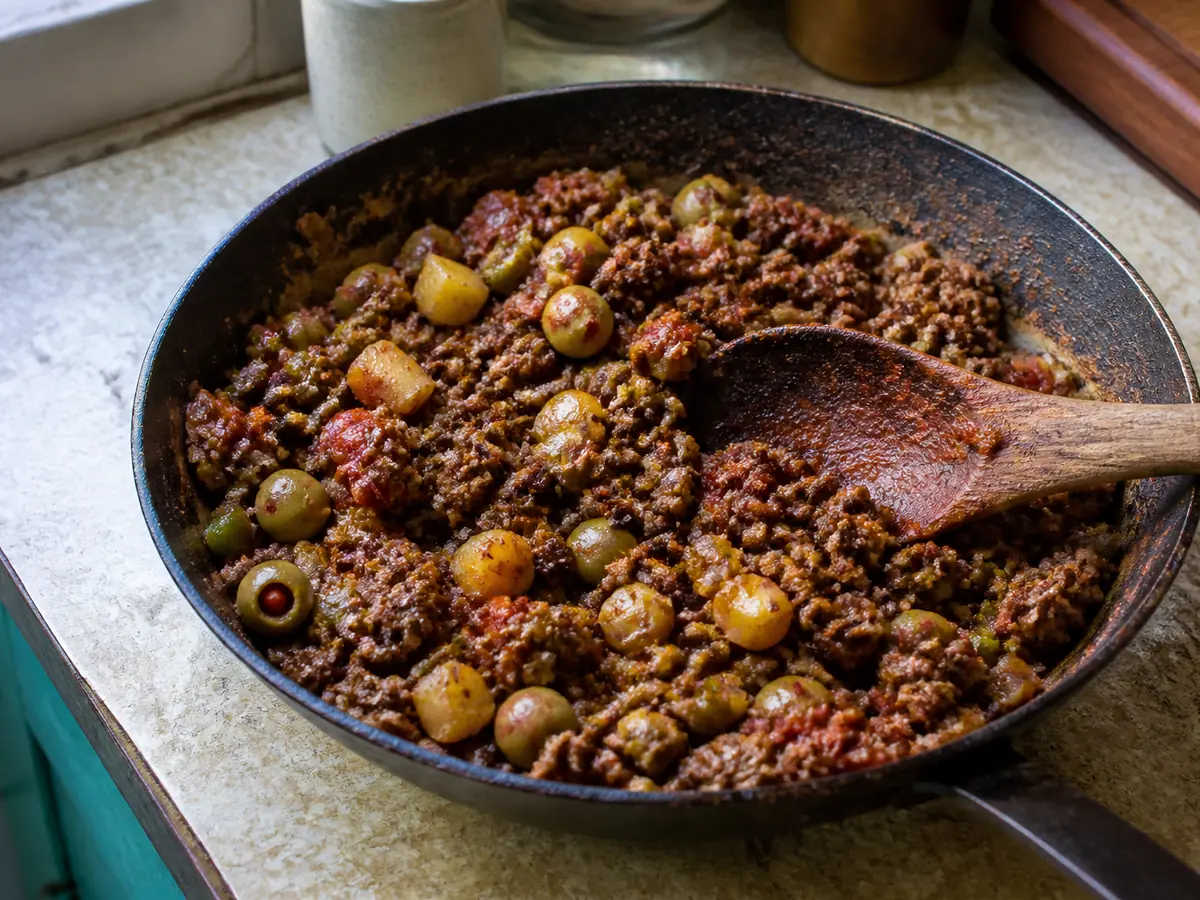
Raisins in the beef is a Havana habit, sweet against green olives and dry wine, and I cook it that way. Some houses skip the raisins outright; that is still picadillo, just a saltier skillet. I label them so you can leave them out without thinking I hid anything.
Havana ground-beef picadillo: sofrito, tomato, cumin, oregano, vino seco, olives, and that sweet-salty tug. Optional potato cubes. Not Mexican picadillo. Not a sloppy joe. I serve it with white rice, a fried egg, or stuffed in peppers on a Cuban table — not with cheddar.
Buy ground beef that is not too lean. 80/20 or 85/15. Extra-lean goes tight and dry as the tomato reduces.
The skillet
- 800 g1¾ lbGround beef, 80/20 or 85/15cold from the fridge, broken into rough chunks
- 30 ml2 tbspLard, bacon fat, or neutral oil
- 200 g7 ozYellow onion, small dice1 large
- 150 g5 ozGreen bell pepper, small dice1 medium
- 18 g5 clovesGarlic, minced
- 4 g1½ tspGround cumin
- 2 g1 tspDried oregano
- 1 leaf1 leafBay leaf
- 30 g2 tbspTomato paste
- 240 g1 cupTomato sauce or crushed tomatonot ketchup, not sloppy-joe mix
- 100 ml⅓ cup plus 1 tbspDry white wine / vino seco
- 90 g½ cupPimiento-stuffed green olives, drainedsliced, or left whole if small. Reserve 15 ml of the brine
- 50 g⅓ cupRaisinsthe Havana sweet-salty habit — omit if your house does
- 6 g1 tspCoarse salta starting point — taste again after the olives
- 1 g½ tspBlack pepper
- 2 g½ tspSugaronly if the tomato tastes harsh
Optional potato cubes
- 250 g9 ozWaxy potato, peeled, in 1.5 cm cubes2 small
- 15 ml1 tbspOil, for frying the cubes
- 1 g¼ tspSalt, for the potatoes
Yield
4 to 6 with rice. Stuffed into 6 small peppers it is the same skillet, not a larger recipe.
On the beef
Not too lean. Fat is the gloss. 90/10 cooks into dry crumbs that drink the tomato and sit there like taco meat. I use 80/20 when I can, 85/15 if that is the shop. Chuck grind beats round. Thaw frozen bricks in the fridge, not on the counter. You do not want a hard crust on every crumb — pink gone, some browned fond, fat rendered. Crowding a cold heap in a timid pan steams the beef grey. Two batches beat one steamed mass. Ground beef is done at 71 °C / 160 °F: that is food safety, not a texture preference.
On the tomato and the wine
Tomato paste for body, then sauce or crushed tomato for volume. Not ketchup. Vino seco — the cheap dry cooking wine in Cuban-American markets — or any dry white you would drink. Sweet wine plus raisins is candy. Red wine is a known departure and makes a duskier pot. The wine deglazes the fond. Most of the alcohol cooks off; the acidity stays, which is what the raisins push against.
On the olives and the raisins
Green olives, usually manzanilla stuffed with pimiento, brined. They are salt — taste after they go in before you add more. I slice large ones so you get olive in the forkful, not a whole bomb. Raisins are the Havana sweet-salty habit, not a garnish I invented and not a requirement of every Cuban kitchen. Some houses skip them and would argue with me. I put them in; they plump in the sauce. If you hate that, leave them out and say so — do not swap in dried cranberries. A spoon of olive brine at the end helps a flat skillet. Do not pour in the whole jar.
On the potatoes, and on what this is not
Potatoes are optional: small cubes, fried first so they hold a crust, then folded in for the last minutes so they take sauce without collapsing. Simmered raw is a known house habit — they go softer and thicken the tomato. I fry them. Mexican picadillo often carries a different spice drawer, potatoes as a given, and a taco job. A sloppy joe is sweet tomato and a bun. This skillet is Cuban lunch: rice, a fried egg, or peppers. Cheddar, chili powder, and chipotle are a different country.
Equipment
- A wide heavy skillet, 30 cm, or a cazuela of similar floor — fond needs surface
- A wooden spoon
- An instant-read thermometer
- A small pan, if you are frying potato cubes
Do not use: a tiny saucepan, which steams the beef; timid nonstick that never browns; a food processor for the sofrito, because you want dice, not juice; a pressure cooker, because this is a skillet reduction, not a pressure cycle.
Method
Mise10 min
Dice the onion and pepper. Mince the garlic. Slice the olives. Measure the wine, tomato, and raisins. Potato cubes sit in cold water so they do not brown, then drain and dry before they hit oil. The beef stays cold until the pan — room-temperature ground beef smears.
Once the meat is in you do not have a free hand for a sloppy chop. Dry cubes brown; wet ones steam.
Dice onion and pepper, mince garlic, slice olives and measure wine, tomatoes and optional raisins. Keep optional potato cubes in cold water, then drain and dry before frying. Keep ground beef refrigerated until cooking; thaw frozen beef in the fridge.
Optional potatoes8–10 min
Film a small pan with the oil, medium-high, surface around 180 °C / 355 °F. Dry cubes in a single layer. Turn until the faces are gold and a knife meets a little resistance in the centre, 8 to 10 minutes. They finish in the sauce. Salt lightly and drain.
You want toasted potato — not blond, not chips. Raw cubes in picadillo stay hard or dissolve; fried cubes keep a shape.
For optional potatoes, heat a film of oil over medium-high, around 180 °C / 355 °F. Fry dry cubes in one layer, turning 8–10 minutes until golden but slightly resistant centrally. Salt lightly and drain; they finish in sauce.
Sofrito8–10 min
Heat the fat in the wide skillet over medium, 160–170 °C / 320–340 °F. Onion and pepper for 6 to 8 minutes until translucent and sweet, edges just gold. Garlic for 1 minute. Cumin, oregano, and bay for 30 seconds.
Tomato paste for 1 minute, stirring, until it darkens a shade and smells fried rather than tinny — it should sizzle and stain the fat rust, not sit as a red lump.
Frying the paste cooks out the metallic note so the sauce clings to the beef instead of reading as watery tomato.
Heat fat over medium to 160–170 °C / 320–340 °F. Soften onion and pepper 6–8 minutes; add garlic 1 minute, then cumin, oregano and bay 30 seconds. Stir in tomato paste for 1 minute until darker and fried-smelling.
Brown the beef8–12 min
Push the sofrito to the edges, or scoop it into a bowl if the pan is small. Raise the heat to medium-high. Add the beef in pieces, not one cold brick. Break it into bite-size crumbs, not paste. Leave it 1 to 2 minutes between stirs so fond can form.
Cook until no pink remains and browned bits sit on the pan floor — 71 °C / 160 °F in the thickest clump. The smell turns from raw iron to roasted, and the fat should be visible and glossy, not a grey slurry.
If the pan weeps a grey flood, you overcrowded it: spoon off some liquid and keep going until the meat fries in its own fat. Two batches if you must. Then mix the sofrito back through.
Fat left in the pan is the gloss — I spoon off only a huge puddle. Lean beef already looks dry here.
Move sofrito aside or remove if needed. Brown beef chunks over medium-high, breaking into coarse crumbs and leaving 1–2 minutes between stirs. Cook to 71 °C / 160 °F in the thickest clump with browned fond. Work in batches if crowded; remove excess watery liquid, retain some fat and mix sofrito back in.
Wine, tomato, raisins, simmer12–18 min
Pour in the wine and scrape the brown film off the pan. Sharp, then sweet. Bubble 1 to 2 minutes.
Add the tomato sauce, the raisins if you are using them, 4 g of the salt, and the pepper. Stir once.
Simmer uncovered at a lazy bubble, 90–95 °C / 195–203 °F, for 12 to 18 minutes, until the sauce mounds on a spoon and the raisins are plump. Stir now and then so the tomato sugar does not catch. Too tight: a splash of water. Soupy at 18 minutes: raise the heat and give it 3 more.
A spoon dragged across the pan should leave a brief trail. Beef coated, not swimming. Raisins swollen, not wrinkled pellets.
This is a reduction, not a stew. Watery picadillo soaks the rice and slides out of a pepper; dry picadillo is leftover taco filling.
Deglaze with wine and bubble 1–2 minutes. Add tomato sauce, optional raisins, 4 g salt and pepper. Simmer uncovered at 90–95 °C / 195–203 °F for 12–18 minutes, stirring occasionally, until sauce mounds and raisins plump. Add water if tight; if soupy at 18 minutes, raise heat for 3 more.
Olives, potatoes, taste3–5 min
Stir in the olives and the optional spoon of brine. Fold in the fried potatoes if you made them. Simmer 3 minutes so the olives warm and the potatoes take sauce.
Taste. The remaining salt only if the olives did not already salt it. Sugar only if the tomato still tastes harsh.
Pull the bay leaf. Rest 5 minutes off the heat so the fat settles into the sauce instead of sitting on top as a slick.
Olives go dull if they stew for half an hour, and fried potatoes collapse if you treat them like raw cubes.
Add olives, optional 15 ml brine and optional fried potatoes; simmer 3 minutes. Taste before adding remaining salt; use sugar only if tomato is harsh. Remove bay and rest off heat 5 minutes.
Storing it
Keeping and reheating
Ground beef reaches 71 °C / 160 °F in the pan; leftovers reheat to 74 °C / 165 °F. Refrigerate within 2 hours in a shallow container, 3 to 4 days. Freezes 2 months; thaw in the fridge. Potatoes get tired frozen — skip them if you are cooking to freeze, and fry a few when you reheat. Do not leave the skillet out through a long afternoon. Sour, fizzy, or slimy leftovers: throw them out.
Troubleshooting
- Dry, crumbly, no gloss.
Beef too lean, or you simmered until the fat and tomato vanished. Stir in 15–30 ml of water and a teaspoon of oil off the heat. Next time: 80/20, and pull it when it mounds.
- Grey steamed beef.
Crowded pan, low heat. Spoon off the liquid, raise the heat, finish browning. Wider pan or two rounds.
- Soupy.
Not reduced, or watery tomato. Simmer longer uncovered. No flour, no cornstarch — time is the thickener.
- Salty beyond eating.
Olives plus brine plus the starting salt. Add unsalted tomato, or more beef. Next time, salt after the olives.
- Too sweet.
Too many raisins, sweet wine, or sugar on already-sweet tomato. More olives, or a splash of vinegar as salvage — not as a style.
- Bitter.
Burnt paste or scorched garlic. A pinch of sugar is a patch. Medium heat for the sofrito next time.
- It tastes like a sloppy joe.
Ketchup, brown sugar, or chili powder crept in. This recipe will not convert that skillet.
- It tastes like taco meat.
Chili powder, heavy cumin, no olives, no wine. Add olives and a little tomato and wine if the pan is still wet; otherwise you made a different dinner.
- The potatoes dissolved.
Raw cubes simmered too long. Fry them next time, or add raw cubes only for the last 12 minutes.
Substitutions
Traditional versus known departure
| Component | Traditional | Known departure |
|---|---|---|
| Beef | Ground beef, 80/20 or 85/15 | Mixed with a little ground pork is richer. Turkey is dry unless you add fat. Plant crumbles are a different dish |
| Fat | Lard, bacon fat, oil | Olive oil is diaspora. Butter browns too fast |
| Tomato | Paste plus sauce or crushed | Grated ripe tomato — lighter, more simmer. Ketchup is not a substitute |
| Wine | Vino seco or dry white | Dry red is duskier. Vinegar plus water if you have no wine. Sweet wine fights the raisins |
| Olives | Green manzanilla, pimiento-stuffed | Plain green olives. Capers in a pinch. Black olives read wrong to me |
| Raisins | 50 g, the Havana habit | None — label it, some houses skip. Not dried cranberries |
| Potato | Optional fried 1.5 cm cubes | Simmered raw cubes are softer. No potato. Peas and carrots drift toward another kitchen |
| Chile | None required | A pinch of hot pepper if your house does. No chipotle |
| Cooker | Skillet, uncovered simmer | A covered pot stays watery. A pressure cooker is not the method |
Scaling
Beef, tomato, wine, and sofrito scale together. Olives and raisins shout in a small pan and get lost if you only double the meat.
| With rice | Beef | Tomato sauce | Wine | Olives | Raisins | Skillet |
|---|---|---|---|---|---|---|
| 2–3 | 400 g | 120 g (½ cup) | 50 ml | 50 g | 25 g | 25 cm |
| 4–6 | 800 g | 240 g (1 cup) | 100 ml | 90 g | 50 g | 30 cm |
| 8–10 | 1.2 kg | 360 g (1½ cups) | 150 ml | 120 g | 70 g | Two pans |
Do not crowd it
A doubled batch in a small pan steams. Two skillets. Do not try to brown 1.2 kg in a 25 cm pan.
What to serve it with
White rice, and a fried egg with the yolk still running — a Cuban lunch move, not brunch theatre.
- White rice
- A fried egg on top
- Fried ripe plantains
- Stuffed into peppers and baked with extra tomato sauce
- Tomato, onion, oil, vinegar
I do not put it on a hamburger bun.
Questions
Can I skip the raisins?
Yes. Some houses do. Say so: the sweet-salty tug is the Havana habit, not a universal law.
Can I skip the olives?
You can. You will miss the salt and the punch. I would rather skip raisins than olives.
What if I do not cook with wine?
A tablespoon of white vinegar and a few tablespoons of water. You need acid. Grape juice is sugar next to raisins.
How lean is too lean?
90/10 and extra-lean go dry. Add an extra tablespoon of fat at the sofrito stage and do not simmer the pan to a paste.
Is this taco filling?
No. A tortilla does not make it Cuban.
How do I do stuffed peppers?
Parboil or roast hollowed peppers, pack with cooled picadillo, tomato sauce on top, bake at 190 °C / 375 °F until tender, 20 to 30 minutes. No chili powder. No cheddar crust unless you have left this recipe on purpose.
Can I make it ahead?
Yes, and it is better after a night in the fridge. Reheat with a splash of water, and extra olives if it went dull. Fry the potatoes the day you serve.
Ground turkey or chicken?
Dry unless you add fat — mix in a tablespoon or two of oil. I still prefer beef.