South America · 15°47′S 47°53′W · Kitchen testing pending
Brazil
Ten dishes, and no two from the same Brazil
The ten
Ranked by what people actually name first
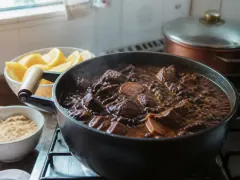 FeijoadaBlack beans and salted, smoked, and fresh pork on one stove, simmered until the broth turns ink-dark. A Saturday, with rice, farofa, orange, and couve waiting.
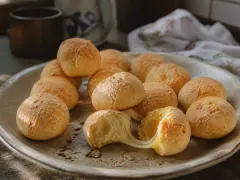 Pão de queijoCassava starch scalded with hot milk and oil until it turns glossy, then bound with egg and cheese. Crackled outside, stretchy inside, gluten-free because there is no wheat in the bowl.
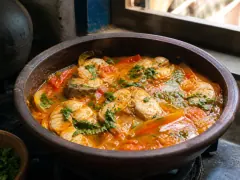 Moqueca baianaFish stewed under a lid in coconut milk and dendê until the broth turns orange-gold and the fillets just flake. Peppers, tomato, and onion build the bed; cilantro and lime finish it.
 BrigadeiroCondensed milk, cocoa, and butter cooked until the paste pulls from the pan in a clean sheet, then cooled and rolled in chocolate sprinkles. Birthday tables across Brazil run on this fudge.
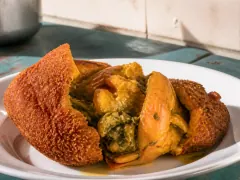 AcarajéBlack-eyed peas soaked, peeled, ground, and beaten until the paste holds a peak, then fried in dendê and split open for vatapá, salad, and pepper sauce. The fritter you smell before you see.
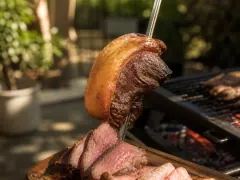 PicanhaThe sirloin cap with its fat left on, coarse-salted and cooked over managed coals until the fat renders and the centre stays pink. Churrasco at home, without the rodízio spit.
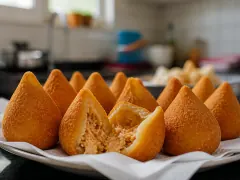 CoxinhaA broth-and-potato dough cooked to real plasticity, wrapped around shredded chicken, pinched into a drumstick and fried. It succeeds or fails in the five minutes after the broth hits the flour.
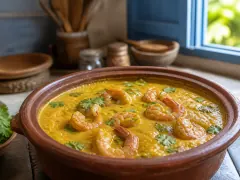 Bobó de camarãoManioc cooked until it turns translucent and heavy, then loosened with coconut milk and dendê until it ribbons on the spoon. The shrimp finish in that heat, not the other way around.
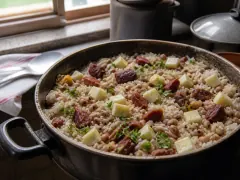 Baião de doisRice and black-eyed peas cooked together in the bean liquor until they cling, with carne de sol soaked back to life and queijo coalho seared until it squeaks. One pot, one rhythm.
 QuindimTwenty yolks, sugar and coconut baked in a water bath until the top sets into a lacquered dome, then unmolded so the shine becomes the face. Not flan, and not a cake.
There is no single Brazilian cuisine, and this ten does not pretend otherwise. It is a route.
Three of the dishes come from Bahia and are built on dendê — the orange palm oil that West Africa carried across the Atlantic and that nothing else substitutes for. Acarajé is fried in a pot of it on a corner in Salvador. Moqueca and bobó both begin by warming it until the pan smells toasty and fruity. Use a neutral oil instead and you will have made something edible that is not the dish.
The south sends picanha, a rump cap with the fat left on and cooked over coals. Minas sends pão de queijo and a plate of garlicky collards. The Northeast sends baião de dois. And three of the ten are festa food — brigadeiro, coxinha, quindim — because a country that takes a children’s birthday table this seriously ends up inventing a national sweet for it.
Cassava runs through most of the list, and it barely looks like itself twice. Sour starch scalded into a dough that stretches. Toasted flour scattered over a stew so it drinks the broth. Boiled and puréed until a shrimp sauce turns silky. Learn what the root does in each form and half this list stops being mysterious.
The other thing worth knowing before you start: the big pots here are weekend cooking. Feijoada is a Saturday, announced days ahead, with the beans already soaking on Thursday night.