Central America · 12°08′N 86°15′W · Kitchen testing pending
Nicaragua
Sour orange, corn in four states, and steam doing the work
The ten
Ranked by what people actually name first
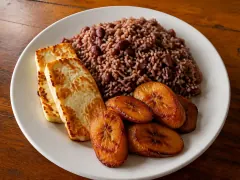 Gallo Pinto con Queso Frito y MadurosRed beans, not black, and no bottled sauce anywhere. The anthocyanins in red silk bean liquor dye the grains deep crimson while twelve hours of chilling has already recrystallised the amylose — so the rice takes the colour without ever turning gummy.
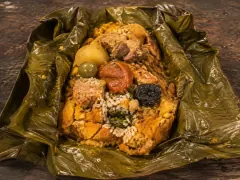 NacatamalesTwice the size of a Mexican tamal and over a pound each. The masa is not whipped raw with cold lard — it is cooked on the stove first until it drops in heavy ribbons, and hot riced potato goes in with it, because potato amylopectin is what keeps the parcel moist through four hours of boiling.
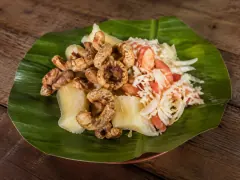 Vigorón GranadinoInvented in 1914 in Granada's central plaza to feed baseball crowds, and still served straight onto a banana leaf. Three temperatures and three textures at once: hot starchy yuca, shattering pork crackling, and a cold vinegar slaw whose acid dissolves the pork fat off your palate between mouthfuls.
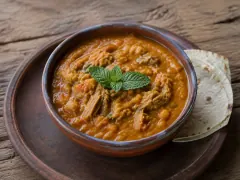 Indio ViejoChorotega and Nicarao heritage in a bowl that sits between soup and polenta. Day-old tortillas are soaked in the beef broth and blended into a slurry that gelatinises between 70 and 80 °C — and the sour orange goes in off the burner, because boiled it turns harsh and bitter and can curdle the starch.
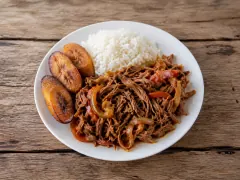 Carne DesmenuzadaWhere Cuban ropa vieja goes savoury and olive-forward, the Nicaraguan version goes *agridulce*. Sour orange, cane sugar and tomato paste together hit acid, sweet and glutamate receptors at once — and the flank is cut with the grain and pulled along it, so the shreds stay long enough to hold the glaze.
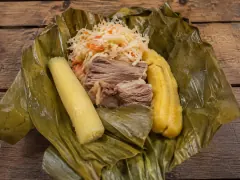 BahoFrom *vaho*, steam — and it is an engineered system. The tiers run by density: green plantain and yuca at the bottom, ripe plantain above, fatty beef crowning the stack, so rendered tallow bastes downward for four and a half hours while steam rises through the leaf chimney.
 Sopa de QuesoHoly Week, when meat is off the table. One cheese-masa dough is used in two physical states: two-thirds fried into crisp rosquillas, one-third blended with milk and whisked into the broth, where the corn starches gelatinise at 85 °C into a velvety golden potage.
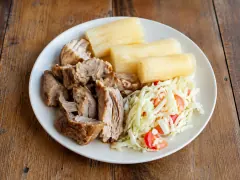 Chancho con YucaThe king of the fritanga. The pork simmers in its own marinade until the water goes, and then — without anything being added — the pan temperature climbs and the same pork begins frying in its rendered lard. Fry it raw instead and the achiote burns black long before the meat is done.
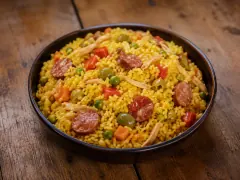 Arroz a la ValencianaNothing like Spanish paella — where that is dry, crusty and saffroned, this is moist, buttery and rich. Three meats are cooked separately and folded in with the broth so none of them overcook, and parboiled rice is sealed in foaming butter so it drinks a litre of stock without bursting into starch.
 Quesillo con TrenzaFrom Nagarote on the Managua–León road. Braided pasta filata cheese is softened in 60 °C water — never boiling, which splits it into butterfat and rubber — wrapped in a tortilla straight off the comal, and drowned in cream at 4 °C. The whole dish is that temperature gap.
Sour orange is the acid this country runs on. Naranja agria appears in six of these ten dishes, and it is doing chemistry, not garnish: it drops the pH of marinating pork to about 4.2, which denatures the surface proteins and lets garlic and fat-soluble achiote pigments travel deep into the meat over twelve hours. It also has to be handled carefully. In indio viejo it goes in off the burner, because boiled it loses its floral aromatics, turns bitter, and can curdle the gelatinised corn starch it was added to brighten.
Corn turns up in four separate physical states. Day-old tortillas are soaked and blended into a slurry that thickens indio viejo. Fresh masa is kneaded with dry aged cheese, then split — two-thirds fried into crisp rosquillas, one-third blended with milk to thicken the same bowl of Lenten soup. Nacatamal masa is cooked on the stove with lard and riced potato before it is ever wrapped, which is what separates it from a Mexican tamal and what stops it drying out over a four-hour boil. And in gallo pinto the corn is absent altogether — that is rice, retrograded for twelve hours in the fridge so the grains fry loose.
The two great pots are both engineered steam systems. Baho tiers by density — green plantain and yuca on the bottom, ripe plantain above, fatty brisket crowning the stack — so that for four and a half hours the rendered tallow bastes downward through the layers. The green plantains come out purple and sweet; reverse the order and the ripe ones dissolve into nothing. Nacatamales work the same principle inside individual banana-leaf parcels, boiled rather than steamed, with the reservoir topped up every hour.
And then there is the country’s habit of deliberate temperature contrast. Vigorón puts hot yuca under crisp pork under a cold vinegar slaw whose acid dissolves the pork fat off the palate between bites. Quesillo wraps 60 °C cheese in a tortilla straight off a 190 °C comal and drowns it in cream at 4 °C. Both are assembled at the very last second, and both are eaten with your hands.