Caribbean · 18°32′N 72°20′W · Kitchen testing pending
Haiti
Épice, sour orange, and a Scotch bonnet that is never punctured
The ten
Ranked by what people actually name first
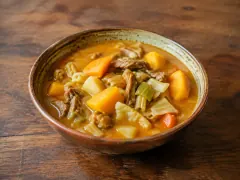 Soup JoumouThe soup of freedom, eaten every 1 January since 1804. Puréed calabaza is the entire structure — its water-soluble pectins trap the water and suspended marrow lipids into an opaque golden potage — and the Scotch bonnet floats whole and unpunctured, perfuming the steam without ever releasing its capsaicin.
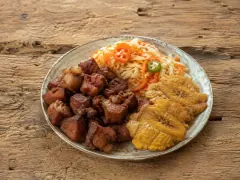 Griot de Porc avec PiklizBraised, then fried — two phases, and the gap between them matters most. The pork must be patted bone-dry and air-dried fifteen minutes, because any surface water steams the crust soft instead of letting it shatter. The pikliz is the counterweight: 5% acetic acid against unctuous pork fat.
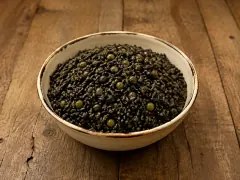 Diri ak Djon DjonThe crown of the celebration table. The mushrooms are never eaten — they are steeped and then pressed hard through a sieve for their inky liquor, which carries both the melanin pigment and the guanylate that makes the rice taste of forest floor. Press them properly or you throw away half the dish.
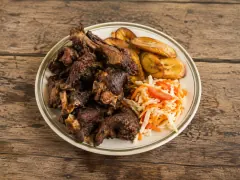 Tassot de CabritGriot's rugged cousin. Goat muscle is dense, lean and barely marbled, so it gets ninety gentle minutes to turn its cross-linked collagen into gelatin — and then strictly three to four minutes in the oil, because anything longer drives the moisture back out of meat that had almost none to begin with.
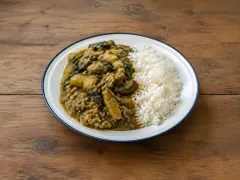 Légume HaïtienDo not be misled by the name — this is a rich, unctuous braise, not a light medley. The vegetables are steamed soft in the beef vapours, lifted out, and crushed by hand in a mortar. A blender would rupture every cell and give you watery purée; a pestle leaves the rustic texture the dish is built on.
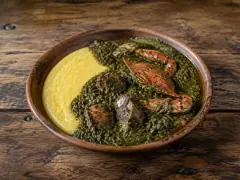 Mayi Moulen ak Fèy LaloJute leaves carry a soluble mucilage rich in rhamnose and galacturonic acid, and forty-five minutes of simmering releases it. That sap is the emulsifier — it binds rendered pork fat, crab liquor and tomato paste into a velvety green sauce, poured over coarse cornmeal cooked to a deliberate al dente.
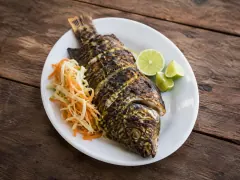 Pwason Boukannen ak Pwason Gros SelThe two pillars of Haitian seafood: whole snapper smoked over wood coals, or poached in a fiery lime court-bouillon. Either way it is scored three times to the backbone, because without those slits the thick dorsal muscle stays raw while the tail dries out — and it comes off the heat at 60 to 63 °C.
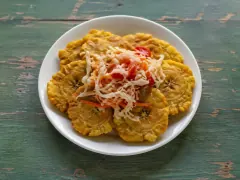 Banan Peze avec PiklizFried twice, and the one-second dip between the two fries is the whole trick. Salted garlic water seasons the interior by capillary draw and leaves a film on the surface; at 190 °C that film flashes to steam and blows microscopic blisters into a crust that shatters without absorbing oil.
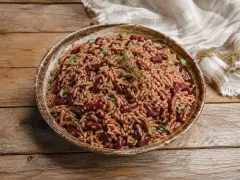 Diri ak Pwa WoujThe daily anchor of the Haitian household. The beans are strained and their dark broth becomes the cooking liquid — anthocyanins and released starch are what stain the rice rosy-chestnut — and coconut lipids keep the starch chains from knitting, so the grains stay loose.
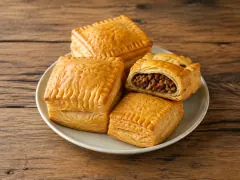 Pâté HaïtienFrench lamination with Caribbean soul — not the turmeric shortcrust of the British Caribbean, but real pâte feuilletée folded into over a hundred layers. A splash of vinegar weakens the disulfide bonds so the dough rolls without snapping back, and breadcrumbs trap the filling's juices so they never reach the pastry.
Two things start almost every dish here. The first is épice — a wet green paste of scallion, garlic, shallot, parsley, thyme and sweet pepper blended with oil, which goes into nine of these ten recipes. The second is acid: raw meat is scrubbed with cut limes and sour Seville oranges before it is seasoned at all. That is not superstition. The citric and malic acids denature the surface proteins, which strips the gamey note off goat and lets the épice penetrate over twelve hours instead of sitting on the outside.
The Scotch bonnet appears in seven dishes and is almost never cut. Capsaicin lives in the internal placenta glands, so a whole unpunctured pepper floated on the surface of a pot perfumes the steam with fruity, floral terpenes and contributes no heat at all — then gets lifted out and discarded before serving. The exception is pikliz, where the peppers are julienned and left in raw cane vinegar for a day precisely so the heat does come out. The two techniques are the same ingredient used in opposite directions, and they end up on the same plate.
Twice-cooking is the other structural habit. Griot and tassot are both braised until the collagen has gone to gelatin, then patted bone-dry, air-dried fifteen minutes and flash-fried — and that drying step is the entire difference between a shattering crust and steamed meat. Banan peze does the same thing to a green plantain: a gentle first fry at 160 °C to gelatinise the interior starches, a smash in the wooden pezwa, a one-second dip in salted garlic water, then 190 °C oil where that film of water flashes into microscopic steam blisters.
The two dishes that carry the most history are the two that thicken themselves. Soup joumou, eaten every January 1st since independence in 1804, gets its body from puréed calabaza — the squash enslaved Haitians grew and were forbidden to eat. Fèy lalo gets its from jute leaves, whose soluble mucilage emulsifies pork fat and crab liquor into a velvety green sauce. Neither uses a spoonful of flour.