South America · 6°48′N 58°09′W · Kitchen testing pending
Guyana
Cassareep, wiri wiri and pepperpot for Christmas
The ten
Ranked by what people actually name first
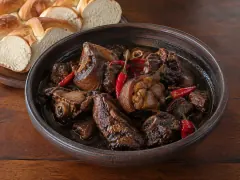 PepperpotThe national dish and the Christmas morning pot. Beef chuck, oxtail and trotters simmered for three hours in cassareep, the black bittersweet reduction of bitter cassava juice, with cinnamon, clove, wild thyme and whole wiri wiri peppers floated unbroken on top. Better the next day, and the day after.
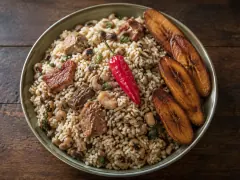 Cook-up RiceThe Saturday night and Old Year's Night pot. Parboiled rice simmered in thick coconut milk with salt beef, smoked pigtail, chicken, black-eyed peas and split peas, thyme and a single whole wiri wiri, sealed under foil and steamed until the grains glisten and the cured meats have seasoned the whole pot.
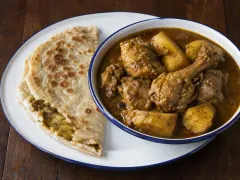 Chicken Curry with Dhalpuri RotiIndo-Guyanese Sunday cooking. A wet paste of curry powder, roasted geera, turmeric and garlic is fried in hot oil until the water is gone and the oil splits out, the bunjal, before the chicken and potatoes go in. Alongside, a split-pea-stuffed flatbread rolled paper-thin, puffed on a hot tawa and clapped between the hands.
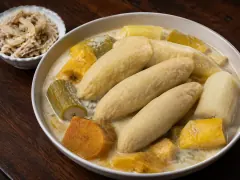 MetemgeeThe Afro-Guyanese provision pot. Eddoes, plantains and sweet potato simmer with salt fish and thyme beneath a crown of steamed duffs. Separately cooked sweet cassava goes into the thick coconut broth just before serving.
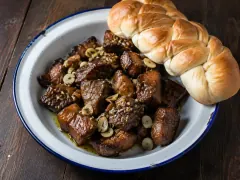 Garlic PorkA Madeiran Portuguese Christmas dish. Fatty pork shoulder marinates overnight in cane vinegar with crushed garlic, thyme and wiri wiri, then simmers in a dry pan until the vinegar boils away and the meat fries in its own fat.
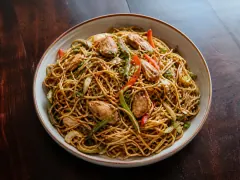 ChowmeinThe Chinese-Guyanese wok dish found in every home and school canteen. Thin egg noodles boiled just short of al dente and rinsed cold, then flash-fried over maximum heat with marinated chicken, bora beans, carrot and cabbage in dark mushroom soy, oyster sauce and a fennel-free five-spice, finished with scallion and served with pepper sauce.
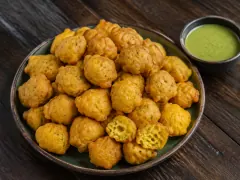 Pholourie with Mango SourThe Indo-Guyanese street fritter sold in brown paper bags at markets and school gates. Soaked yellow split peas ground to a slurry, beaten into a flour batter with yeast, turmeric and roasted geera, fermented until spongy, and dropped into hot oil where each spoonful swells into a hollow golden sphere, eaten with a tart, fiery green mango sauce.
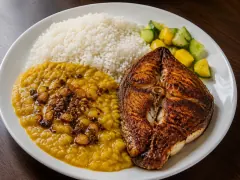 Dhal and Rice with Fried FishThe weekly Guyanese comfort plate. Yellow split peas boiled soft with turmeric, garlic and whole wiri wiri, swizzled smooth with a wooden dhal gutni, then woken with the chunkay, garlic chips and cumin seed fried in smoking oil and poured hissing into the pot, served over parboiled rice with a fish steak rubbed in green seasoning and fried crisp.
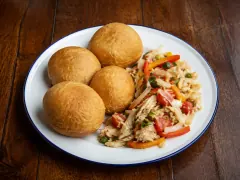 Bakes and SaltfishThe weekend breakfast. Despite the name, bakes never see an oven. Discs of leavened dough are dropped into hot oil, where they puff into hollow golden floats, then split while steaming and stuffed with salt cod boiled twice and sautéed with onion, tomato, garlic, fine-leaf thyme and wiri wiri.
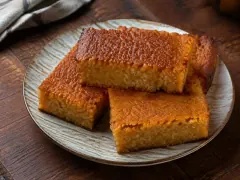 Cassava PoneA Guyanese pone of cassava, grated coconut and orange calabaza, sweetened with Demerara sugar and scented with nutmeg, cinnamon and clove. This home version uses flaked, fully cooked cassava and a shallow metal pan for dark caramelised corners.
Guyana calls itself the land of six peoples, and the kitchen shows it. Lokono and Kalina cooks developed cassareep, a black, bittersweet syrup made from cassava that gives pepperpot its dark colour and depth. Freed African villagers farmed the provision grounds of yam, eddo, cassava and plantain that go into cook-up rice and metemgee. Indentured workers from Uttar Pradesh and Bihar brought the bunjal, the frying of a wet spice paste until the oil separates, and the dhalpuri roti. Madeiran Portuguese brought pork cured in garlic and vinegar. Cantonese labourers brought the wok. The English left the word “bakes” for a bread that is fried.
The heat is the wiri wiri, a cherry-sized pepper with a fruity, tomato-like aroma, and it is nearly always used whole. It floats unbroken on pepperpot, cook-up and metemgee so the steam carries its perfume and the seeds keep their fire to themselves. Roasted geera, cumin toasted until it smokes and ground fine, is the other signature, in the curry, the dhal, the pholourie batter.
Two techniques define the cooking. Coconut milk, freshly pressed and thick, is the liquid for rice and for root stews, its fats coating each grain so parboiled rice stays whole under a long simmer. And the chunkay: garlic chips and cumin seed fried in smoking oil for forty-five seconds and poured, hissing, into a pot of dhal.
The pepperpot is the country’s Christmas. Oxtail, trotters and chuck simmer for hours in cassareep with cinnamon and clove. It is eaten with thick slices of plait bread. At home, refrigerate leftovers promptly; cassareep and daily reboiling are not substitutes for safe cold storage.