South America · 51°42′S 57°51′W · Kitchen testing pending
Falkland Islands
Camp mutton, smoko baking and a fish pie at the edge of the South Atlantic
The ten
Ranked by what people actually name first
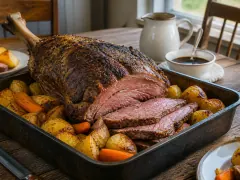 Slow-Roasted Falkland LambThe Sunday joint of the islands. A bone-in leg rubbed with oil, garlic, rosemary, salt and pepper, set over potatoes and carrots in a hot oven for twenty minutes to colour, then roasted slowly at 165 °C with stock in the pan to 63 °C for pink or 71 °C for well done. Rested twenty-five minutes, the tin deglazed for gravy, and carved across the grain.
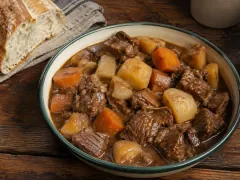 Camp Mutton StewThe winter pot of the settlements. Mutton shoulder browned in batches until the pan carries a dark fond, onions softened in the fat and dusted with flour, the meat returned with stock and bay for two hours at the gentlest simmer, then carrots, swede and potatoes added and cooked until everything is tender at once. Rested, skimmed and seasoned before it meets bread.
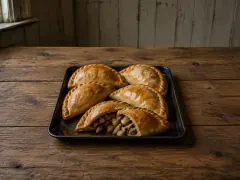 Falklands Lamb PastiesThe shearing-shed lunch, carried to the gangs in a tin. Cold butter rubbed into flour and brought together with cold water, chilled, rolled into circles and filled raw with small dice of lamb shoulder, potato, swede and onion, seasoned and dotted with butter. Crimped, brushed with egg, vented, and baked until the pastry is deep gold and the filling piping hot.
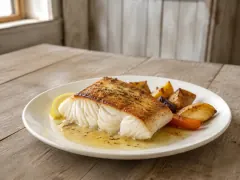 Pan-Roasted Patagonian ToothfishThe deep-water fish of the islands' longliners, cooked simply. Thick fillets patted dry, seasoned and rested cold, seared skin side down in a hot ovenproof pan until the crust is deep gold, turned and basted with foaming butter, garlic and thyme, then finished in a 190 °C oven until the centre reaches 63 °C and flakes in moist layers. Lemon beside.
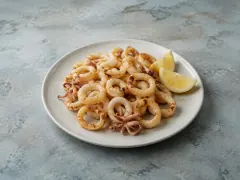 Falkland Calamari with LemonThe islands sit on the richest squid grounds on earth, and this is the plate that follows. Cleaned squid cut into even rings and tentacle clusters and dried well, dipped in a thin batter of flour, cornflour, baking powder and cold sparkling water, and fried at 185 °C in small batches for about ninety seconds until crisp and just cooked. Salted at once, with lemon.
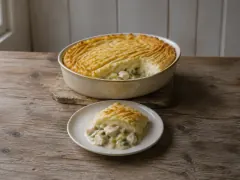 Falklands Fish PieThe Stanley standby, a pie of the day's white fish under mash. Mixed firm fillets poached gently in milk and lifted out, the milk kept for a sauce built on softened leeks, butter and flour, the fish and peas folded through it, and everything covered with a firm buttery mash and grated cheddar. Baked at 200 °C until bubbling and browned, and rested ten minutes.
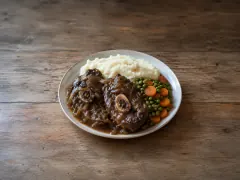 Mutton Chops with Onion GravyWeeknight camp cooking, done slowly. Thick mutton chops browned hard and set aside, three onions cooked in the same pan until soft and amber, flour stirred through them, then stock and Worcestershire sauce added gradually to a smooth gravy. The chops go back under the lid to braise for about seventy-five minutes, and come to the plate with mash and peas.
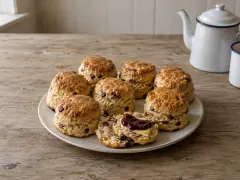 Teaberry Smoko SconesSmoko is the mid-morning break, and these are its scones. Cold butter rubbed into self-raising flour, sugar and small pink teaberries stirred through, milk folded in to a soft dough patted three centimetres thick and never kneaded. Cut straight down, set close together on a hot tray, brushed with egg and baked at 220 °C until tall and golden. Split warm, with jam.
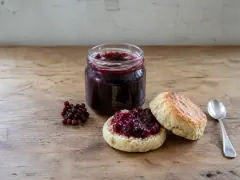 Diddle-Dee Berry JamThe islands' own preserve, from the red crowberry that carpets the heath. Diddle-dee berries simmered with a little water until they burst, sugar and lemon juice stirred in until dissolved, then boiled hard to 105 °C, skimmed, and tested on a chilled plate until it wrinkles. Potted hot into sterilised jars. Sharp, dark, made for scones.
 Smoko Ginger BiscuitsThe biscuit in every camp tin. Butter and brown sugar creamed until light, golden syrup and an egg beaten in, then flour, ground ginger and bicarbonate folded through to a soft dough. Rolled into balls, flattened a little, and baked at 180 °C for ten to twelve minutes until the edges are firm and the centres still soft, so they cool crisp-edged and chewy.
The Falkland Islands are a British Overseas Territory in the South Atlantic, their sovereignty disputed with Argentina, and the atlas lists them as a territory, not a country. Some three and a half thousand people live here, most of them in Stanley and the rest in “camp”, the islanders’ word for everything outside the town. Camp is sheep country, and camp cooking is sheep cooking: mutton stewed with root vegetables through the winter, chops under onion gravy, a leg of lamb roasted slowly for Sunday, and pasties for the shearing gangs.
The other larder is the sea. The islands sit on one of the richest squid grounds on earth, and calamari with lemon is as local as anything gets; Patagonian toothfish comes off the same boats, and a fish pie under mashed potato is the Stanley standby. Everything is eaten with a strong cup of tea.
Smoko is the mid-morning break, and it has its own baking: ginger biscuits, scones, the cakes that every camp house keeps in a tin for whoever comes through the door. The berries on the heath go into them. Diddle-dee, a red crowberry that grows low across the islands, is picked in autumn and boiled into a sharp jam; the teaberry, small and pale pink, flavours scones and puddings. It is British farmhouse cooking, kept alive by distance, weather and the peat fire.