Pan-Roasted Patagonian Toothfish
The deep-water fish of the islands' longliners, cooked simply. Thick fillets patted dry, seasoned and rested cold, seared skin side down in a hot ovenproof pan until the crust is deep gold, turned and basted with foaming butter, garlic and thyme, then finished in a 190 °C oven until the centre reaches 63 °C and flakes in moist layers. Lemon beside.
- Prep
- 15 min
- Cook
- 15 min
- Serves
- 4
- Difficulty
- Medium
Researched · Kitchen testing pending
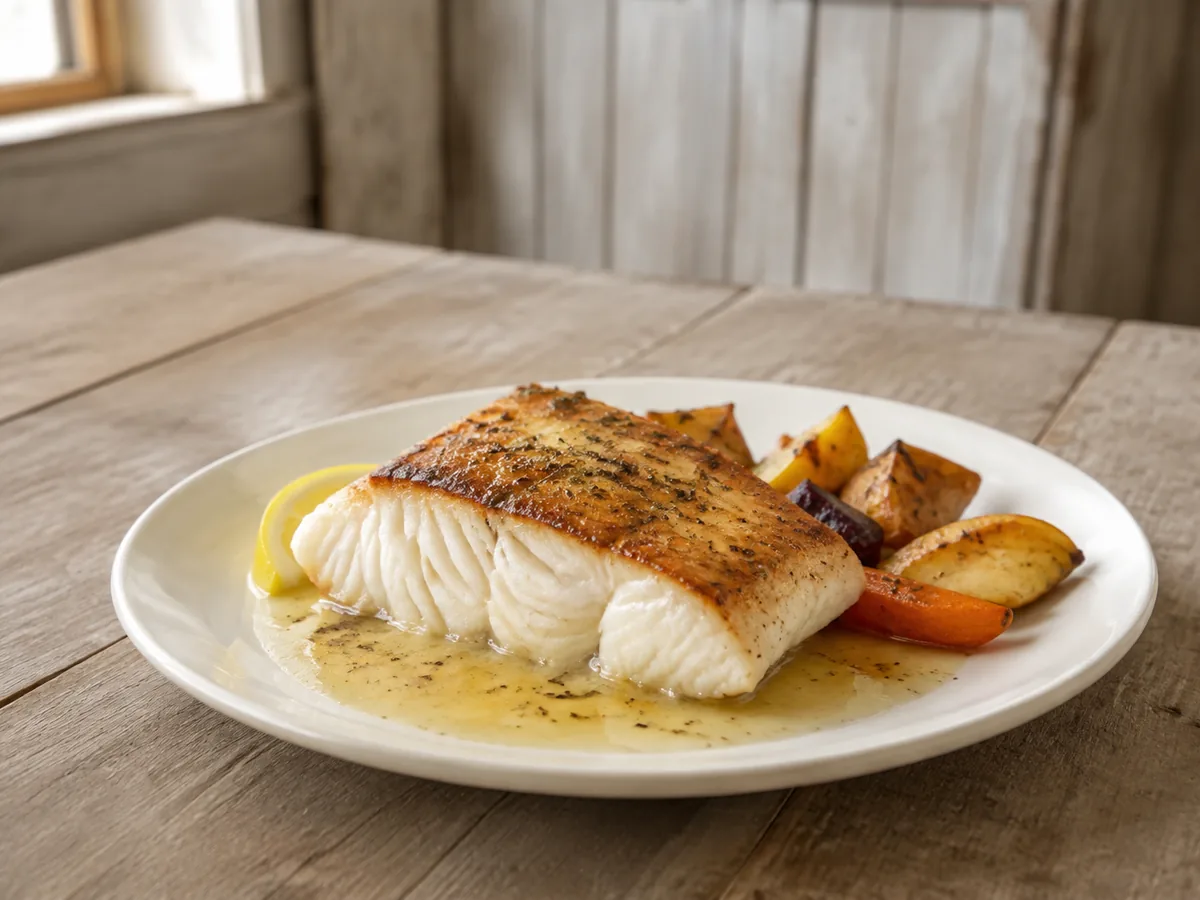
The Falklands’ waters are among the richest fishing grounds in the South Atlantic, and the longliners that work them bring in Patagonian toothfish, the deep-water fish the rest of the world buys as Chilean sea bass. In Stanley it is cooked simply, because it needs nothing: seared in a hot pan, basted with butter, finished in the oven, and served with lemon.
The fish is oily, large-flaked and forgiving, and the whole dish takes a quarter of an hour.
- 44Patagonian toothfish fillets, 180 g each, skin on
- 5 g¾ tspFine salt
- 2 g½ tspBlack pepper
- 30 ml2 TbspOil
- 40 g3 TbspButter
- 2 cloves2 clovesGarlic, crushed with the skin on
- 2 sprigs2 sprigsThyme
- 11Lemon, half juiced and half in wedges
Toothfish
Sold as Chilean sea bass elsewhere, Patagonian toothfish is a deep, cold-water fish with large white flakes and a high oil content that forgives a minute too long. The Falklands fishery is certified; buy it labelled as such.
Dry, then hot
A wet fillet steams; a dry one crusts. Pat it dry, salt it, and let it sit ten minutes in the fridge so the surface dries further before it meets the pan.
The five tastes on this plate
Salt is on the fish. Fat is the fish's own oil and the butter. Acid is lemon, in the butter and on the side. Heat is black pepper. Umami is the seared crust.
Equipment
- Heavy ovenproof skillet, cast iron or stainless
- Fish spatula
- Large spoon, for basting
- Instant-read thermometer
The pan goes from the stove into the oven, so no plastic handles. Cast iron holds the heat for the sear.
Method
Season and dry12 min
Heat the oven to 190 °C. Pat the fillets dry, season both sides with the salt and pepper, and set them uncovered in the fridge 10 minutes.
Heat the oven to 190 °C. Pat the fillets dry, season both sides with the salt and pepper, and set them uncovered in the fridge 10 minutes.
Sear4 min
Heat the oil in the skillet over medium-high until it shimmers. Lay the fillets in skin side down, press gently for 20 seconds, and sear 3 to 4 minutes without moving them until the edge of the skin is deep gold and releases easily.
Heat oil over medium-high until shimmering. Add fish skin-side down and press gently for 20 seconds. Sear undisturbed 3–4 minutes until the skin edges are deep gold and release easily.
Turn and baste1 min
Turn the fillets. Add the butter, garlic and thyme; when the butter foams, tilt the pan and spoon it over the fish for 30 seconds.
Turn the fillets. Add the butter, garlic and thyme; when the butter foams, tilt the pan and spoon it over the fish for 30 seconds.
Finish in the oven6 min
Move the pan to the oven and roast 4 to 6 minutes until the thickest part reads 63 °C and the flakes separate when pressed.
Move the pan to the oven and roast 4 to 6 minutes until the thickest part reads 63 °C and the flakes separate when pressed.
Rest and sauce3 min
Rest the fish on warm plates 3 minutes. Add the lemon juice to the pan butter, swirl, and spoon it over the fillets. Lemon wedges beside.
Rest the fish on warm plates 3 minutes. Add the lemon juice to the pan butter, swirl, and spoon it over the fillets. Lemon wedges beside.
Sensory cues of doneness
- Visual: a deep gold crust on the skin side; the flesh opaque white, separating into thick moist flakes.
- Auditory: a steady sizzle at the sear; the butter's foam hissing as it is spooned.
- Olfactory: browned butter, garlic, thyme and a clean sweetness from the fish.
Check for a deep gold skin crust and opaque white flesh separating into thick, moist flakes. Expect steady sizzling, hissing butter foam and aromas of browned butter, garlic, thyme and sweet fish.
Storing it
Best straight from the pan. Cooked toothfish keeps a day refrigerated and is good cold, flaked into a salad; do not reheat it hard.
Troubleshooting
- Skin stuck to the pan.
Moved too early, or the pan was not hot. Wait for the shimmer and for the fish to release on its own.
- Dry.
Overcooked. Sixty-three degrees and out; it climbs while it rests.
- Pale, no crust.
The fillet was wet. Pat dry, salt, and the 10 minutes uncovered in the fridge.
Substitutions
One-to-one swaps, with the technique change each one needs.
Ingredient substitutions
| Ingredient | Replace with | Culinary impact and technique adjustment |
|---|---|---|
| Toothfish | Black cod, halibut or thick cod loin | Leaner fish; pull them at 60 °C |
| Thyme | Rosemary or bay | Rosemary is louder; one small sprig |
| Butter | Olive oil, with the lemon added off the heat | Lighter, no browning; still baste |
Scaling
Half
Two fillets in a smaller skillet; the same timings.
Double
Two skillets, or sear in two rounds and finish all together on a tray in the oven.
What to serve it with
- Roasted carrots, potatoes and beetroot
- Buttered peas, or wilted greens
- A glass of Chilean Sauvignon Blanc
Questions
Is toothfish sustainable?
The Falklands fishery is certified, with quotas and observers on the longliners. Look for its label; unlabelled toothfish is another matter.
What is it like?
Rich, buttery and large-flaked, closer to black cod than to sea bass despite the market name.
Skin on or off?
On, for the sear. It crisps and protects the flesh; it can be left on the plate.