Falkland Calamari with Lemon
The islands sit on the richest squid grounds on earth, and this is the plate that follows. Cleaned squid cut into even rings and tentacle clusters and dried well, dipped in a thin batter of flour, cornflour, baking powder and cold sparkling water, and fried at 185 °C in small batches for about ninety seconds until crisp and just cooked. Salted at once, with lemon.
- Prep
- 20 min
- Cook
- 10 min
- Serves
- 4
- Difficulty
- Medium
Researched · Kitchen testing pending
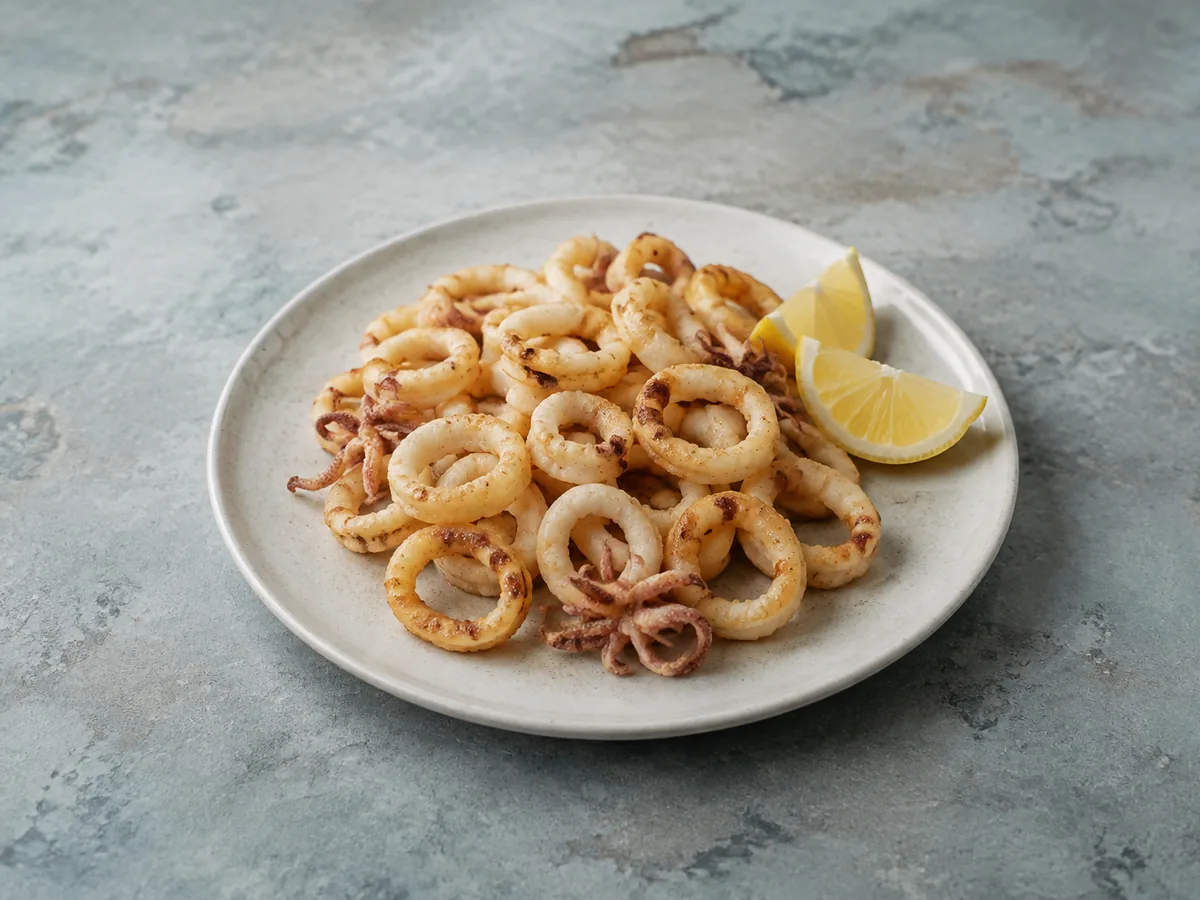
Every October the squid fleet gathers off the Falklands under lights bright enough to see from space, and calamari is as local a dish as the islands have. In Stanley’s pubs it comes battered and fried with lemon, and the batter is a thin one of flour, cornflour and cold sparkling water, so it shatters rather than coats.
The only technique is restraint: hot oil, a small handful at a time, and out after ninety seconds.
- 800 g1¾ lbCleaned squid, bodies and tentacles
- 250 g2 cupsAll-purpose flour
- 50 g⅓ cupCornflour
- 5 g1 tspBaking powder
- 250 ml1 cupCold sparkling water
- 6 g1 tspFine saltplus flaky salt to finish
- 1 L4 cupsNeutral frying oil
- 22Lemons, in wedges
Ninety seconds
Squid is tender at ninety seconds and tender again after forty minutes; everything in between is rubber. Hot oil, small batches and a timer.
Dry squid, cold batter
Water on the squid steams the batter off. Dry it on paper, twice. The batter is mixed at the last minute with water straight from the fridge so the bubbles are still in it; lumps are fine.
The five tastes on this plate
Salt is in the batter and on top. Fat is the frying oil. Acid is lemon, squeezed on hot. There is no heat unless a pepper sauce is offered. Umami is the squid's own sweetness.
Equipment
- 4 to 5-quart heavy pot with a deep-fry thermometer
- Two bowls, one for flour and one for batter
- Spider or slotted spoon and a rack lined with paper
- Timer
A wide pot gives the oil surface for small batches without crowding; crowding drops the temperature and the squid boils in its batter.
Method
Cut and dry10 min
Slice the squid bodies into 1 cm rings and halve any large tentacle clusters. Dry everything on paper towels, then on fresh ones.
Slice the squid bodies into 1 cm rings and halve any large tentacle clusters. Dry everything on paper towels, then on fresh ones.
Heat the oil6 min
Pour the oil into the pot to 5 cm deep and heat to 185 °C.
Pour the oil into the pot to 5 cm deep and heat to 185 °C.
Make the batter2 min
Whisk 200 g of the flour with the cornflour, baking powder and salt. Pour in the cold sparkling water and stir briefly; small lumps are fine. Put the remaining 50 g flour in the second bowl.
Whisk 200 g of the flour with the cornflour, baking powder and salt. Pour in the cold sparkling water and stir briefly; small lumps are fine. Put the remaining 50 g flour in the second bowl.
Coat and fry8 min
Working with a handful at a time, toss the squid in the plain flour, shake off the excess, dip in the batter and lift out with the excess dripping. Lower into the oil and fry 80 to 90 seconds until pale gold and crisp. Lift onto the rack, salt at once, and let the oil recover before the next batch.
Flour a handful of squid; shake off excess, dip in batter and let excess drip. Fry 80–90 seconds until pale gold and crisp. Drain on a rack, salt immediately and let oil regain 185 °C between batches.
Serve
Piled on a warm plate with the lemon wedges, immediately.
Piled on a warm plate with the lemon wedges, immediately.
Sensory cues of doneness
- Visual: a thin, pale gold, blistered coat; the squid inside white and just opaque.
- Auditory: a fierce sizzle that softens as the batter sets; the crunch when bitten.
- Olfactory: hot oil and a clean, sweet sea smell.
Look for a thin, pale gold, blistered coat with the squid inside white and just opaque. Listen for a fierce sizzle that softens as the batter sets and a crunch when bitten; smell hot oil and a clean, sweet sea smell.
Storing it
None; it is eaten within minutes. Cleaned raw squid keeps a day refrigerated at 4 °C or colder and freezes well for 3 months.
Troubleshooting
- Rubbery squid.
Fried too long. Ninety seconds, and out.
- Batter slid off.
Wet squid, or no flour dredge first. Dry twice and dust with flour.
- Soggy coat.
Oil too cool or the pot crowded. Wait for 185 °C between batches.
Substitutions
One-to-one swaps, with the technique change each one needs.
Ingredient substitutions
| Ingredient | Replace with | Culinary impact and technique adjustment |
|---|---|---|
| Squid | Cuttlefish, or small whole squid | Cuttlefish needs 2 minutes; whole squid 2½ |
| Sparkling water | Cold lager, or iced still water | Lager browns faster; still water gives a flatter coat |
| Cornflour | Rice flour | Crisper and glassier; the same amount |
Scaling
Half
Halve everything; two batches.
Double
Make the batter twice rather than once; it goes flat as it stands. Fry in steady small batches.
What to serve it with
- Lemon, and a bowl of garlic mayonnaise
- Chips, the Stanley pub way
- A cold beer
Questions
Why is Falkland squid famous?
The islands' waters hold huge shoals of Illex and Loligo squid, and the licensed jigging fleet is the biggest earner in the economy. Much of Europe's calamari comes from here.
Frozen squid?
Fine; most squid is frozen at sea anyway. Thaw in the fridge and dry it thoroughly.
Can I skip the batter?
Yes: flour and salt only, fried the same way, for a lighter Spanish style.