Central America · 13°42′N 89°12′W · Kitchen testing pending
El Salvador
Curtido on everything, hierbabuena in everything else
The ten
Ranked by what people actually name first
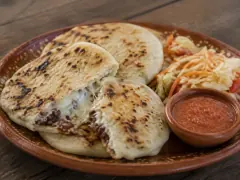 Pupusas RevueltasNot a tortilla with cheese on it — a sealed masa envelope around a molten core of three things. The fillings go in refrigerator-cold and paste-thick, because any free water in them flashes to steam on a 210 °C comal and blows the seams apart before the pupusa can puff.
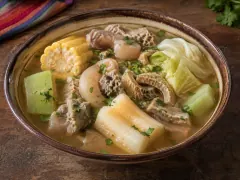 Sopa de PataThe Sunday restoration, simmered in aluminium cauldrons at the central market. Type-I and type-II collagen only becomes gelatin between 82 and 93 °C held for hours — boil it at 100 °C instead and the fat emulsifies into cloudy scum. Done right, the broth sticks your lips together.
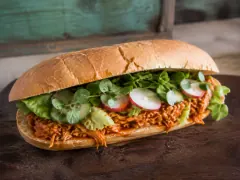 Panes con PolloNot a deli sandwich but an architectural banquet in a crusty roll. The recado thickens on seed fat alone — dry-toasted pepitoria and sesame ground with fire-charred tomato form an oil-in-water emulsion, no flour anywhere. And the watercress goes in first, as a hydrophobic shield against the hot sauce.
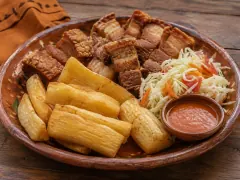 Yuca Frita con ChicharrónBoiled, dried, then fried — and the ten-minute rest on a rack between the two is what makes it work. Frying does not cook cassava, it only crisps it, so the root has to be tender to the centre first and dry on the outside second.
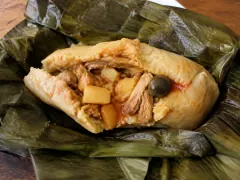 Tamales de GallinaWhere a Mexican tamal whips raw masa with cold lard, the Salvadoran one cooks its dough on the stove first. Lard poured in at 75 °C coats each swelling starch granule in a lipid film that stops it cross-linking into a rubbery cake — which is why this sets into a custard that trembles on the fork.
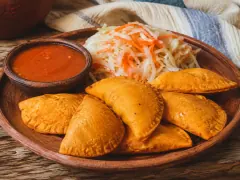 Pastelitos de Carne SalvadoreñosCorn masa, not wheat, kneaded sunset-orange with achiote. The oil is rubbed into the dry flour *before* any water goes in, which coats the starch particles and keeps the dough from turning rubbery — and the shell is pressed to 2 mm, so it shatters instead of going gummy at the seam.
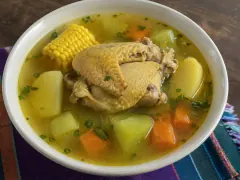 Sopa de Gallina IndiaCooked twice, deliberately. Ninety minutes at a sub-boil turns the mature hen's cross-linked collagen to gelatin, and then the already-cooked bird goes over 220 °C coals for six minutes — long enough to char and crisp the skin, too short to drive the moisture back out.
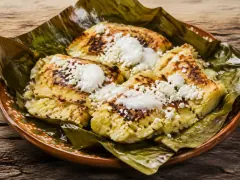 Riguas de Maíz Tierno con QuesoThe banana leaf is not packaging — it is the cooking vessel. Raw sweet-corn batter on bare iron scorches its own sugars long before the centre sets, so it goes inside a leaf that conducts heat gradually and traps the steam, then chars black and pyrolyses smoke straight into the cake.
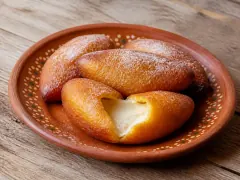 Empanadas de Plátano con PoleadaNot wheat turnovers at all — croquettes of boiled ripe plantain, mashed hot into a dough with no flour in it. The custard inside must be chilled firm before it is wrapped, because warm poleada turns watery in the fryer and bursts straight through the seam.
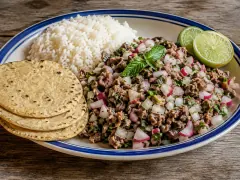 Salpicón de ResA chilled salad, not a stew. The beef is boiled, then refrigerated until cold and firm — which solidifies the residual fat and lets a sharp knife mince it into 2 mm confetti instead of tearing it into strings. A food processor turns the same meat into paste.
Almost half these dishes are fried, and every one of them arrives under the same thing: curtido. Cabbage, carrot and onion packed tight into a jar with cane vinegar and wild oregano and left to ferment for a day, then heaped cold over whatever came out of the oil. That is not a garnish habit but a structural one — the acid is what keeps a plate of fried corn masa and pork fat from becoming heavy, and it is why pupusas, pastelitos, yuca frita and the panes all get it.
Corn does the heaviest lifting, in three incompatible forms. Nixtamalised masa, hydrated to the softness of an earlobe, is clapped between oiled palms into pupusas — where the fillings must go in fridge-cold and paste-thick, because any free water in them flashes to steam on a 210 °C comal and splits the seams. Tamal masa is cooked on the stove first with lard poured in at 75 °C, which films each starch granule and makes the difference between a custard and a rubbery cake. And riguas skip dried corn entirely: young sweet kernels ground raw, which would scorch on bare iron and so are cooked inside a banana leaf that chars black and smokes them from the outside in.
Two dishes are built on seeds. The recado that carries panes con pollo thickens on nothing but dry-toasted pepitoria and sesame, ground with fire-charred tomato — an oil-in-water emulsion with no flour in it, and one that turns acrid if the seeds go thirty seconds too far. The same seed recado, in a redder form, is what glazes the chicken inside the Christmas tamales.
The country’s other signature is mint. Hierbabuena — spearmint, never peppermint — goes into the gallina india broth tied whole and then minced raw at service, and into salpicón, where cold lime-dressed minced beef is about as far from a stew as beef gets. And in that hen soup the bird is cooked twice on purpose: ninety minutes at a sub-boil for the collagen, then six minutes over 220 °C coals purely to char the skin, and served on its own plate beside the broth.