North America · 45°25′N 75°42′W · Kitchen testing pending
Canada
Cold-weather cooking and an unexpected amount of syrup
The ten
Ranked by what people actually name first
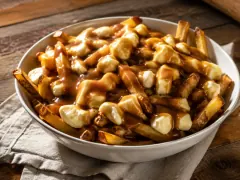 PoutineThe Quebec diner icon done properly. Russets soaked, blanched at 160 °C and crisped at 190 °C, fresh cheddar curds kept at room temperature so they squeak, and a peppery sauce brune of beef and chicken stock ladled over at 90 °C so the curds soften at the edges without melting into soup.
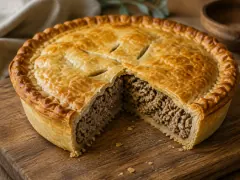 TourtièreThe Christmas Eve pie of Quebec. Coarsely ground pork and veal simmered with onion, celery and the quatre-épices, cinnamon, clove, allspice and nutmeg, then bound with hot mashed potato and chilled cold before it goes into a lard-and-butter pastry that shatters on the fork.
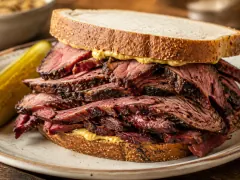 Montreal Smoked MeatThe Saint-Laurent Boulevard deli brisket. A whole packer dry-cured for ten days with salt, cracked pepper, coriander and a measured dose of curing salt, smoked over sugar maple to 68 °C, then steamed for three hours until the collagen melts, and sliced thin across the grain onto caraway rye with yellow mustard.
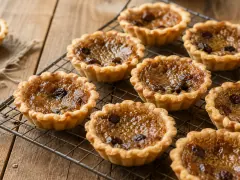 Butter TartsThe Ontario farm-bakery tart, descended from French sugar pie and Scottish treacle tart. A lard pastry shell holding butter, dark brown sugar, maple syrup, cream and egg, baked hot for sixteen minutes so the top crackles while the centre stays runny enough to drip.
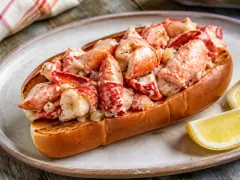 Atlantic Lobster RollMaritime purism. Cold-water claw, knuckle and tail meat, dried bone-dry and barely dressed with mayonnaise, lemon and chives, or tossed warm in clarified butter, packed into a top-split brioche bun whose flat sides have been griddled in butter until crisp.
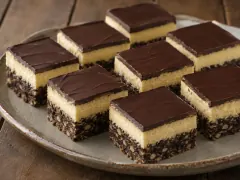 Nanaimo BarsThe unbaked three-layer bar from Vancouver Island. A tempered-egg base of graham crumbs, coconut, walnuts and cocoa, a pastel yellow buttercream made with English custard powder, and a dark chocolate top that snaps cleanly under a warm knife.
 Yellow Split Pea SoupSoupe aux pois, the sugar-shack winter staple that came over with Champlain's men. Yellow split peas simmered two hours with a smoked ham hock, salt pork lardons, mirepoix, bay and summer savory until they dissolve into a thick golden potage, salted only at the end.
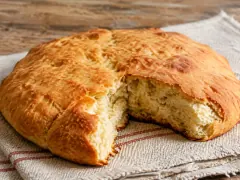 BannockThe hearth and campfire bread of First Nations, Inuit and Métis kitchens. Flour, lard, salt and water with baking powder, mixed for thirty seconds and never kneaded, fried low in a cast-iron skillet to a blistered golden crust over a pillowy crumb, and served with a warm wild blueberry and maple compote.
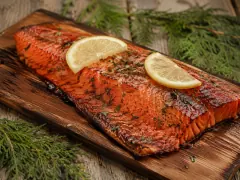 Cedar-Planked Sockeye SalmonThe British Columbia method the coastal First Nations have used for millennia, moved to a grill. A soaked western red cedar plank shields wild sockeye from the flame while its oils steam into the flesh, under a glaze of dark maple, grainy mustard and cider vinegar, pulled at 52 °C so it flakes without a trace of white albumin.
 Peameal Bacon on a BunToronto's sandwich, from the St. Lawrence Market counters. Wet-cured, unsmoked pork loin rolled in cornmeal, sliced 5 mm thick and seared two minutes a side in foaming butter, stacked four deep in a soft Kaiser roll with sweet-hot maple mustard.
Canadian cooking is a conversation between an enormous landscape, a hard climate and layered migration. It runs from the lobster wharves of the Maritimes to the cedar rainforests of British Columbia, with the French farmhouses of the Saint Lawrence, the Scottish and English farm kitchens of Ontario, and the Jewish delis of Montreal in between. Under all of it are the First Nations, Inuit and Métis kitchens that were roasting salmon on cedar and frying bannock in lard long before wheat flour reached the trading posts.
The fats and sugars are the tell. Pure maple syrup, boiled from sap in the spring thaw, sweetens the butter tart, glazes the planked salmon and goes into the mustard on the peameal bun. Leaf lard and beef tallow do the frying and laminate the pastry, which is why a tourtière crust shatters and why poutine fries survive a ladle of gravy. Coarse cracked pepper and coriander define the Montreal cure.
Two textures are peculiar to the country. Fresh cheddar curds that squeak against the teeth, because they have never been refrigerated and their casein is still elastic. And the runny centre of a butter tart, which depends on pulling the tin from the oven at sixteen minutes while the middle still wobbles.
The list also carries the country’s arguments. Raisins in the butter tart or not. Mayonnaise or warm butter on the lobster roll, which splits Nova Scotia from Prince Edward Island. Whether smoked meat can be sliced from anywhere but the point. None of them is settled, and the recipes say so.