Atlantic Lobster Roll
Maritime purism. Cold-water claw, knuckle and tail meat, dried bone-dry and barely dressed with mayonnaise, lemon and chives, or tossed warm in clarified butter, packed into a top-split brioche bun whose flat sides have been griddled in butter until crisp.
- Prep
- 25 min
- Cook
- 12 min
- Serves
- 4
- Difficulty
- Medium
Researched · Kitchen testing pending
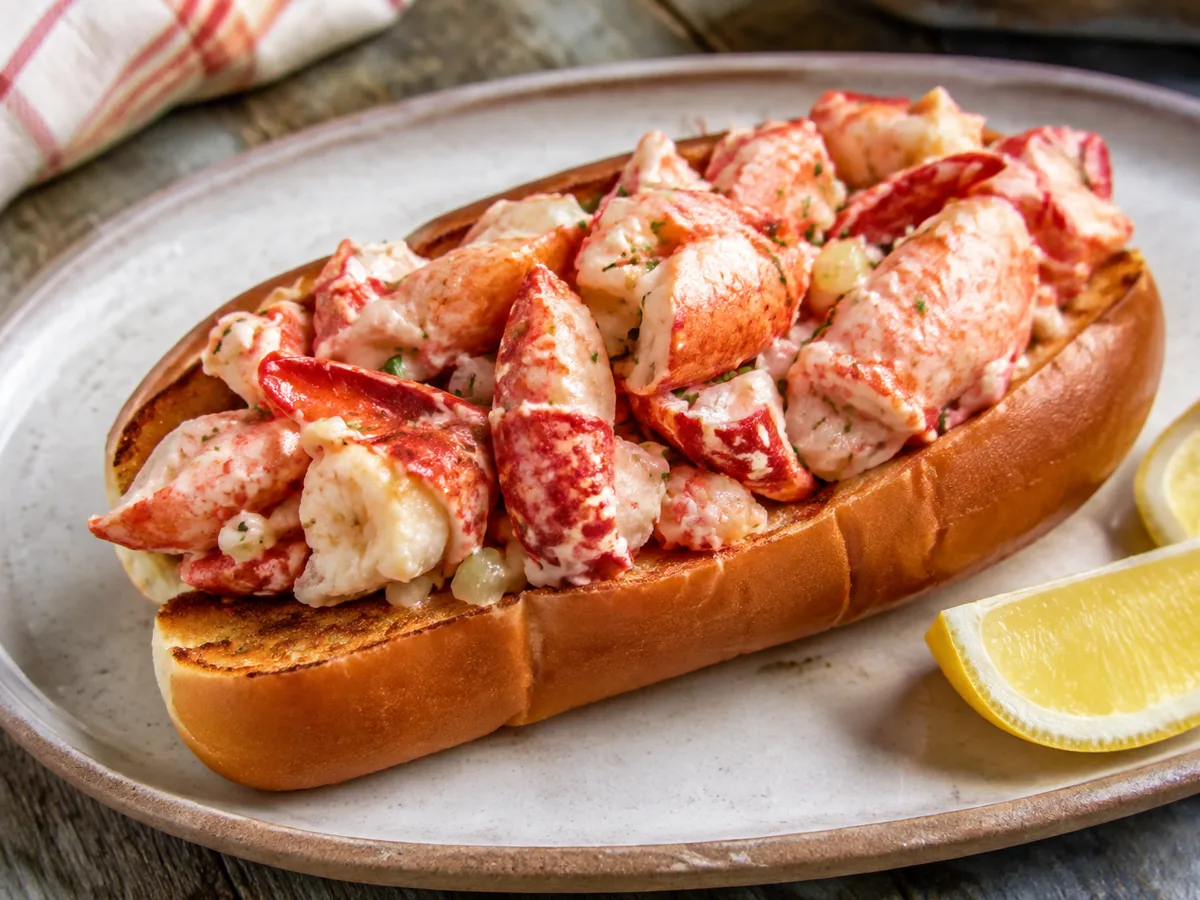
Along the Atlantic coasts of Nova Scotia, New Brunswick and Prince Edward Island, wharves unload wooden traps from icy North Atlantic water, and the lobster roll is a study in restraint. There is no celery salt, no paprika, no seafood salad. The cold-water lobster is allowed to dominate.
Claw, knuckle and tail meat is steamed only until opaque, shocked in salted ice water and drained dry. It is dressed with a minimum of mayonnaise or, Maritime style, warm clarified butter, a splash of lemon and minced chives, then packed into a top-split brioche bun whose flat outer walls have been buttered and griddled crisp.
- 600 g1⅓ lbCooked Atlantic lobster meat, whole claws, knuckles and chopped tail, drained bone-dry
- 44Top-split brioche hot dog buns, New England style with flat sides
- 60 g4 TbspUnsalted butter, softened, for griddling the buns
- 45 g3 TbspWhole-egg mayonnaiseor 60 ml warm clarified butter for the warm version
- 15 ml1 TbspFresh lemon juice
- 1 stalk1 stalkCelery, peeled of outer strings and cut into 1.5 mm diceabout 2 Tbsp
- 15 g2 TbspChives, sliced into fine rings
- 2 g½ tspFine sea salt
- 1 g¼ tspFreshly ground white pepper
- 4 leaves4 leavesBoston bibb lettuceoptional, as a moisture barrier in the bun
Sixty degrees, then ice
Lobster muscle has almost no collagen. Past 63 °C the proteins clench, squeeze out their water and the sweet claw meat goes to rubber. A gentle steam to 60 °C and an immediate salted ice bath stops it there.
Dry meat, or the bun dissolves
Any water left on the lobster breaks the mayonnaise and weeps into the bread. Pat every piece dry on paper towels before dressing.
Flat sides for a reason
Top-split buns have flat cut sides that griddle evenly in foaming butter, browning and caramelising into a crisp shell that keeps the soft crumb from going soggy.
The five tastes on this plate
Salt is the lobster's own sea salinity and the salted griddled bun. Fat is butter on the bread and mayonnaise on the meat. Acid is lemon cutting through both. Heat is chives and white pepper. Umami is sweet cold-water lobster and toasted milk sugars in the brioche.
Equipment
- 12-inch cast-iron skillet or flat griddle
- Wide mixing bowl and silicone spatula
- Paper towels
The wharf-side version comes off a flat-top griddle beside the lobster steamers. A heavy cast-iron skillet toasts the flat bun sides just as evenly.
Method
Prepare the lobster10 min
Check the meat for shell and cartilage. Keep the claws whole, cut the tail into 2 cm chunks, and leave the knuckles intact. Spread on paper towels and pat completely dry. Chill until assembly.
Check the meat for shell and cartilage. Keep the claws whole, cut the tail into 2 cm chunks, and leave the knuckles intact. Spread on paper towels and pat completely dry. Chill until assembly.
Mix the light dressing3 min
Whisk the mayonnaise, lemon juice, celery, white pepper and salt until smooth. For the warm Maritime version, replace the mayonnaise with 60 ml warm clarified butter and toss it over warm meat instead.
Whisk the mayonnaise, lemon juice, celery, white pepper and salt until smooth. For the warm Maritime version, replace the mayonnaise with 60 ml warm clarified butter and toss it over warm meat instead.
Dress the meat gently2 min
Add the cold lobster to the dressing and fold from the bottom up three or four times only, until every piece has a light gloss. Stir in half the chives and taste for lemon.
Add the cold lobster to the dressing and fold from the bottom up three or four times only, until every piece has a light gloss. Stir in half the chives and taste for lemon.
Toast the split-top buns5 min
Heat the skillet over medium, about 180 °C. Butter both flat outer sides of each bun generously. Toast flat side down 2 minutes until deep golden and crisp, flip to the other flat side for 2 minutes more, then stand the buns upright for 30 seconds to warm through.
Heat skillet over medium to about 180 °C. Generously butter both flat bun sides; toast each 2 minutes until deep golden and crisp. Stand upright 30 seconds to warm through.
Assemble2 min
Open the warm buns and slip in a lettuce leaf if using. Divide the lobster among the four rolls, mounding knuckle and tail inside, and crown each with a whole claw. Scatter the remaining chives over and serve at once.
Open the warm buns and slip in a lettuce leaf if using. Divide the lobster among the four rolls, mounding knuckle and tail inside, and crown each with a whole claw. Scatter the remaining chives over and serve at once.
Sensory cues of doneness
- Visual: a golden griddled bun overflowing with coral-red claw and white knuckle meat flecked with green chives.
- Auditory: a gentle sizzle as the buttered flat sides meet the griddle, then a crisp crunch through the toasted brioche.
- Olfactory: sweet ocean lobster, browned butter, lemon and toasted bread.
Look for golden crisp brioche filled with coral claws, white knuckle meat and green chives. Expect a gentle griddle sizzle and aromas of lobster, browned butter, lemon and toast.
Troubleshooting
- The lobster tastes of mayonnaise.
Too much dressing. Three tablespoons lightly glazes 600 g of meat and no more.
- A soggy, collapsing bun.
Wet lobster. Thawed or freshly steamed meat sheds liquid; pat it dry or the dressing turns to water.
- The bun will not toast evenly.
Standard side-split buns have rounded crusts. Use top-split buns with flat sides, or trim standard ones flat.
Substitutions
One-to-one swaps, with the technique change each one needs.
Ingredient substitutions
| Ingredient | Replace with | Culinary impact and technique adjustment |
|---|---|---|
| Atlantic lobster | Cold-water rock lobster tails, king crab or langoustines | One-to-one. Keep the meat tender and dry |
| Split-top brioche buns | Brioche hot dog buns with the sides trimmed flat | Slice a thin strip off each side to expose flat crumb for griddling |
| Chives | Fresh tarragon, minced, or scallion greens | One-to-one. Tarragon adds the anise note of French Maritime kitchens |
Scaling
Half, for 2
Use 300 g lobster. Dressing and griddling times do not change.
Double, for 8
Use 1.2 kg lobster and toast the buns in two batches.
What to serve it with
- Kettle-cooked crisps with sea salt
- A cold garlic dill pickle spear
- Nova Scotia Tidal Bay white, or a crisp Maritime pilsner
Questions
Cold mayonnaise or warm butter?
Both are Atlantic Canadian. Cold with light mayonnaise and celery is the Nova Scotia way; warm with clarified butter is common in Prince Edward Island and New Brunswick shacks.
Can I use frozen lobster meat?
Yes, good frozen claw and knuckle thawed slowly in the fridge. Press it gently in a sieve to drain all the thaw water.
Why keep the claws whole?
A whole claw on top makes the roll, and it bites differently from the knuckle and tail underneath.