U.S. territory · 18°21′N 64°56′W · Kitchen testing pending
U.S. Virgin Islands
Fungi, kallaloo and a burnt-sugar pot on St. Thomas, St. John and St. Croix
The ten
Ranked by what people actually name first
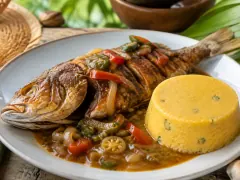 Fish and FungiThe national dish of the territory. Whole snapper scored, washed in lime, seasoned with thyme and poached at a sub-boil in a butter-tomato Creole sauce of onion, sweet peppers, garlic and vinegar under a whole Scotch bonnet, beside fungi, fine cornmeal streamed into okra water and beaten with a wooden paddle until it pulls clean from the pot into a smooth, buttered mound.
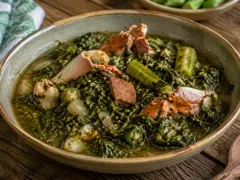 KallalooThe Old Year's Night pot. Twice-boiled salt pig tail and smoked ham hock simmered in beef stock, then dasheen leaves, okra, purslane, mallet-pounded conch and cracked blue crab with thyme, cloves, culantro and a splash of cane vinegar, cooked forty-five minutes until the greens collapse, whipped with a wooden swizzle stick into a velvet emerald potage, and served under a scoop of fungi.
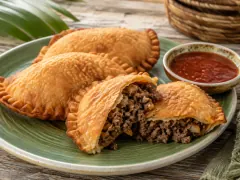 Meat PâtésThe market-square handheld, pronounced pah-tay. Ground beef simmered with onion, garlic, seasoning peppers, a little Scotch bonnet, thyme, tomato paste and Worcestershire, bound with a spoon of flour so it holds no free liquid, chilled cold, sealed inside a thin shortening pastry with a fork-crimped edge, and fried at 180 °C until the crust blisters gold.
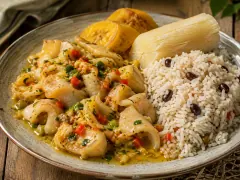 Conch in Butter SauceThe harbourside luxury, from Frenchtown to Frederiksted. Queen conch pounded to five millimetres, simmered forty-five minutes with onion, garlic and thyme until a fork meets no resistance, then finished in a skillet with sweet peppers, its own reserved broth, a whole Scotch bonnet, and 120 grams of cold butter swirled in off the boil into a velvet garlic-lime sauce.
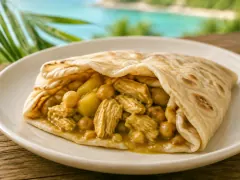 Pot RotiThe roti-shop parcel that came with Trinidadian and Guyanese migration. Bone-in chicken marinated in green seasoning, seared in a wet slurry of West Indian curry powder and roasted geera bloomed in hot oil, braised with russet potato chunks in stock until the meat leaves the bone, the gravy thickened by crushing potatoes into it, and folded tight into a warm dhalpuri roti with mango kuchela.
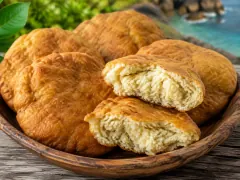 Crucian Johnny CakesThe food-fair bread of St. Croix. Flour, double-acting baking powder, a generous quarter cup of sugar and salt, cold butter rubbed in, cold milk stirred to a soft dough, kneaded a minute, rested thirty, flattened into discs, pricked three times with a fork so they puff evenly, and fried at 175 °C into golden pillows with a crisp shell and steamy layered crumb.
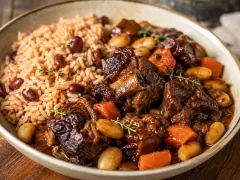 Stewed Oxtail, Crucian StyleSunday dinner on St. Croix, built on browning. Oxtail washed in lime and marinated overnight in green seasoning, garlic, Worcestershire, dark soy and allspice, dropped into brown sugar melted in oil until it foams almost black, so the meat takes a bittersweet mahogany lacquer, then braised three hours with thyme and a whole Scotch bonnet, and finished with carrots and butter beans in a thick, glossy gravy.
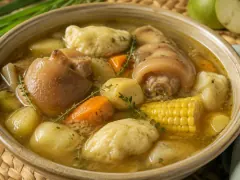 Bullfoot SoupThe Saturday cauldron outside every roadside cookshop. Lime-scrubbed cow heel simmered with yellow split peas for nearly two hours until the tendons are translucent and the peas have dissolved into a golden broth, then pumpkin, cassava, yam and corn rounds, a whole Scotch bonnet, and hand-rolled flour spinners dropped in for the last twelve minutes.
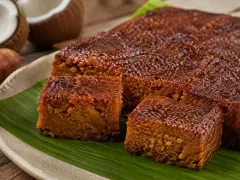 Sweet Potato PuddingThe Christmas and Carnival dessert, dense and dark. White-fleshed Caribbean sweet potato and calabaza grated raw with their juices, mixed with coconut milk, evaporated milk, melted butter, dark brown sugar, Cruzan rum, a big hand of fresh ginger, rum-plumped raisins, cinnamon, nutmeg, clove and a secret half teaspoon of black pepper, bound with flour and no eggs, and baked ninety minutes to a glossy mahogany top.
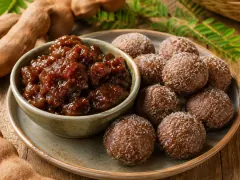 Stewed Tamarind and Tamarind BallsThe twin tamarind sweets of every island childhood. Half the shelled pulp, seeds and all, kneaded by hand with raw cane sugar, rum and a pinch of salt and rolled in sparkling sugar into chewy balls with no cooking. The other half simmered in a stainless pan with dark brown sugar, ginger, cinnamon and clove to a glossy mahogany preserve at thread stage, finished with Cruzan rum.
The three islands have been American since 1917 and Danish for two centuries before that, but the kitchen is West African and West Indian. Fungi, the national starch, is cornmeal beaten with okra until the pod’s own mucilage binds it into a smooth mound, and it descends from fufu. Kallaloo is a pot of dasheen leaves, okra and purslane simmered with salt pig tail, ham hock, pounded conch and blue crab, whipped with a wooden swizzle stick, and eaten on Old Year’s Night. Bullfoot soup is cow heel cooked until the tendons are liquid gelatin, with split peas, pumpkin, yam and cassava, and hand-rolled spinners dropped in at the end.
Two techniques mark the islands. The first is browning: dark brown sugar melted in oil until it foams almost black, then oxtail dropped into it so the meat takes on a bittersweet mahogany lacquer before it braises. The second is the whole Scotch bonnet, floated in the pot with its stem intact so it gives aroma and no fire, then lifted out. Green seasoning, a slurry of scallion, garlic, culantro, thyme and sweet seasoning pepper, goes into every marinade.
Trinidadian and Guyanese migration brought the roti shops, so a curried chicken or goat roti belongs here as much as it does in Port of Spain. The street food is carnival food: beef pâtés fried until blistered, Crucian johnny cakes puffed in hot oil, and tamarind rolled in sugar. Behind the sweets and the browning stands Cruzan rum, distilled on St. Croix since 1760, which goes into the sweet potato pudding, the stewed tamarind and the glass beside them.