U.S. state · 21°18′N 157°51′W · Kitchen testing pending
Hawaii
Canoe plants, an earth oven, and the plantation lunch tin
The ten
Ranked by what people actually name first
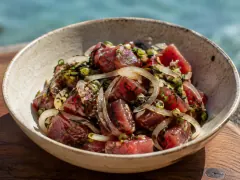 Ahi PokeThe original, before the mainland salad bar. Sashimi-grade yellowfin cut across the grain into 2 cm cubes in a chilled bowl, folded with coarse Hawaiian sea salt, chopped limu kohu, roasted crushed kukui nut, sweet Maui onion, scallion, shoyu and toasted sesame oil, and eaten within fifteen minutes. No citrus touches the fish.
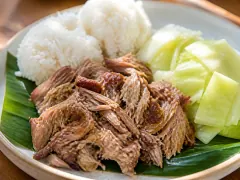 Kalua PorkThe imu, brought indoors. A bone-in pork shoulder scored, pierced, rubbed with liquid smoke and coarse red ʻalaea salt, wrapped in ti and banana leaves inside a Dutch oven, sealed under foil and a heavy lid, and roasted five hours at 160 °C until it reads 95 °C and the bone slides out, then shredded in its own juices.
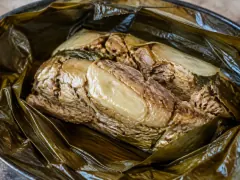 Lau LauThe ancestral parcel. A chunk of salted pork shoulder and a piece of salted butterfish wrapped in five or six young taro leaves, then bundled in two ti leaves and tied, and steamed three and a half to four hours until the taro has melted into silky greens, the pork is tender and every oxalate needle in the leaves is gone.
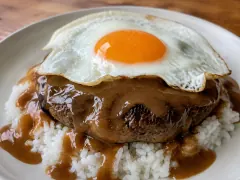 Loco MocoHilo, 1949, in four tiers. A mound of hot Calrose rice, a thick 80/20 chuck patty seared hard in cast iron, a brown gravy built on the patty's fond with mushrooms, a butter roux, beef stock, shoyu and Worcestershire, and a sunny-side egg on top whose yolk breaks into the gravy and turns it into a sauce.
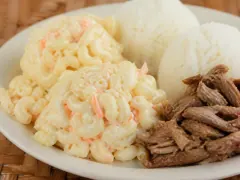 Hawaiian Macaroni SaladThe one cold scoop on every plate lunch, and nothing like a mainland pasta salad. Elbow macaroni boiled past al dente, drenched while scalding with cider vinegar and grated sweet onion so the acid goes into the pasta, dressed in two stages with mayonnaise and cold milk around a two-hour chill, with grated carrot and coarse black pepper and nothing else.
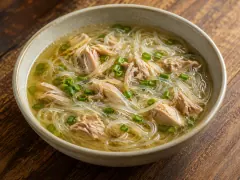 Chicken Long RiceThe luau soup with no rice in it. A whole hand of ginger, crushed with a cleaver, bloomed in oil with garlic, bone-in thighs seared and poached in chicken stock and shoyu, the meat shredded, and cut mung bean threads simmered in the broth until they turn clear and drink a third of it, finished with sesame oil and scallion batons.
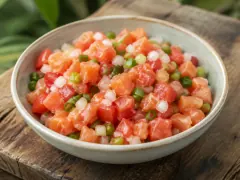 Lomi Lomi SalmonThe cold, salty counterpoint on the luau plate. Fresh salmon packed in coarse sea salt overnight, soaked two hours to bring the salt down, shredded, then massaged by hand with diced ripe tomato and sweet Maui onion until the vegetables give up their juice and the fish oils bind it, chilled, and finished with crushed ice at the table.
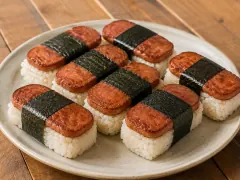 Spam MusubiThe island's handheld fuel, from surf contests to every convenience store on Oahu. Calrose rice cooked and seasoned with a little rice vinegar, slabs of Spam fried crisp and glazed in shoyu, mirin and sugar until the syrup clings, pressed onto a block of rice dusted with furikake in a musubi mould, and wrapped in a band of nori.
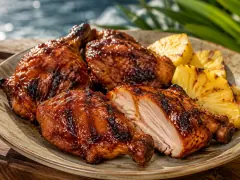 Huli Huli ChickenThe Saturday fundraiser bird. Spatchcocked chickens marinated four hours in a cooked sauce of pineapple juice, shoyu, brown sugar, ketchup, ginger and garlic, seared briefly over kiawe coals, roasted on the cool side of the grill, then brushed and flipped every five minutes with a reduced glaze so the sugar lacquers to mahogany without burning.
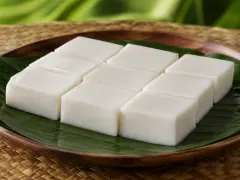 HaupiaThe luau's last word, in four ingredients. Coconut cream heated with water until steaming, a cold slurry of cornstarch or Polynesian arrowroot, sugar and a pinch of salt whisked in, cooked two full minutes past the moment it seizes into a glossy pudding, poured into a square pan and chilled three hours into a firm, clean-cutting block served on ti leaves.
Hawaii’s table was set twice. The first time by Polynesian navigators who crossed the Pacific in double-hulled canoes with a cargo of survival crops: kalo, the taro whose corm becomes poi and whose young leaves wrap lau lau; coconut; sugar cane; banana; the kukui nut whose roasted kernel is inamona; and pigs. Under the ahupuaʻa system, land ran from ridge to reef, with taro pondfields in the valleys and stone fishponds on the shore. That kitchen is the imu, an earth oven of hot basalt and crushed banana stump that steams a whole pig for a day, and it is poke, raw fish with sea salt, limu and inamona and no citrus at all.
The second setting came with the sugar and pineapple plantations after 1850. Chinese, Portuguese, Japanese, Filipino, Korean and Puerto Rican labourers ate side by side from tiered tin lunch boxes and traded what was in them. Shoyu and rice, ginger and glass noodles, sweet bread and sausage, and after the Second World War, canned luncheon meat. Out of that came the plate lunch: two scoops of rice, one of macaroni salad, and a protein glazed in something sweet and salty. Loco moco, Spam musubi and huli huli chicken are all children of that lunch tin.
The ten plates sit across both settings. Half are ancestral or near it: poke, kalua pork, lau lau, lomi salmon, chicken long rice, haupia. Half are local food: loco moco, mac salad, musubi, huli huli. Three seasonings run through everything. Hawaiian sea salt, plain or red with ʻalaea clay. Shoyu, mirin and cane sugar as the sweet-savoury glaze. And restraint with acid: a proper poke, a proper long rice and a proper haupia contain none.