U.S. state · 61°13′N 149°54′W · Kitchen testing pending
Alaska
Cold water, hot iron, and a sourdough that crossed the Chilkoot
The ten
Ranked by what people actually name first
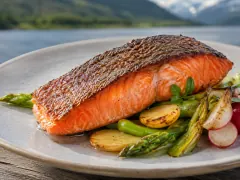 Pan-Seared Copper River King SalmonThe late-May fish, cooked the way Cordova line cooks do it. Skin scraped dry and scored, pressed flat onto 190 °C cast iron and left alone until the heat line climbs three-quarters of the way up, then basted with foaming butter, crushed garlic and chopped spruce tips and flipped for under a minute, to 52 °C at the centre.
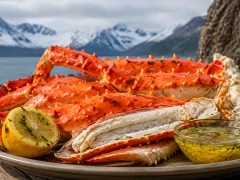 King Crab Legs with Clarified Herb ButterBering Sea red king crab is cooked and blast-frozen on the boat, so at home it is reheated, never boiled. Thawed eighteen hours, snipped at the knuckles and pre-split along the soft underside, then steamed six to eight minutes over white wine, lemon and dill to 55 to 60 °C, and served with clarified butter steeped with garlic, dill and smoked paprika.
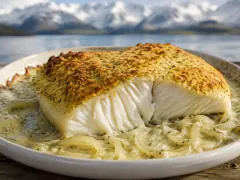 Halibut OlympiaThe mid-century lodge dish that solves the driest fish in the Pacific. Thick halibut steaks seared ninety seconds, set on a bed of onions sweated in butter, blanketed in mayonnaise, sour cream, Parmesan, lemon and garlic, topped with buttered panko, and baked then broiled to a golden gratin while the fish underneath reaches 55 °C and stays moist.
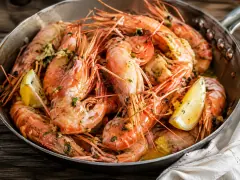 Spot Prawns in Garlic-White Wine ButterThe sweetest shellfish in North American water, cooked in under three minutes. Shell-on prawns split along the back, seared in a smoking pan for ninety seconds, tossed with garlic and shallot, deglazed with dry white wine, and finished off the heat with cold butter swirled into a glossy emulsion, eaten from the pan with sourdough.
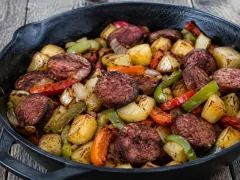 Reindeer Sausage SkilletFrontier one-pan cooking built for forty below. Smoked reindeer sausage seared in bacon fat until its edges blister, waxy red potatoes crisped in the drippings, onions and garlic, then an amber ale to lift the fond, shredded cabbage, stock, grainy mustard and cider vinegar, braised under a lid until the potatoes are tender and the liquid has reduced to a glaze.
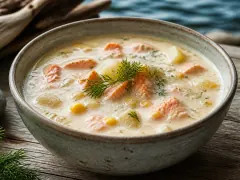 Smoked Salmon ChowderThe winter pot of Kodiak, Sitka and Juneau. Bacon rendered, leeks, celery and carrot sweated in the fat, a light roux, white wine, seafood stock, Yukon Gold potatoes and sweet corn simmered until the potato starch thickens the broth, then cream, and alder-smoked sockeye folded in for the last four minutes so its smoke seeps into the cream.
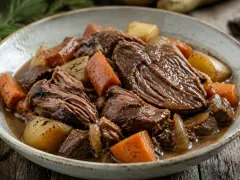 Braised Moose Pot RoastThe interior cabin's answer to meat with no marbling. A tied moose or venison shoulder dusted with flour and seared in bacon fat, onions and tomato paste browned in the drippings, stout to lift the fond, then three hours sealed at 150 °C with beef stock, crushed juniper, thyme and bay, carrots, parsnips and turnips added for the last hour, until the collagen has turned to gelatin and the meat parts under a fork.
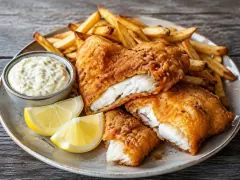 Beer-Battered Rockfish and ChipsPier-shack fish and chips from Ketchikan to Homer. Strips of Pacific cod or rockfish dredged in seasoned flour, dipped in a lumpy batter of flour, cornstarch, baking powder and ice-cold amber ale, and fried at 185 °C so the dissolved gas and alcohol blow the crust into a thin blistered shell while the fish steams inside to 58 °C, drained on a rack and salted hot.
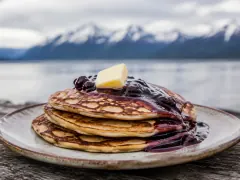 Sourdough HotcakesThe Klondike breakfast. An overnight sponge of active starter, flour, warm water and a little sugar, then eggs and melted butter in the morning and a teaspoon of baking soda dissolved in water stirred in at the last minute, so the acid and the alkali foam the batter into thin, lacy-edged hotcakes on a 190 °C griddle, served with cultured butter and wild berry syrup.
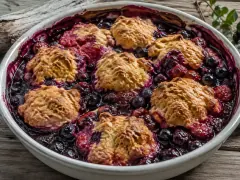 Wild Berry GruntThe woodstove dessert of late August. Wild blueberries, lingonberries and salmonberries stewed in a cast-iron skillet with sugar, lemon and cornstarch until they burst into a glossy crimson compote, then mounds of cold-butter drop dough dolloped on top, sprinkled with turbinado, and steamed under a tight lid until the dumplings are set and the juices bubble up between them.
Alaska cooks what the cold gives it. Fish and shellfish that live in near-freezing water build dense stores of unsaturated fat and free amino acids to keep their cells from freezing, and that biology is the whole point of the table: Copper River king salmon with fat marbled through crimson flesh, red king crab and spot prawns so sweet they need nothing but butter, halibut and Pacific cod with big clean flakes. The rule for all of them is gentle heat. Cold-water fat melts low and leaves early, so a king salmon comes off the iron at 52 °C and a crab leg is warmed through steam, never boiled.
The inland half of the state eats differently. Tlingit, Haida and Tsimshian cooks on the Southeast coast, Athabascan river fisheries, and Iñupiat hunters in the Arctic built the foundations. Then the 1897 stampede came over the Chilkoot Pass carrying sourdough starters inside their coats to keep the culture alive at forty below, and the word Sourdough became the name for anyone who had wintered here. Cabin kitchens learned to braise lean moose and Sitka deer with juniper, to smoke salmon over green alder for the dark months, and to fry reindeer sausage with potatoes and cabbage in a black skillet.
Ten plates, then, in two registers. Five from the water, cooked fast and barely. Five from the cabin, cooked slow and heavy: a stout-braised pot roast, a smoked salmon chowder thickened by its own potatoes, hotcakes leavened by a hundred-year-old starter and a pinch of soda, and a skillet of tundra berries under steamed dumplings. The equipment is the same throughout. Seasoned cast iron, a thick Dutch oven, and a thermometer, because with wild protein the number matters more than the clock.