Caribbean · 10°39′N 61°31′W · Kitchen testing pending
Trinidad and Tobago
Indian indenture, African browning, and a Scotch bonnet that stays whole
The ten
Ranked by what people actually name first
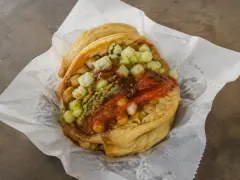 Trinidad DoublesInvented in Princes Town in 1936, and the whole thing turns on five seconds. A 64%-hydration yeasted dough pulled paper-thin balloons the instant it hits 190 °C oil — five to six seconds a side gelatinises the surface before the water is gone, which is why a bara stays soft as cloth instead of going cracker-hard.
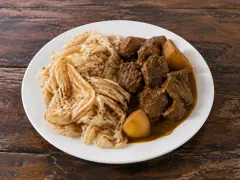 Buss Up Shut with Curried GoatNamed because the shredded layers look like a torn-up shirt. Ghee spread across rolled dough and rolled into a cone traps dozens of alternating fat-and-flour sheets — and the roti must be clapped within five seconds of leaving the tawa, while the steam is still trapped between them.
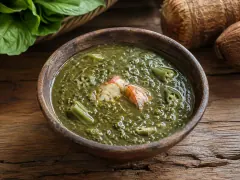 Callaloo TrinbagonianNot the sautéed amaranth of Jamaica but a silky green potage. Okra and dasheen leaves are full of water-soluble galacturonan gums; swizzled hard with a wooden puyol, that mucilage disperses through coconut milk and butter into a stable emulsion that will not separate.
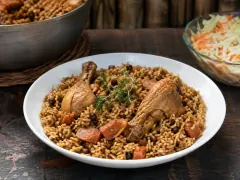 PelauCentral Asian pilaf by way of Indian indenture, rebuilt around African sugar browning. Dark brown sugar is left unstirred in hot oil until it foams dark mahogany, and the chicken goes in at exactly that second — the cold meat halts the temperature climb before caramel becomes carbon.
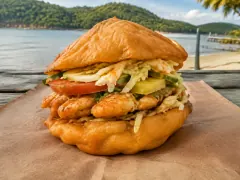 Bake and SharkMaracas Bay in a paper napkin. The bake is doubly leavened — yeast builds the gluten over an hour, baking powder gasses again in the oil — and hot oil spooned over the top is what balloons it into a hollow dome in under twenty seconds. Then you build it yourself at the condiment bar.
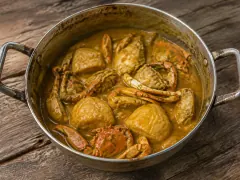 Curried Crab and DumplingsTobago's signature dish, from every shack between Store Bay and Pigeon Point. The claws are cracked *before* cooking so the curry can get to the meat, and the dumplings are deliberately dense and flat rather than fluffy — they exist to be dragged through the coconut gravy.
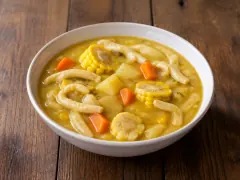 Corn Soup with SpinnersOutside the Oval after a match, or at three in the morning on Carnival Tuesday. Split peas simmered forty-five minutes burst and dissolve entirely, and a wire whisk shears them into an opaque golden broth — no flour, no roux, nothing but the legume itself.
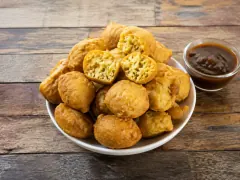 Pholourie with Tamarind ChutneyBrought by East Indian indentured immigrants in the 19th century and now the island's favourite finger food. Yeast and baking powder build a network of gas bubbles over an hour of fermentation, and at 180 °C the surface water flashes to steam and blows that network into a spongy sphere.
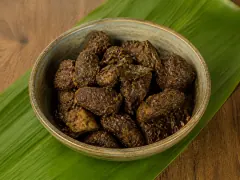 Geera PorkThe king of rum shop cutters. Whole cumin seeds are dry-roasted past 160 °C until chocolate-brown — pyrolysis burning off the grassy notes and building deep alkylpyrazines — and the pork is braised until every drop of water goes, then fried in its own rendered fat until the geera crusts onto it.
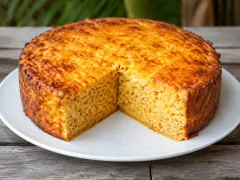 Trinidad Macaroni PieNot American mac and cheese spooned loose from a pot — this is baked into a dense sliceable slab with clean right angles. Evaporated milk has 60% of its water removed, and those concentrated caseins resist curdling and set with the egg into a matrix firm enough to hold a square.
Two culinary inheritances collide here, and pelau is where you can see the seam. The rice-and-pulse structure is Central Asian pilaf, carried by East Indian indentured workers from the 1840s. But the pot begins with African sugar browning: dark brown sugar left unstirred in hot oil until it foams dark mahogany, at which exact second the chicken goes in — cold meat halting the temperature climb before caramel turns to carbon. Curry powder, geera, dhal and tamarind on one side; burnt sugar, coconut milk and callaloo on the other, and often on the same plate.
Chadon beni runs through nearly all of it. Culantro, not cilantro — long serrated leaves with an intense coriander flavour that survives an hour in a pot where the delicate herb would go muddy in five minutes. Blended with scallion, garlic, thyme and pimento pepper it becomes green seasoning, which marinates the goat, the shark, the crab, the pork and the pelau chicken alike.
The Scotch bonnet is handled two opposite ways, sometimes in the same kitchen. In callaloo, corn soup and pelau it floats whole and unpunctured with its stem on, giving fruity steam and no heat at all, then gets lifted out before serving. In geera pork and the doubles channa it is seeded, minced and left in, and the result is exactly as fierce as a rum shop wants. The pepper is not the variable — the technique is.
Three doughs are worth studying on their own. Bara is 64% hydration yeasted dough fried for five seconds a side, long enough to gelatinise the surface and no longer, which is why it stays soft as cloth. Buss up shut is ghee spread on a rolled circle and rolled into a cone to trap the layers, then beaten with wooden dablas within five seconds of leaving the tawa while the steam is still inside. And spinners and Tobago dumplings go the other way entirely: flour and cold water, no leavening, kneaded stiff into something dense enough to survive being dragged through gravy.