Caribbean · 17°58′N 76°48′W · Kitchen testing pending
Jamaica
Smoke, scotch bonnet, and pimento wood
The ten
Ranked by what people actually name first
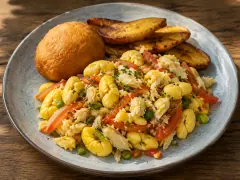 Ackee and SaltfishThe national dish. Salt cod boiled twice until it is seasoned rather than salty, then folded into sweated onion, pepper, thyme and Scotch bonnet with the ackee going in last and barely touched, so the lobes stay whole like soft curds.
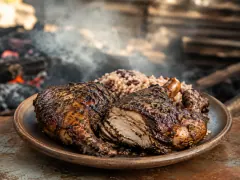 Jerk ChickenBone-in leg quarters slashed to the bone and soaked overnight in a wet rub of Scotch bonnet, fresh-ground pimento, scallion, thyme and ginger, then smoked low over pimento wood and finished over the coals until the skin is dark and blistered.
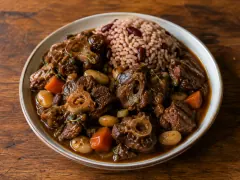 Oxtail Stew with Broad BeansSunday oxtail. Thick rounds marinated in browning, soy, pimento and thyme, seared to a dark crust, then braised for three hours until the meat slips off the bone, with butter beans added at the end to soak up the glossy gravy.
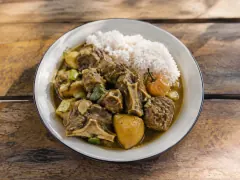 Curry GoatThe centrepiece of Jamaican celebrations. Bone-in goat marinated in yellow Jamaican curry, seared in oil where more curry has just been "burnt", then simmered for two hours with ginger, thyme and Scotch bonnet until the potatoes thicken the gravy on their own.
 Beef PattyThe Kingston lunch. A turmeric-yellow shortcrust laminated with grated frozen butter and shortening, folded over a spiced beef filling that has been simmered with stock and breadcrumbs into a paste that stays put when you bite.
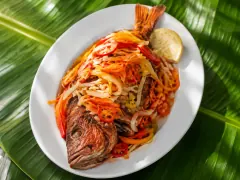 Escovitch FishWhole red snapper scored to the bone, fried in hot oil until the skin blisters, then buried under a hot cane-vinegar pickle of carrot, onion, sweet pepper, chayote and Scotch bonnet ribbons that has simmered for two minutes only, so it stays crisp.
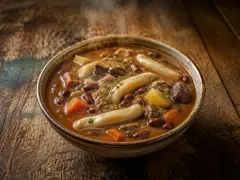 Red Peas Soup with SpinnersSaturday soup. Red kidney beans simmered with salted pig tail and beef until they burst and turn the water creamy, then yellow yam, sweet potato, plantain and coconut milk, and finally the spinners, hand-rolled flour dumplings dropped in for the last quarter hour.
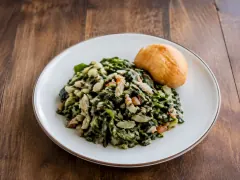 Callaloo and SaltfishCountry breakfast. Amaranth greens with the fibrous skin stripped from the stalks, sliced into ribbons and steamed in their own moisture with flaked salt cod, tomato, scallion, thyme and Scotch bonnet, then cooked dry so nothing pools in the pan.
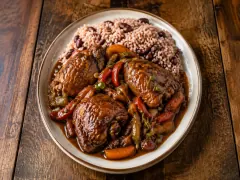 Brown Stew ChickenThe weeknight braise. Chicken chopped small on the bone, marinated in browning, soy, ginger and allspice, seared hard to a mahogany crust, then simmered with peppers, carrot and tomato in just enough stock to reduce into a thick, sweet-savoury gravy.
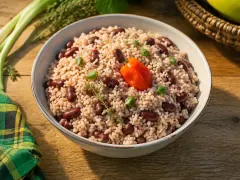 Rice and PeasThe Sunday side that every braise on this list sits on. Kidney beans boiled with garlic and pimento until the water runs red, then coconut milk, scallion and thyme, long-grain rice, and a whole Scotch bonnet resting on top while the pot steams under a foil seal.
Jamaican cooking is built on smoke and patience. The Maroons, escaped Africans who allied with the island’s Taíno hunters in the Blue Mountains, cured wild boar over green pimento wood with wild allspice, bird peppers and salt. That preservation method is where jerk comes from, and the wood still matters: fresh pimento berries and pimento smoke both carry eugenol, the same oil that gives cloves their scent, and it is what separates real jerk from a spice rub.
Every other thread on the island lands in this list too. West Africa brought ackee, callaloo and the one-pot rice-and-legume habit. Indian indenture brought curry, and the Jamaican version is its own thing: turmeric-heavy, with allspice in the blend, and always “burnt” in hot oil before the meat goes in. The British pasty became the beef patty, its pastry stained yellow with turmeric and curry powder rather than egg wash. Spanish Jewish settlers brought escabeche, which became escovitch: fried snapper drowned in hot cane vinegar and pickled vegetables while the skin is still crackling.
Three ingredients hold the pantry together. Scotch bonnet is the heat, but half these recipes use it whole and unbroken, floated on top of a pot so the skin perfumes the steam without releasing any capsaicin. Fresh thyme and scallion go into every marinade and every pot base. Coconut milk binds the rice and the soups, and its fats are what keep rice and peas in separate grains.
Two techniques recur. Browning, which is cane sugar cooked past caramel until it is nearly black, gives oxtail and brown stew chicken their mahogany colour and a bittersweet edge under the sweetness. And saltfish, which is salt cod boiled twice in fresh water until it is seasoned rather than salty, turns up in the national dish and in the callaloo, always with the warning not to add salt until you have tasted.