Central America · 14°04′N 87°12′W · Kitchen testing pending
Honduras
Red silk beans, a Garífuna coast, and cured beef from the cattle country
The ten
Ranked by what people actually name first
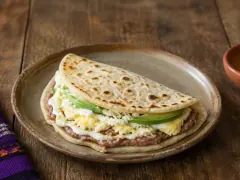 Baleadas EspecialesHonduras's national breakfast, and no rolling pin comes near it. Lard kneaded into the flour limits the gluten cross-linking, and thirty minutes of rest lets the disulfide bonds settle — which is what lets the cook slap a ball into a 25 cm disc between two palms without it snapping back.
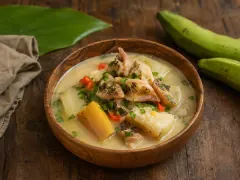 Sopa de Caracol GarífunaThe Garífuna coast's greatest dish, and an exercise in timing. Queen conch is dense cross-linked collagen that seizes into rubber if simmered — so it is pounded flat with a mallet, and then dropped into broth already off the boil for strictly sixty to ninety seconds.
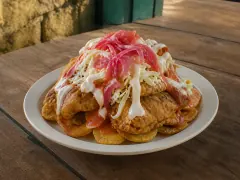 Pollo Chuco con Tajadas"Dirty chicken", named affectionately for its messy street-stall glory. Yellow mustard does the binding no egg batter is needed for, and cutting the flour with cornstarch drops the gluten so the shell stays brittle even under warm tomato gravy and cold pink sauce.
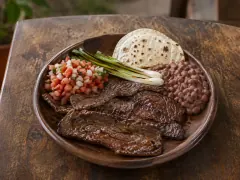 Carne Asada Hondureña con ChismolSunday belongs to the charcoal grill. Skirt steak is only a centimetre thick, so it needs 260 °C coals and two and a half minutes a side — long enough for a Maillard crust, short enough to stop at 54 °C. And it is carved strictly across the grain, which is what shortens the fibres into a tender bite.
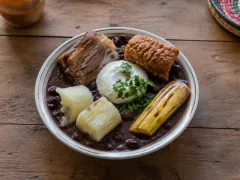 Sopa de Frijoles con ChicharrónSaturday is bean soup day across Comayagua and Francisco Morazán. Salt goes in late, because sodium displaces the calcium in the bean pectin and doubles the cooking time — and a cup of tender beans crushed against the pot wall releases the starch that emulsifies with the pork fat into an unctuous potage.
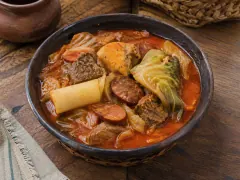 Tapado Olanchano*Tapado* means covered, for the blanket of plantain leaves sealing the pot. The tiers are not decorative: dense yuca and green plantain on the floor, meats above, ripe plantain across the top — so rendered fat and cured beef juices wash down while coconut and plantain sugars steam up.
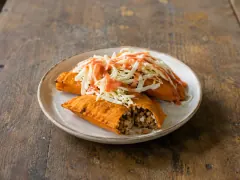 Pastelitos de Carne HondureñosCorn masa, not wheat, tinted sunset-orange with achiote — and one tablespoon of wheat flour stirred in, because that trace of gluten gives the tensile strength to roll a 3 mm disc that will not tear at the fold. Cooked rice and fine potato dice in the filling absorb the beef juices so nothing steams the shell open.
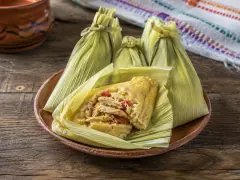 MontucasNot a tamal made from dry corn flour but from fresh sweet corn ground raw, so the batter is native ungelatinised starch and corn milk. It sets in the husk at 72 to 78 °C into a trembling sweet custard, with a savoury pork core in achiote recado at the middle of it.
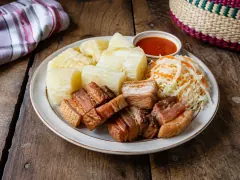 Yuca con ChicharrónCassava boiled in heavily salted water until internal pressure splits it open along its own longitudinal seams — and then drained the instant it does, because left sitting in the hot water the starches retrograde into glue. Over it goes pork belly fried in two phases into glass-like crackling.
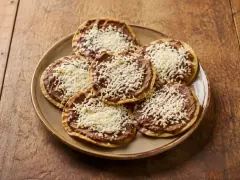 CatrachitasNamed for *Catracho*, the demonym Hondurans use for themselves. Day-old tortillas fry crisper because the starch has already retrograded and there is less water to drive off — and the lard-bound bean paste on top is a moisture barrier, which is what keeps the chip crunching for twenty minutes.
The bean that defines this country is not the kidney bean. Frijoles rojos de seda — red silk beans — have an unusually thin seed coat and a high-amylose starchy interior, and refried in lard they collapse into an unctuous paste that spreads across a tortilla without soaking through it. They appear in five of these ten dishes, and in the bean soup a cupful of them is deliberately crushed against the wall of the pot, because the free starch that releases emulsifies with the pork fat and turns thin broth into a velvet potage. Kidney beans, with their thick skins, do none of this.
Three distinct kitchens meet here. The Garífuna Caribbean coast around La Ceiba and Roatán gives sopa de caracol, which is really a lesson in restraint: conch is dense cross-linked collagen that turns to rubber the moment it is simmered, so the entire coconut broth is cooked through first and the pounded conch goes in for sixty seconds off the boil, after which the pot comes off the heat and is never reheated. The cattle country of Olancho gives tapado, where sun-dried salted cecina is soaked for twelve hours through three changes of water and then layered in tiers under a seal of plantain leaves. And the industrial north gives pollo chuco, fried on the pavements of San Pedro Sula.
Corn runs through the rest in three different states. Baleadas are wheat, not corn, and stretched by hand between the palms after a thirty-minute rest — a rolling pin has no place near them. Pastelitos are nixtamalised masa with a single tablespoon of wheat flour stirred in, the trace of gluten that lets a 3 mm disc fold without tearing. Montucas are neither: fresh sweet corn ground raw, which sets in the husk into a trembling custard around a pork core.
What ties the plates together is what goes on top. Chismol — tomato, onion, sweet green pepper and lime, gentler than a Mexican pico — plus shredded cabbage, pickled onions and a dusting of dry salty queso duro. Half of these dishes are assembled rather than cooked, and most of them are assembled at the very last moment, because the crisp thing underneath has about twenty minutes before the acid gets to it.