Baleadas Especiales
Honduras's national breakfast, and no rolling pin comes near it. Lard kneaded into the flour limits the gluten cross-linking, and thirty minutes of rest lets the disulfide bonds settle — which is what lets the cook slap a ball into a 25 cm disc between two palms without it snapping back.
- Prep
- 35 min
- Cook
- 25 min
- Serves
- 6 large baleadas, about 25 cm across
- Difficulty
- Medium
Researched · Kitchen testing pending
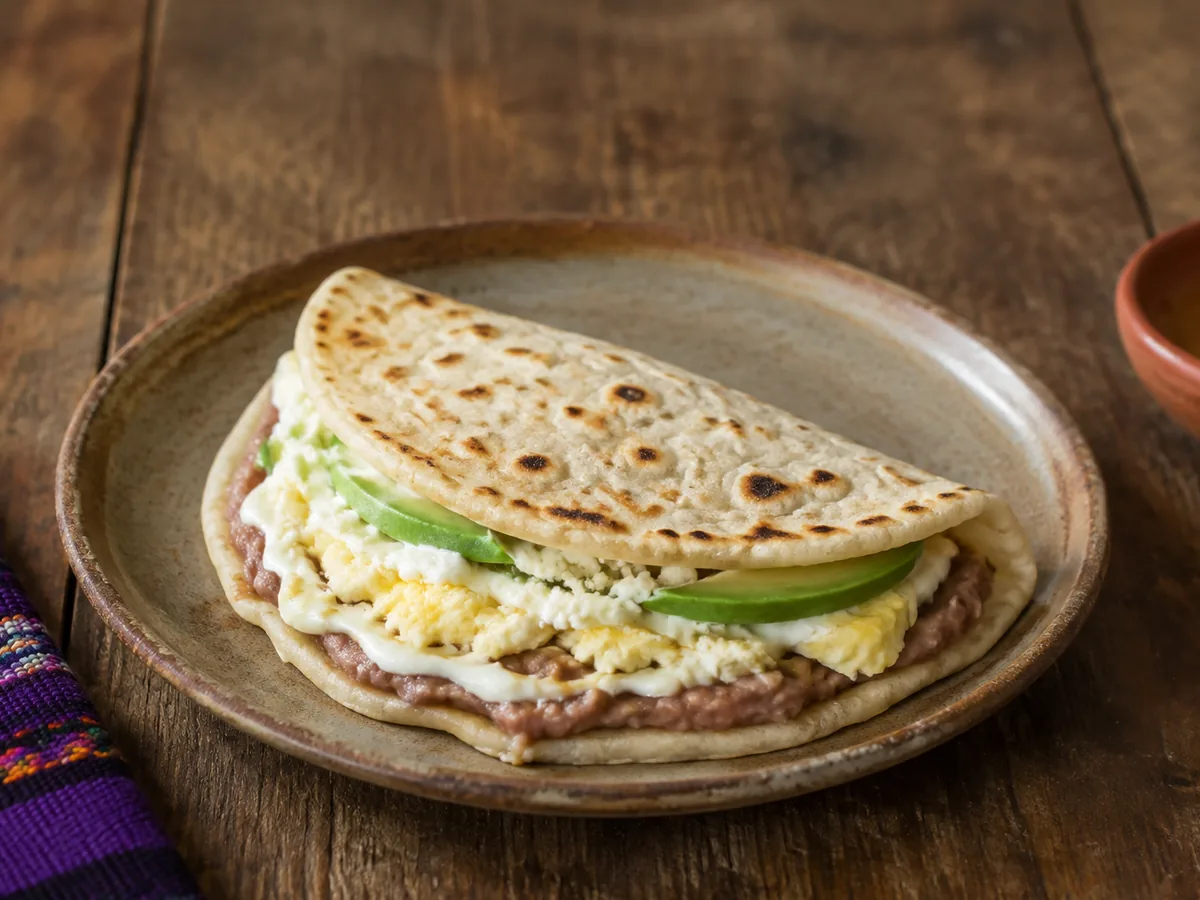
In San Pedro Sula and La Ceiba the morning begins over hot steel comales. The baleada is Honduras’s national breakfast institution.
It starts with a wheat dough enriched with warm pork lard and milk. The cook slaps the ball between their palms, stretching it paper-thin into a 25 cm disc that blisters on the iron. Inside goes a thick swipe of refried red silk beans cooked in lard, then a splash of mantequilla blanca — the cultured raw-milk sour cream with its lactic tang.
Then salty grated queso duro viejo, soft scrambled eggs, avocado and thin strips of seared carne asada. Folded in half, it is heavy, hot, and eaten out of a paper wrapper.
The tortillas
- 500 g4 cupsAll-purpose wheat flour, about 11% protein, sifted
- 10 g2 tspDouble-acting baking powder
- 8 g1.5 tspFine sea salt
- 80 g6 TbspRendered pork lard or vegetable shortening, softened
- 240 ml1 cupLukewarm whole milk, or warm water, at 38 °C
The beans
- 400 g2 cupsCooked Honduran red silk beans, blended with 120 ml of their broth into a thick purée
- 45 ml3 TbspRendered pork lard, or neutral oil, for refrying
- 1 medium1 mediumYellow onion, minced fine
- 2 cloves2 clovesFresh garlic, minced to a paste
- 4 g1 tspCumin seeds, freshly toasted and ground
The fillings
- 400 g14 ozBeef skirt or flank steak, trimmed and sliced into thin 5 mm strips
- 15 ml1 TbspBitter orange juice, or fresh lime juice
- 6 large6 largeFarm-fresh eggs, lightly beaten with a pinch of salt
- 30 ml2 TbspUnsalted butter, for the eggs
- 150 g⅔ cupHonduran mantequilla blanca, or Salvadoran or Mexican crema agria
- 120 g1 cup packedQueso duro viejo, finely grated
- 2 large2 largeRipe Hass avocados, peeled, pitted and sliced into thin wedges
Rest exactly thirty minutes
Unrelaxed gluten refuses to stretch and tears. If the balls still fight you, give them ten more minutes under a damp towel — never reach for a rolling pin.
Forty-five seconds, then flip
At 220 °C the steam trapped between the starch layers puffs the dough into blistered pockets in well under a minute. Past sixty seconds that steam is gone and the tortilla goes rigid and cracks when folded.
Red silk beans, specifically
Frijoles de seda have very thin seed coats and a high-amylose starchy interior, which refries into an unctuous paste that spreads without soaking through the bread. Kidney beans do not do this.
Beans that hold their shape
Cook them down until the paste pulls away from the pan floor. Watery beans make a soggy baleada regardless of how good the tortilla was.
Lard in the dough, not just the pan
Rubbing softened lard into the flour before the liquid coats the glutenin and gliadin strands, which is half of why the dough stays supple.
Passive time, counted separately
The dough balls rest 30 minutes and the steak marinates while the beans refry. Neither is active work.
The five tastes on this plate
Salt is briny aged queso duro and the seasoned beans. Fat is lard in the tortilla, cultured mantequilla blanca, buttered eggs and avocado. Acid is the lactic tang of the cream cutting the beans and lard. Heat is toasted cumin, seared garlic and optional pickled jalapeño. Umami is caramelised beef, refried beans and aged cheese.
Equipment
- Large mixing bowl
- Oiled tray and a damp towel
- 10 in skillet, for the beans
- Cast-iron skillet, for the beef
- Non-stick pan and silicone spatula, for the eggs
- 12 to 14 in cast-iron comal or flat-top griddle
Traditionally a heavy round steel comal over an open flame. A seasoned 12-to-14 inch cast-iron griddle works in a modern kitchen — the mass matters, because the thin dough has to bake through in forty seconds without drying into a cracker.
Method
Knead and rest the testales12 min
Whisk the flour, baking powder and 8 g salt, then rub in the softened lard until sandy. Work in the warm milk gradually and knead on an unfloured counter 6 to 8 minutes until smooth and elastic.
Divide into 6 balls of about 135 g, roll them tight, oil the tops, cover with a damp towel and rest strictly 30 minutes.
Mix flour, baking powder and 8 g salt; rub in softened lard until sandy. Gradually add milk at 38 °C; knead on an unfloured surface 6–8 minutes until elastic. Shape six 135 g balls, oil tops, cover with a damp towel and rest 30 minutes.
Refry the red silk beans14 min
Heat the lard over medium and sauté the onion and garlic 4 minutes until translucent.
Add the blended beans with the toasted cumin and 1 tsp salt, and cook over medium-low, stirring constantly, 8 to 10 minutes until the paste pulls away from the pan floor. Keep warm.
Blend cooked beans with 120 ml bean broth. Heat lard over medium; sauté onion and garlic 4 minutes. Add bean purée, toasted cumin and 1 tsp salt. Stir over medium-low 8–10 minutes until paste pulls from the pan; keep warm.
Sear the carne asada4 min
Toss the beef strips with the bitter orange juice, a pinch of cumin, salt and pepper.
Get a cast-iron skillet smoking, add a tablespoon of oil, and sear the strips 90 seconds without moving, then toss for a minute more to 54 °C. Onto a warm plate.
Toss the beef strips with the bitter orange juice, a pinch of cumin, salt and pepper.
Get a cast-iron skillet smoking, add a tablespoon of oil, and sear the strips 90 seconds without moving, then toss for a minute more to 54 °C. Onto a warm plate.
Soft-scramble the eggs2 min
Melt the butter in a non-stick pan over medium-low, pour in the eggs, and fold gently with a spatula 2 minutes into soft custardy curds at 65 °C.
Off the heat immediately — the residual heat finishes them.
Melt the butter in a non-stick pan over medium-low, pour in the eggs, and fold gently with a spatula 2 minutes into soft custardy curds at 65 °C.
Off the heat immediately — the residual heat finishes them.
Stretch and bake the tortillas8 min
Heat the comal to 220 °C. Press a rested ball flat, then slap and rotate it between your palms and forearms, stretching from the centre outward into an even 25 cm round.
Straight onto the dry comal for 35 to 45 seconds as big bubbles puff across it, then flip and give it 20 to 30 seconds more.
Heat comal to 220 °C. Hand-stretch a rested ball from centre outwards to a 25 cm round, slapping and rotating; if resistant, rest covered another 10 minutes. Cook on dry comal 35–45 seconds until puffed, then flip for 20–30 seconds.
Build the baleada
Spread 3 generous tablespoons of hot beans right across the tortilla and dollop 2 tablespoons of mantequilla blanca over them.
Scatter scrambled egg across one half, layer the beef strips and avocado over it, dust heavily with grated queso duro, and fold the bare half over into a giant half-moon. Serve at once.
Spread each tortilla with 3 generous tablespoons hot beans and 2 tablespoons mantequilla blanca. Add scrambled egg over one half, followed by beef, avocado and plenty of grated queso duro. Fold the other half over and serve immediately.
Sensory cues of doneness
- Visual: a huge blistered tortilla with pale-golden spots and puffed steam bubbles, folded over red beans, yellow egg, green avocado and white cheese.
- Auditory: a rushing hiss as the stretched dough meets the dry comal, then gentle puffing as the steam expands.
- Olfactory: toasted wheat, warm pork lard, cumin-laced beans and seared beef.
Look for a large pliable tortilla with pale-gold blisters surrounding red beans, yellow egg, avocado and cheese. Expect a hiss and puffing on the comal, with aromas of toasted wheat, lard, cumin beans and seared beef.
Troubleshooting
- The dough snaps back and tears.
It has not rested. Give the balls another ten minutes under a damp towel.
- A rigid tortilla that cracks when folded.
It stayed on the comal past sixty seconds. Bake fast, flip once.
- A soggy baleada.
The beans were watery. Cook them down until they hold their shape on a spoon.
Substitutions
One-to-one global substitutions, with the technique adjustment each one requires.
Ingredient substitutions
| Ingredient | Replace with | Culinary impact and technique adjustment |
|---|---|---|
| Frijoles rojos de seda | Small red beans, or Central American red beans | One-to-one, simmered tender before blending |
| Mantequilla blanca | Salvadoran crema, or crème fraîche with sour cream | One-to-one. The same rich dairy tang |
| Queso duro viejo | Cotija, or aged Parmigiano-Reggiano | One-to-one. The same salty dry grating finish |
Scaling
Half, for 3 baleadas
Halve everything. Resting and cooking times are identical.
Double, for 12 baleadas
Double everything, stretching and baking the tortillas one at a time and keeping the assembled baleadas warm in a clean towel.
What to serve it with
- Encurtido hondureño — pickled onion, carrot and jalapeño in spiced vinegar
- Sweet fried ripe plantain slices
- Cold horchata with morro seed and cinnamon, or hot mountain coffee
Questions
Sencilla or especial?
A baleada sencilla has only beans, mantequilla blanca and queso duro. The especial adds scrambled egg, avocado and carne asada or chicharrón.
What makes red silk beans special?
An ultra-thin skin and a creamy starchy interior, which refries into a velvety paste that tough kidney beans cannot match.
What replaces mantequilla blanca?
Equal parts crema agria and crème fraîche with a pinch of sea salt.