Caribbean · 25°04′N 77°20′W · Kitchen testing pending
The Bahamas
Conch three ways, peas n' rice, and a guava duff steamed in a cloth
The ten
Ranked by what people actually name first
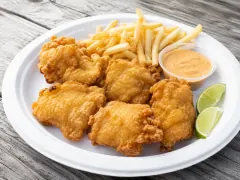 Cracked ConchThe plate every Bahamian orders first when they come home. Cleaned conch sliced into cutlets and beaten thin until it gives up its chew, seasoned with lime, salt and a pinch of goat pepper, dredged in flour, dipped in egg and evaporated milk, coated in crumbs and fried at 180 °C in small batches until crisp and gold. Lime wedges and a cool pink sauce beside it.
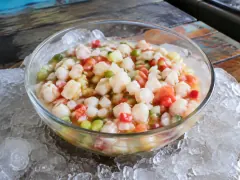 Bahamian Conch SaladThe raw dish of the conch stalls, made to order in front of you. Impeccably fresh conch diced small and kept cold, tomato, cucumber, onion and sweet pepper diced to match, everything tossed with lime and orange juice, salt and as much goat pepper as the customer asks for, and served within ten minutes over ice. The citrus firms the conch; it does not cook it.
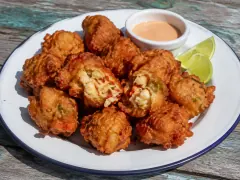 Conch FrittersThe fried side of every conch stall. Conch chopped fine by hand so the batter keeps small chewy pieces, folded with diced onion, sweet pepper, tomato and a little goat pepper into a thick batter of flour, baking powder, egg and evaporated milk, rested ten minutes, then dropped by the spoonful into 175 °C oil and fried until craggy and brown. Calypso sauce and lime.
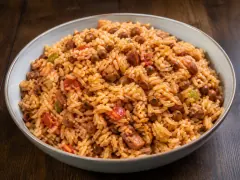 Peas n' RiceThe side that sits beside nearly everything in the Bahamas. Salt pork rendered slowly until its fat runs, onion, sweet pepper, tomato and thyme softened in it, then pigeon peas, coconut milk and water brought to a simmer and tasted before any salt goes near the pot. Rice stirred in once, the lid on tight, twenty minutes over the lowest heat and ten minutes' rest.
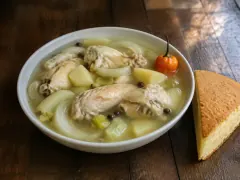 Chicken SouseThe Saturday breakfast and the morning-after cure. Chicken wings blanched first so the broth stays clear, then simmered with allspice, onion and celery, potatoes added and cooked until tender while the chicken passes 74 °C, and the pot finished off the heat with enough lime juice and salt to make it bright without harshness. A goat pepper on the side, and johnny cake.
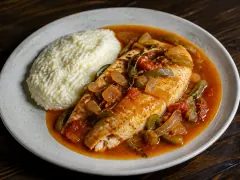 Bahamian Steamed FishSteamed in the Bahamian sense, which means smothered. Grouper or snapper fillets seasoned with lime, salt and pepper and rested cold, then laid into a gravy of onion, sweet pepper and celery, tomato, thyme, tomato paste and fish stock simmered until lightly thickened. The lid goes on and the fish cooks in the steam until it flakes at 63 °C. Grits beside.
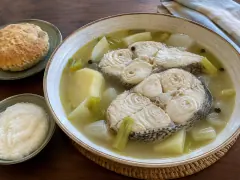 Bahamian Boiled FishThe island breakfast, a clear and sour fish broth. Potatoes, onion, celery and allspice simmered in salted water until nearly tender, then thick grouper steaks poached in it without a hard boil so they stay whole, until they flake at 63 °C. Lime juice goes in off the heat, tasted for the clean sourness the dish is known for. Grits or johnny cake beside.
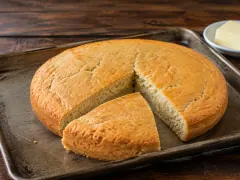 Bahamian Johnny CakeThe dense, faintly sweet pan bread that goes with souse and boiled fish. Flour, baking powder, salt and a little sugar, cold butter rubbed in until sandy, milk stirred in only until no dry flour shows, the dough pressed into a buttered round pan, scored into wedges and baked at 190 °C until golden and set. Cooled ten minutes and cut thick, to be split and buttered.
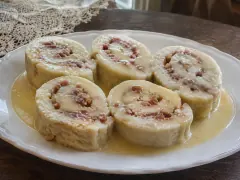 Guava DuffThe national dessert, a rolled and steamed pudding. A soft dough of flour, butter, shortening and milk rolled into a rectangle, scattered with chopped ripe guava and sugar, rolled into a tight log, wrapped in parchment and foil, and cooked in a water bath at 175 °C for an hour until set. Sliced warm into pinwheels under a sauce of butter, icing sugar and rum.
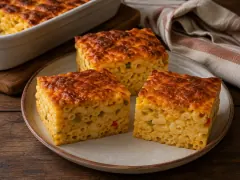 Bahamian Baked Macaroni and CheeseA side dish, a serious one. Elbow macaroni cooked just tender, mixed with sharp cheddar, diced onion, sweet pepper and a pinch of goat pepper, bound with eggs whisked into evaporated milk with salt, pepper and paprika, packed into a buttered pan under more cheese, and baked at 180 °C until firm and browned. Rested fifteen minutes so it cuts into sturdy squares.
The Bahamas is seven hundred islands on a shallow, glass-clear bank, and the food begins with what lives on that bank. The queen conch is the national shellfish, and it is eaten raw, fried and beaten: diced with onion, sweet pepper, tomato and sour orange into conch salad at the stalls of Arawak Cay and Potter’s Cay; folded into a peppery batter for conch fritters; or pounded thin, breaded and fried as cracked conch, the plate every Bahamian orders first when they come home.
Breakfast is boiled fish, grouper or snapper simmered with onion, lime, thyme and a whole hot pepper in a thin, sharp broth, spooned over grits or eaten with johnny cake, the dense sweetish pan bread that also goes with stew fish. Chicken souse, the same idea with lime, allspice and potato, is the Sunday morning and after-party cure. Steamed fish is the other register: whole fish smothered in a tomato, onion and pepper gravy until it falls from the bone.
Beside almost everything sits peas n’ rice, pigeon peas and rice cooked with salt pork, tomato and thyme, browned with a little sugar in the pot, and a square of baked macaroni and cheese, set firm enough to slice and seasoned with onion, pepper and paprika. It is a side dish here and a serious one.
The dessert is guava duff, a sweet dough rolled around stewed guava, tied in a cloth and boiled or steamed for hours, then sliced and drowned in a butter and rum sauce. Sky juice, gin in fresh coconut water with condensed milk, goes with the conch; switcha, a limeade, goes with everything else. The cooking is Lucayan, West African and English at once, and the Junkanoo season, when the streets fill with drums and cowbells, is when all of it is on the table together.