Peas n' Rice
The side that sits beside nearly everything in the Bahamas. Salt pork rendered slowly until its fat runs, onion, sweet pepper, tomato and thyme softened in it, then pigeon peas, coconut milk and water brought to a simmer and tasted before any salt goes near the pot. Rice stirred in once, the lid on tight, twenty minutes over the lowest heat and ten minutes' rest.
- Prep
- 15 min
- Cook
- 45 min
- Serves
- 6
- Difficulty
- Easy
Researched · Kitchen testing pending
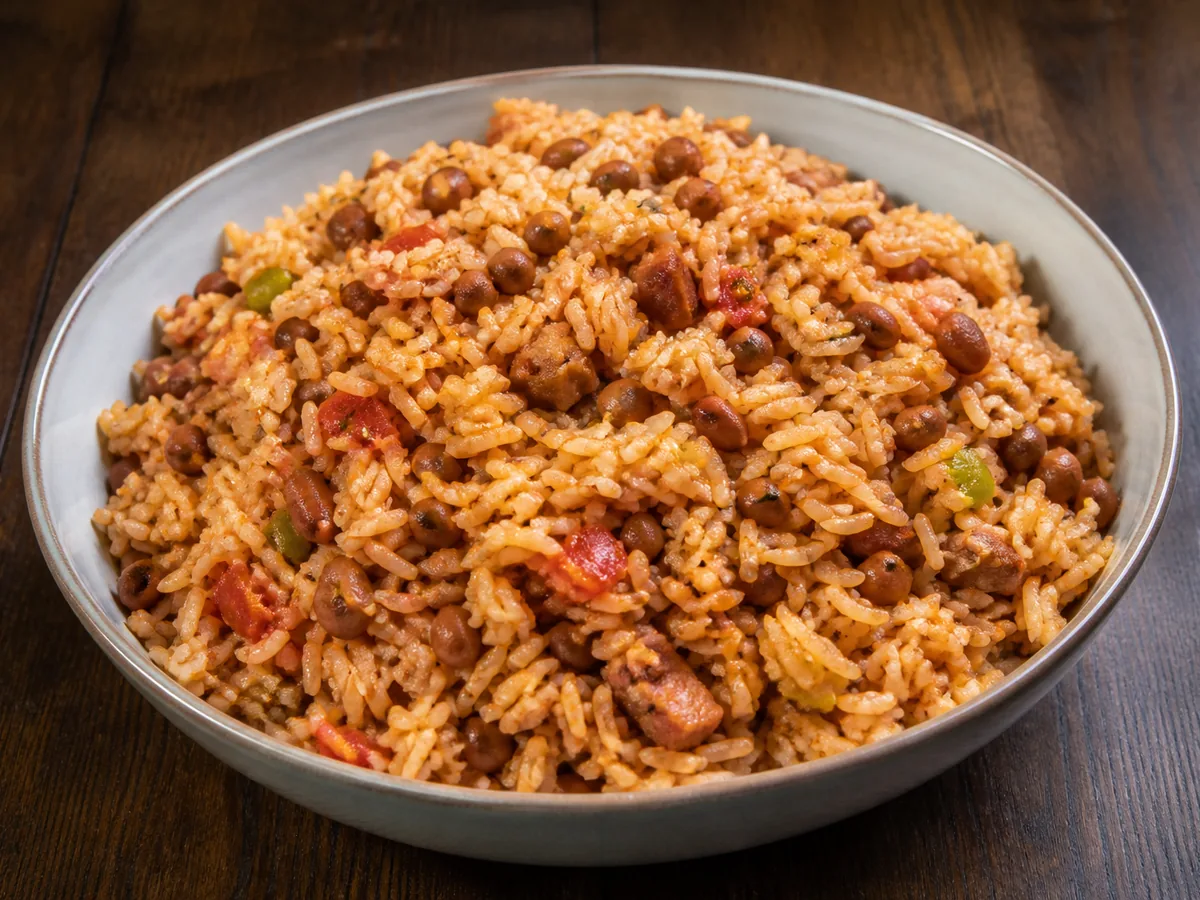
Peas n’ rice is the Bahamian side dish, the one that arrives with cracked conch, steamed fish, fried chicken and Sunday dinner alike. Pigeon peas and rice cook together in one pot with salt pork, tomato, thyme and coconut milk, so the rice comes out orange-pink and seasoned through.
It is cousin to the rice and peas of Jamaica and the rice and beans of Belize, and every island has its own claim to the best version. The Bahamian one is known by its salt pork and its pigeon peas.
- 150 g5 ozSalt pork, in small dice
- 1 medium1 mediumOnion, finely chopped
- 11Sweet pepper, finely chopped
- 2 medium2 mediumTomatoes, chopped
- 4 sprigs4 sprigsFresh thyme
- 400 g2 cupsCooked pigeon peas, drainedone 425 g can, or kidney beans
- 400 ml1⅔ cupsCoconut milk
- 400 ml1⅔ cupsWater
- 400 g2 cupsLong-grain rice, rinsed until the water runs clear
- 2 g½ tspBlack pepper
- to tasteto tasteFine salttaste the pot first; the pork may have done the job
Salt pork seasons the pot
Rendered slowly, the pork gives up fat to cook the vegetables in and enough salt that the dish may need none. Taste the liquid before the rice goes in and add salt only if it wants it.
Rinse the rice
Surface starch rinsed away is what keeps the grains separate. Rinse until the water is clear, then drain well.
The five tastes on this plate
Salt is the pork. Fat is pork fat and coconut milk. Acid is tomato. Heat is black pepper and, in many kitchens, a whole goat pepper set on top of the rice to steam. Umami is the pork and the peas.
Equipment
- 4 to 5-quart heavy pot with a tight lid
- Wooden spoon
- Fork, for fluffing
A tight lid over the lowest flame; a heat diffuser helps on a gas stove. Steam that escapes is rice that does not cook.
Method
Render the pork8 min
Cook the diced salt pork in the dry pot over medium-low 6 to 8 minutes, stirring, until the fat has run and the pieces are golden.
Cook diced salt pork in a dry pot over medium-low for 6–8 minutes, stirring, until the fat renders and the pieces turn golden.
Soften the vegetables6 min
Add the onion, sweet pepper, tomato and thyme and cook 5 to 6 minutes until the onion is soft and the tomato has broken down.
Add onion, sweet pepper, tomato and thyme to the rendered pork. Cook 5–6 minutes until onion softens and tomato breaks down.
The liquid5 min
Stir in the drained peas, coconut milk and water and bring to a lively simmer. Add the black pepper. Taste, and add salt only if the pork has not already seasoned it.
Add drained cooked peas, 400 ml coconut milk and 400 ml water; bring to a lively simmer. Add black pepper and taste before salting, since the pork may provide enough.
Cook the rice20 min
Stir in the rinsed rice once, spreading it level. Cover tightly and cook over the lowest heat 18 to 20 minutes, without lifting the lid, until the liquid is absorbed.
Add thoroughly rinsed, well-drained rice, stir once and level. Cover tightly and cook on the lowest heat for 18–20 minutes without lifting the lid, until liquid is absorbed.
Rest and fluff10 min
Take the pot off the heat and rest, covered, 10 minutes. Remove the thyme stems and fluff with a fork from the edges inward, without crushing the peas.
Remove from heat and rest covered for 10 minutes. Discard thyme stems, then fluff with a fork from the edges inward without crushing the peas.
Sensory cues of doneness
- Visual: separate grains tinted orange-pink, whole peas through them, a faint crust at the base of the pot.
- Auditory: the simmer falls silent when the liquid is gone; a faint crackle from the bottom says it is done.
- Olfactory: thyme, rendered pork and coconut.
Look for separate orange-pink grains and whole peas, with a light crust underneath. The simmer should quiet as liquid disappears, leaving a faint crackle and aromas of thyme, pork and coconut.
Storing it
Keeps 3 days refrigerated. Reheat with a splash of water, covered, until steaming through at 74 °C. It freezes for 2 months.
Troubleshooting
- Mushy rice.
Too much liquid, or stirred after the lid went on. Measure the liquid and stir only once.
- Hard grains, wet bottom.
Heat too high, or the lid leaked. Lowest heat, tight lid, and the 10-minute rest.
- Bland.
The pork was lean. Taste before the rice goes in and salt to match.
Substitutions
One-to-one swaps, with the technique change each one needs.
Ingredient substitutions
| Ingredient | Replace with | Culinary impact and technique adjustment |
|---|---|---|
| Salt pork | Bacon, or 30 ml oil with 1 tsp salt | Bacon adds smoke; oil needs the salt added back |
| Pigeon peas | Red kidney beans, or black-eyed peas | Kidney beans are the common swap in Nassau |
| Coconut milk | More water, or chicken stock | Lighter and less sweet; the traditional version without it |
Scaling
Half
A 3-quart pot; the same timings.
Double
Two pots rather than one deep one; rice in a deep pot cooks unevenly.
What to serve it with
- Cracked conch, steamed fish or fried chicken
- Baked macaroni and cheese and coleslaw, for the full Sunday plate
- Hot pepper sauce
Questions
Why peas and not beans?
Pigeon peas are the Bahamian standard, and the name stays even when kidney beans stand in for them.
Can I use dried pigeon peas?
Yes. Soak overnight and simmer 45 minutes before they go into the pot, and use their cooking water as part of the liquid.
What is the browning some recipes use?
A spoon of sugar caramelised in the pork fat before the vegetables go in, for colour. Optional; the tomato gives colour on its own.