South America · 5°52′N 55°10′W · Kitchen testing pending
Suriname
Javanese warungs, Hindustani roti and a Creole pot, on one street
The ten
Ranked by what people actually name first
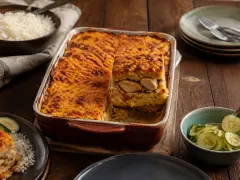 PomThe Surinamese celebration casserole, born where Jewish planters and Afro-Surinamese cooks met. Chicken thighs marinated in sour orange and nutmeg, browned in butter and braised with tomato, celery leaf and piccalilli, then layered between blankets of grated raw pomtajer root soured with citrus and baked ninety minutes until the top is mahogany and the centre is set.
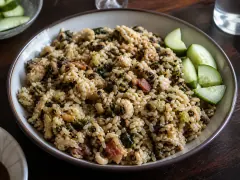 Moksi AlesiMixed rice, in Sranan Tongo. Salt cod and smoked pork belly, both desalted, rendered and cooked into a tomato and allspice sofrito, then long-grain rice simmered in coconut milk with black-eyed peas and wild bitawiri greens under a whole yellow Madame Jeanette, sealed and steamed until the grains separate and the bottom crisps.
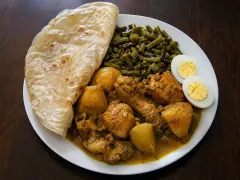 Roti with Chicken and KousebandThe Hindustani-Surinamese institution. Bone-in chicken and potatoes braised in a turmeric-heavy Surinamese massala bloomed in oil, yardlong beans cooked separately so they keep their snap, and a dhalpuri rotiplaat stuffed with ground cumin-spiced split peas, rolled thin and puffed on a dry griddle, eaten by hand.
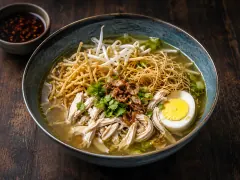 Saoto SoepThe Javanese-Surinamese restorative. A crystal-clear chicken broth infused with bruised lemongrass, galangal, ginger, allspice and salam leaf, ladled boiling at the last second over bowls of shredded chicken, hard-boiled egg, raw cabbage and bean sprouts under a mountain of crisp potato sticks and puffed vermicelli, with sambal ketjap on the side.
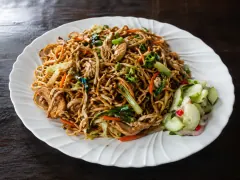 BamiThe Javanese-Surinamese noodle plate. Spaghetti or thick egg noodles boiled al dente and rinsed cold, then wok-tossed in a bumbu of shallot, garlic, ginger and toasted trassi with ketjap manis and dark soy until every strand is glossy mahogany, finished with celery leaf and served under sliced five-spice roasted chicken, omelette ribbons and pickled cucumber.
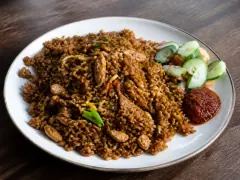 Nasi GorengThe Javanese-Surinamese fried rice, darker and richer than the Chinese kind. Day-old chilled rice broken apart by hand and tossed on maximum heat into a bumbu of shallot, garlic, minced lemongrass, grated galangal and toasted trassi with foaming ketjap and dark soy, until every grain is mahogany, served with glazed roast chicken, a lacy fried egg, kroepoek and pickled cucumber.
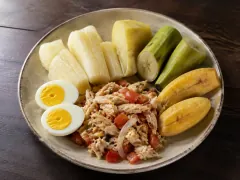 Her'heri with BakkeljauwThe dish of Keti Koti, the first of July, when Suriname marks the end of slavery. Cassava, sweet potato, green and ripe plantain boiled in stages until tender and arranged round a golden-red sauté of desalted salt cod with butter, onion, garlic, tomato and celery leaf, garnished with halved boiled eggs.
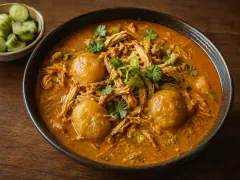 Pinda Soep with Tom TomThe Creole peanut soup descended from West African groundnut stews. Chicken and smoked pork simmered with allspice and a whole Madame Jeanette, pure roasted peanut butter tempered with hot broth and whisked in to a velvet, and tom tom, green plantains boiled and pounded scorching hot into smooth, resilient dumplings, dropped in at the end.
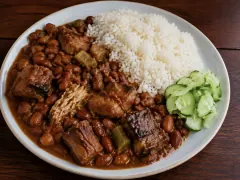 Bruine Bonen met RijstBB met R, the everyday comfort meal of the whole country. Dutch brown beans soaked overnight and simmered an hour with smoked pork belly, desalted salt beef, a tomato sofrito, allspice and a whole Madame Jeanette, a quarter of the beans crushed against the pot wall into a glossy gravy, mounted with butter and spooned over white rice.
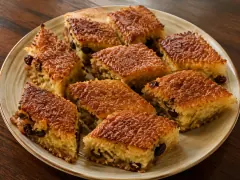 BojoThe national cake, flourless and unleavened, born of Jewish planters who needed a Passover cake and African cooks who knew cassava and coconut. Grated cassava and fresh coconut with evaporated and coconut milk, brown sugar, butter, almond and vanilla extracts, cinnamon and rum-soaked raisins, baked to a dense, fudgy slab with caramelised edges and finished with coloured sprinkles.
Suriname sits on the Atlantic shoulder of South America and cooks like nowhere else on the continent. Its table was set by four centuries of arrivals: Arawak and Carib cassava and chilli, Sephardic and Ashkenazi planters on the Suriname River, Dutch administrators with their brown beans and piccalilli, West African Maroons in the forest, indentured Hindustani workers from Uttar Pradesh and Bihar after 1873, and Javanese workers from 1890 who built the warung culture of Paramaribo. Curried dhalpuri roti, lemongrass chicken broth, a peanut soup with plantain dumplings and a baked taro casserole all sit on the national table as equals.
Three ingredients do most of the work. The Madame Jeanette pepper, a yellow lantern relative of the habanero, is floated whole in almost every pot so it perfumes the steam with mango and passionfruit and never releases its fire. Surinamese massala is a turmeric-heavy curry powder bloomed in oil at the start of a braise, not sprinkled at the end. And the Javanese pairing of ketjap manis and toasted trassi shrimp paste gives bami and nasi their dark, sweet, savoury glaze.
Under all of it are the roots. Pomtajer, the arrowleaf taro corm, is grated raw and mixed with sour orange juice before baking into pom, the festive casserole. Use edible pomtajer sold for cooking and follow its preparation instructions; citrus is not a guarantee that an unidentified or irritating root is safe. Cassava and coconut become bojo, the flourless cake the Jewish plantations needed at Passover. Green plantains are boiled and pounded hot into tom tom dumplings for the peanut soup. And her’heri, the platter of boiled roots and salt cod, is eaten every first of July to mark the end of slavery.