Bistec Picado
The fonda breakfast rush in one pan. Thin strips cut across the grain hit a smoking skillet in two batches — crowd it and the beef greys in its own juices instead of browning — then return to the tomato-culantro gravy for strictly two minutes, spooned over a hojaldra so the juices soak straight in.
- Prep
- 20 min
- Cook
- 20 min
- Serves
- 4 portions
- Difficulty
- Easy
Researched · Kitchen testing pending
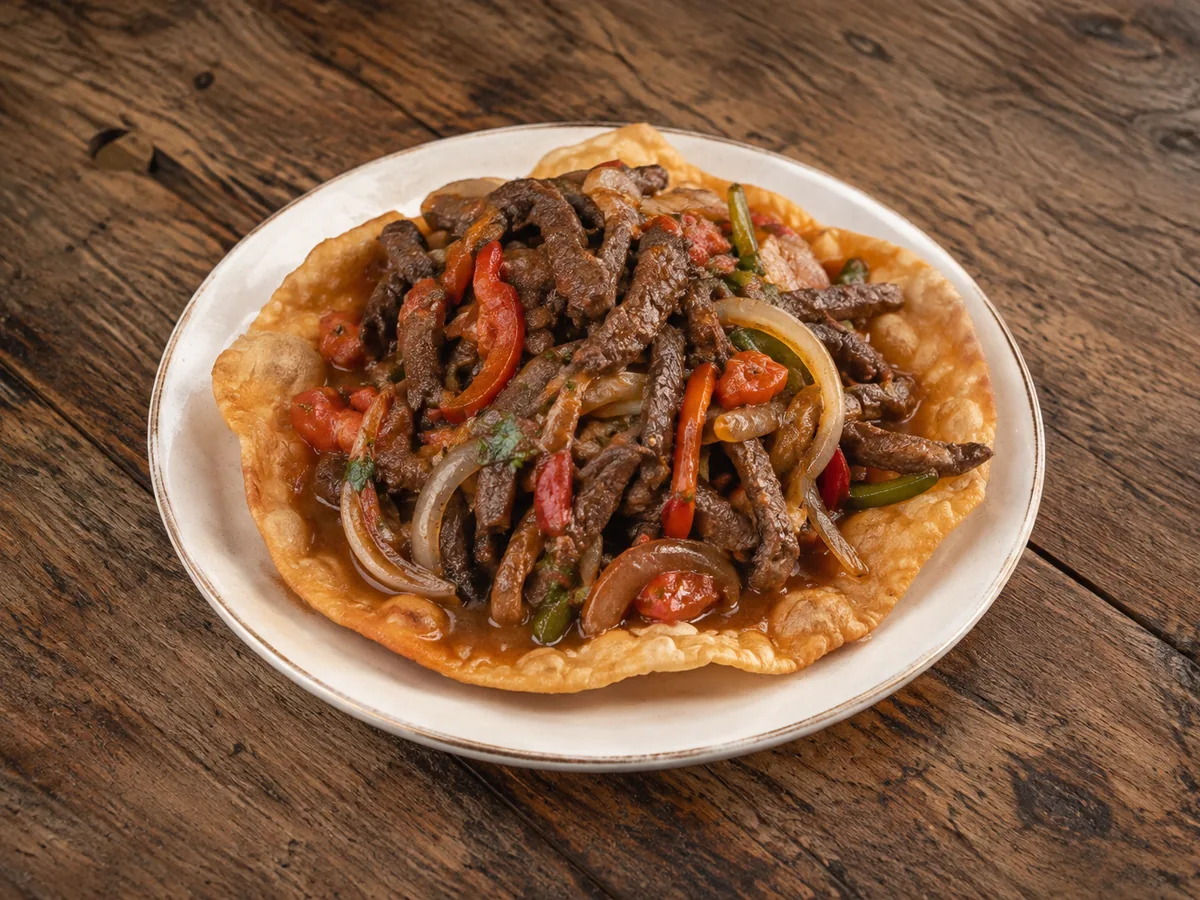
Fast, hot and savoury. In roadside fondas the breakfast rush smells of searing beef, onions and hot lard.
Bistec picado is tender steak sliced into thin strips, seared over a high flame and simmered in a pan gravy of ají dulce, onion, fresh plum tomato, Worcestershire, toasted cumin and culantro.
It goes piping hot over a freshly fried hojaldra, golden patacones or steamed white rice — and with the hojaldra, the pan juices soak straight into the bread.
The beef
- 700 g1.5 lbBeef sirloin, round steak (palomilla) or skirt, trimmed and sliced across the grain into 5 × 1 cm strips
- 4 cloves4 clovesFresh garlic, minced to a paste
- 4 g1 tspCumin seeds, freshly toasted and ground
- 2 g½ tspDried wild oregano, crushed
- 15 ml1 TbspSoy sauce
- 6 g1 tspFine sea salt
- 2 g½ tspFreshly ground black pepper
The pan
- 30 ml2 TbspAchiote oil, or vegetable oil
- 1 large1 largeYellow onion, peeled and cut into 5 mm half-moons
- 1 large1 largeGreen bell pepper, seeded and cut into thin strips
- 1 large1 largeRed bell pepper, seeded and cut into thin strips
- 4 pieces4 piecesAjí trompito or ají dulce, seeded and sliced thin
The gravy
- 3 large3 largeRipe plum tomatoes, peeled, seeded and chopped fine
- 15 g1 TbspTomato paste
- 30 ml2 TbspWorcestershire sauce (salsa inglesa)
- 120 ml½ cupBeef stock, or cold filtered water
- 15 g1 TbspUnsalted butter, to finish
- 4 leaves4 leavesFresh culantro, chopped fine
Across the grain, thin
Slicing across the muscle grain shortens the fibres so they chew tender in strips this size. Cut with the grain and no amount of sauce will fix it.
Two batches, smoking pan
The skillet needs to be over 200 °C so Maillard browning happens in under three minutes and leaves dark fond behind. All the meat at once drops the pan and the beef boils grey in its own liquid.
Two minutes back in the sauce
Thin strips simmered for twenty minutes turn to leather. Sear, set aside, and return them only to heat through and take on the glaze.
Peppers stay tender-crisp
Four or five minutes only. Longer and the ribbons go limp and lose the texture that carries the dish.
The fond is the gravy
Worcestershire, stock and tomato paste exist to dissolve what the beef left on the pan floor. Scrape hard with a wooden spatula.
Passive time, counted separately
The seasoned beef marinates 15 minutes at room temperature. That sits outside the times quoted above.
The five tastes on this plate
Salt is sea salt, soy and Worcestershire. Fat is achiote oil and the butter finishing the gravy. Acid is fresh plum tomato and the tamarind note in the Worcestershire. Heat is garlic, black pepper, toasted cumin and sweet ají dulce. Umami is seared beef fond, reduced stock, soy and tomato paste.
Equipment
- 12 in cast-iron or carbon-steel skillet
- Wooden spatula
- Sharp knife, for slicing across the grain
Traditionally a heavy round cast-iron or aluminium paila over a roaring flame. A 12-inch cast-iron skillet works in a modern kitchen — the mass is what holds the temperature when cold beef lands, and that is the difference between searing and boiling.
Method
Season the beef5 min
Toss the strips with the garlic, toasted cumin, oregano, black pepper, 1 tsp salt and the soy sauce, and leave 15 minutes at room temperature.
Slice beef thinly across the grain. Toss strips with garlic, toasted cumin, oregano, pepper, 1 tsp salt and soy sauce; marinate 15 minutes at room temperature.
Sear hard, in two batches8 min
Heat the achiote oil over high heat until shimmering. Add half the beef and sear 2 to 3 minutes without moving until a deep crust forms, then stir and sear 1 minute more.
Onto a plate with its juices, and repeat with the second batch. Do not overcook.
Heat achiote oil over high in a skillet above 200 °C. Sear half the beef untouched 2–3 minutes until deeply crusted, then stir and sear 1 minute more. Transfer with juices to a plate; repeat without overcooking.
Peppers and aromatics8 min
Drop to medium and add the onion, both bell peppers and the ají dulce to the drippings. Sauté 4 to 5 minutes until soft-crisp and glistening.
Stir in the chopped tomato and tomato paste and cook 3 minutes until they break down.
Reduce to medium; sauté onion, both bell peppers and ají dulce in the drippings 4–5 minutes until tender-crisp. Add chopped tomato and tomato paste; cook 3 minutes until broken down.
Deglaze3 min
Pour in the 120 ml stock and the Worcestershire, scraping every browned speck off the floor of the pan.
Boil, then simmer 3 minutes until the gravy thickens.
Add 120 ml stock and Worcestershire, scraping all browned bits from the skillet bottom with a wooden spatula. Bring to boiling, then simmer 3 minutes until the gravy thickens.
Beef back in2 min
Return the beef and all its resting juices, stir in the culantro and the butter, and simmer over medium-low strictly 2 minutes to heat through and emulsify.
Off the heat immediately.
Return beef and all resting juices. Stir in culantro and butter and simmer over medium-low for strictly 2 minutes to heat through and combine the gravy. Remove from heat immediately.
Sensory cues of doneness
- Visual: browned tender strips in a thick glossy reddish-brown gravy with vivid red and green pepper ribbons.
- Auditory: a violent spitting sizzle as the beef lands, settling to a quiet bubbling simmer.
- Olfactory: seared beef, sautéed garlic, sweet pepper, toasted cumin and fresh culantro.
Check for browned, tender beef strips in thick, glossy reddish-brown gravy with vivid, tender-crisp peppers. The searing sizzle should settle to gentle bubbling, with aromas of beef, garlic, sweet pepper, cumin and culantro.
Troubleshooting
- Grey, boiled beef.
The pan was crowded. Sear in batches so the temperature holds.
- Tough, leathery strips.
They simmered too long. Sear fast, set aside, and give them 2 minutes back in the sauce.
- Limp, mushy peppers.
They cooked too long. Four to five minutes, tender-crisp.
Substitutions
One-to-one global substitutions, with the technique adjustment each one requires.
Ingredient substitutions
| Ingredient | Replace with | Culinary impact and technique adjustment |
|---|---|---|
| Sirloin or palomilla | Skirt steak, flank, or ribeye | One-to-one, sliced thin across the grain |
| Ají trompito | Sweet mini peppers, or bell peppers | One-to-one |
| Culantro | Fresh cilantro | One-to-one |
Scaling
Half, for 2 portions
Halve everything in a 10-inch skillet. The sear stays 2 to 3 minutes.
Double, for 8 portions
Double everything, searing the beef in four batches and using a wide 14-inch sauté pan for the vegetables.
What to serve it with
- Hot hojaldras, for scooping up the beef and the gravy
- Crisp patacones
- Steamed white rice, to soak up the tomato gravy
- Strong black coffee at breakfast, or a cold Balboa at lunch
Questions
Which cut is best?
Top sirloin, flank, or palomilla. Sirloin gives the best balance of tender chew and beefy flavour.
Can I add potatoes?
Yes — bistec picado con papas is a classic. Fry diced potato crisp and toss it into the sauce with the beef.
Chicken or pork instead?
Both work. Sliced boneless thighs or pork tenderloin strips in the same tomato-culantro gravy.