Pastel de Jaiba
The marisquería gratin — sweet picked crab folded into a panade of crustless bread soaked in warm milk and cream, over a sofrito of shallot, butter, white wine and ají de color, baked in clay pailas under a browned cheese crust.
- Prep
- 30 min
- Cook
- 20 min
- Serves
- 6 individual clay pailas (18 cm / 7 in), or one 2-quart baking dish
- Difficulty
- Medium
Researched · Kitchen testing pending
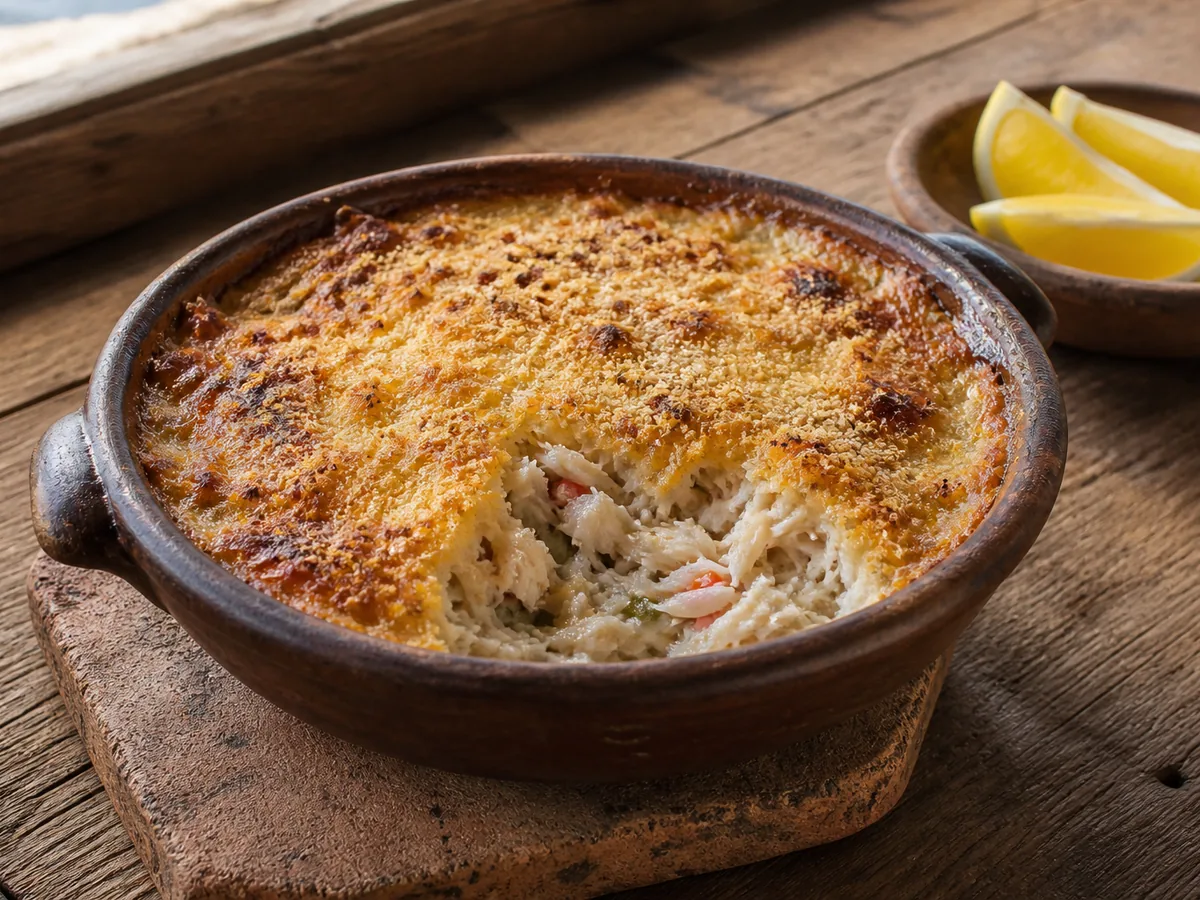
Seaside marisquerías along the central coast, from Viña del Mar to Zapallar, have always served pastel de jaiba. Unlike Maryland crab cakes or deviled crab, this is a bubbling gratin of sweet picked crab meat folded into a panade of crustless white bread soaked in warm milk and heavy cream.
A sofrito of sweet shallots, butter, garlic, white wine and ají de color enriches the base, scented with freshly grated nutmeg and bound with shredded Chilean Chanco and parmesan. Baked in clay pailas until bubbling under a browned, crisp cheese crust, it delivers sweet ocean crab wrapped in warm dairy richness.
Crab
- 800 g1.76 lbFresh lump and claw crab meat (jaiba)picked through by hand for shell fragments and cartilage
Panade
- 250 g8 slicesCrustless white sandwich bread (pan de molde)or traditional Chilean pan marraqueta crumb
- 350 ml1½ cupsWhole milk, warmed to 45 °C / 113 °F
- 150 ml⅔ cupHeavy whipping cream, 36% butterfat
Sofrito
- 60 g4 TbspUnsalted European butter, 82% butterfat
- 30 ml2 TbspExtra-virgin olive oil
- 2 medium2 mediumShallots, minced into fine 3 mm brunoise diceor 1 medium yellow onion
- 3 cloves3 clovesFresh garlic, peeled and pressed to a paste
- 120 ml½ cupDry Chilean white wine — Sauvignon Blanc or Chardonnay
- 10 g2 tspAjí de color (Chilean sweet paprika)
- 1 g¼ tspGround nutmeg, freshly grated
- 8 g1½ tspFine sea salt
- 2 g½ tspFreshly ground white pepper
Cheese
- 150 g1½ cupsAged Chilean Chanco cheese, shredded and dividedor young Gouda or Fontina; 100 g into the mix, 50 g for the crust
- 60 g⅔ cupParmigiano-Reggiano or Grana Padano, finely gratedfor the top crust
Why the panade protects the crab
Crustless white bread starches carry gelatinised amylopectin that hydrates instantly in warm milk and cream. Folded with picked crab, that panade forms a moisture-retaining sponge around the meat. Crab proteins expel water and turn spongy above 65 °C / 149 °F, and the panade traps those free juices inside its starch network, keeping the gratin moist under baking heat.
What the broiler does
Intense radiant heat drives Maillard reactions between milk casein and cheese lactose, forming a crisp, golden-brown crust with roasted, nutty notes.
The filling is already cooked
Oven time is only there to heat the gratin through and brown the cheese. Prolonged baking dries out crab protein.
The five tastes on this plate
Salt is fine sea salt and aged Parmigiano seasoning the sweet crab. Fat is European butter, heavy cream and melted Chanco, creating a rich, velvety mouthfeel. Acid is the dry Sauvignon Blanc reduction in the sofrito, balancing the dairy panade. Heat is grated nutmeg, white pepper, sweet paprika and minced garlic. Umami is sweet lump crab, aged cheese and reduced white wine.
Equipment
- Flat baking tray, for picking the crab
- Wide bowl, for the panade
- 4 qt pot, for the sofrito
- Six clay pailas 18 cm / 7 in, or 10–12 oz gratin dishes
- Baking sheet
- Spatula
Traditionally clay pailas de greda, preheated in the oven. Individual 10-to-12 oz ceramic or enamelled cast-iron gratin dishes work in a modern kitchen — heavy ceramic insulates the sides so the crab stays creamy while the top browns.
Method
Pick the crab meat8 min
Spread the picked crab meat onto a flat baking tray and run clean fingers through it, feeling for any sharp shell bits or transparent cartilage.
Keep it cold in the fridge until you are ready to fold.
Spread the crab meat on a flat tray and feel through it with clean fingers, removing sharp shell fragments and cartilage. Refrigerate until ready to fold into the filling.
Make the bread panade10 min
Tear the crustless white bread into chunks and put them in a wide bowl. Pour the warm milk and heavy cream over the bread and let it sit 10 minutes to soak.
Mash the soaked bread with a fork into a smooth, thick paste.
Tear crustless bread into a wide bowl. Pour over milk warmed to 45 °C / 113 °F and the cream; soak 10 minutes, then fork-mash into a smooth, thick paste.
Cook the sofrito7–9 min
Melt the butter with the olive oil in a 4-quart pot over medium heat. Add the minced shallots and garlic and sweat 6 to 8 minutes, until soft and translucent without browning.
Stir in the ají de color, fresh nutmeg, white pepper and salt, and cook 1 minute to bloom the spices.
Melt butter with olive oil over medium heat. Sweat shallots and garlic 6–8 minutes until translucent without browning. Stir in paprika, nutmeg, white pepper and salt; cook 1 minute to bloom the spices.
Reduce the wine and add the panade6–7 min
Pour in 120 ml white wine, bring to a boil, and simmer 3 minutes until reduced by half.
Turn the heat to low, add the bread panade, and whisk with a wooden spoon for 3 to 4 minutes into a thick, glossy cream.
Add 120 ml white wine, bring to a boil and reduce by half over 3 minutes. Lower the heat, add the panade and stir vigorously with a wooden spoon 3–4 minutes until thick and glossy.
Fold in cheese and crab
Pull the pot off the burner and stir in 100 g of the shredded Chanco until melted.
Gently fold the cold crab meat into the mixture with a spatula, keeping the lump pieces intact. Taste and adjust the salt if needed.
Remove from heat and stir in 100 g shredded Chanco until melted. Gently fold in the cold crab with a spatula, keeping large lumps intact; taste and adjust salt.
Assemble the pailas5 min
Preheat the oven to 200 °C / 400 °F and butter six clay pailas or gratin dishes.
Spoon the crab mixture evenly into the dishes and smooth the tops. Toss the remaining 50 g Chanco with the 60 g grated Parmigiano-Reggiano, and sprinkle a thick coat over each dish.
Preheat to 200 °C / 400 °F and butter 6 gratin dishes. Divide filling evenly and smooth the tops. Mix remaining 50 g Chanco with 60 g parmesan; spread a thick cheese layer over each dish.
Bake, broil and rest18–19 min
Set the dishes on a baking sheet and bake on the middle rack for 15 minutes, until heated through and bubbling around the sides.
Switch the oven to high broil for 3 to 4 minutes, until the cheese blisters with golden-brown spots.
Rest 5 minutes before serving.
Bake dishes on a sheet on the middle rack for 15 minutes, until heated through and bubbling at the edges. Broil on high 3–4 minutes until golden and blistered; avoid prolonged baking of the already-cooked filling. Rest 5 minutes.
Sensory cues of doneness
- Visual: a bubbling, burnished cheese top with dark hazelnut-brown patches, and juices bubbling actively against the clay edges.
- Auditory: a steady hissing and bubbling from the edges as steam escapes around the cheese crust.
- Olfactory: toasted parmesan, browned butter, sweet ocean crab and warm nutmeg.
Check for a bubbling cheese crust with dark hazelnut-brown patches and juices bubbling against the dish edges. Expect a steady hiss and aromas of toasted parmesan, butter, sweet crab and nutmeg.
Storing it
Assemble the gratin in its dishes, cover with wrap, and refrigerate up to 24 hours. Bake at 190 °C / 375 °F for 25 minutes, then broil 3 minutes. Freezing is not recommended — the bread-and-milk panade weeps water when thawed, which ruins the texture.
Troubleshooting
- Mashing the crab.
Stirring aggressively breaks delicate lump meat into shreds. Fold gently with a spatula, off the heat.
- A watery gratin.
Canned or thawed crab was not drained. Press the crab in a sieve before using it, to remove excess liquid.
- Baking too long.
Prolonged baking dries out crab protein. The filling is already cooked — the oven time is only to heat it through and brown the cheese.
Substitutions
One-to-one global substitutions, with the technique adjustment each one requires.
Ingredient substitutions
| Ingredient | Replace with | Culinary impact and technique adjustment |
|---|---|---|
| Jaiba (crab) | Dungeness crab, blue crab or king crab meat | One-to-one. Make sure it is drained well |
| Chanco cheese | Young Gouda, Havarti or Fontina | One-to-one. Delivers the same mild, buttery melting quality |
| Pan marraqueta crumb | Crustless white sandwich bread, or brioche crumb | One-to-one. Hydrates quickly into a smooth panade |
Scaling
Half, for 3 portions
Halve the ingredients. The bake times stay the same.
Double, for 12 portions
Double into individual dishes, or two 9×13 in baking pans. Add 5 minutes to the bake time if you are using large dishes.
What to serve it with
- A green salad with lemon dressing — crisp tender greens with fresh lemon juice and olive oil, to cut the rich dairy
- Buttered toast points, for scooping up the gratin
- A Limarí Valley Chardonnay, whose creamy brioche notes mirror the gratin while limestone-grown mineral acidity cleanses the palate
Questions
Can I make pastel de jaiba ahead of time?
Yes. Assemble the gratin in its dishes, cover with wrap, and refrigerate up to 24 hours. Bake at 190 °C / 375 °F for 25 minutes, then broil 3 minutes.
What crab works best outside Chile?
Fresh Dungeness crab, blue crab lump, or Jonah crab meat all produce excellent results.
Can I freeze it?
Freezing is not recommended, because the bread-and-milk panade weeps water when thawed and ruins the texture.