Tasajo Entomatado Panameño
Beef salted and smoke-dried over hardwood embers in the Azuero cattle country. The boil does two jobs at once — rehydrating shrunken muscle fibres and leaching out the salt by osmosis — while the phenols stay bound to the fat, so the smoke survives into the tomato gravy.
- Prep
- 25 min
- Cook
- 45 min
- Serves
- 4 to 6 portions
- Difficulty
- Medium
Researched · Kitchen testing pending
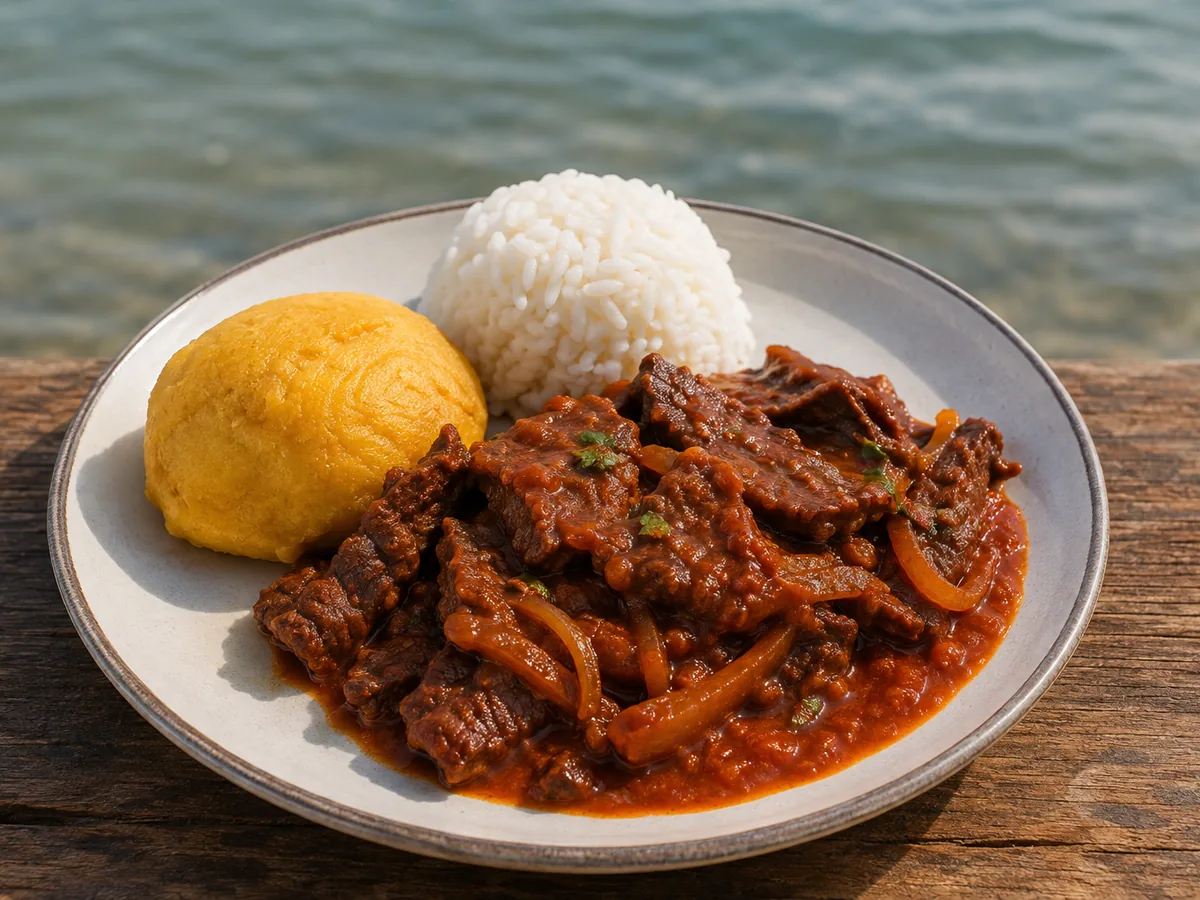
Campfire smoke and cured beef. In the cattle pastures of Azuero, tasajo is a rural staple — beef flank or round, salted, spiced and smoke-dried over native hardwood embers until the strips are dark mahogany.
In the kitchen the dry meat is desalinated and rehydrated by boiling until tender, then cut into strips and sautéed in a sofrito of achiote oil, onion, garlic, ripe tomato and fresh culantro.
Simmered down into a thick crimson gravy, it is eaten for breakfast with hot corn bollos, fried hojaldras, or over a mountain of white rice.
The beef
- 700 g1.5 lbCured smoked beef (tasajo panameño, or cecina ahumada), cut into 8 cm strips
- 1.5 L6.3 cupsCold filtered water, for boiling and desalinating
The sofrito
- 45 ml3 TbspAchiote oil
- 1 large1 largeYellow onion, peeled and cut into fine 6 mm dice
- 6 cloves6 clovesFresh garlic, minced to a paste
- 1 large1 largeGreen bell pepper, cored and diced
- 6 pieces6 piecesAjí trompito or ají dulce, seeded and minced fine
The sauce
- 400 g3 largeRipe plum tomatoes, peeled, seeded and puréed smooth
- 15 g1 TbspTomato paste
- 4 g1 tspCumin seeds, freshly toasted and ground
- 2 g½ tspDried wild oregano, crushed
- 2 g½ tspCoarsely ground black pepper
- 120 ml½ cupThe reserved tasajo cooking broth, or fresh beef stock
To finish
- 6 leaves6 leavesFresh culantro, chopped fine
- 15 g1 TbspUnsalted butter
Do not add salt
Tasajo is cured in it. Season nothing until the finished sauce has been tasted, and expect to add nothing at all.
The boil is not optional
Twenty-five to thirty minutes in fresh water rehydrates the shrunken fibres and pulls excess sodium chloride out by osmotic diffusion. Straight into the skillet, the meat stays leathery and inedibly salty.
The smoke stays behind
Phenols, guaiacol and syringol are bound to the meat fats, not the water, so the boil takes the salt and leaves the campfire aroma — which then dissolves into the tomato and culantro reduction.
Cut across the grain
After boiling, slice the softened meat across the grain into thin ribbons so it stays tender under the sauce.
Keep the gravy generous
Reduce it to thick and spoonable, not dry. There should be plenty of sauce around the meat for the rice or the bollo.
Passive time, counted separately
The finished skillet rests 5 minutes off the heat so the beef reabsorbs the sauce. That sits outside the times quoted above.
The five tastes on this plate
Salt comes entirely from the cure. Fat is achiote oil, butter and cured beef fat carrying the smoke across the tongue. Acid is plum tomato and tomato paste balancing that smoke and salt. Heat is garlic, black pepper, toasted cumin and sweet ají dulce. Umami is smoke-cured beef glutamates, reduced cooking broth and concentrated tomato paste.
Equipment
- 4 qt pot, for the desalination boil
- 12 in cast-iron skillet or 5 qt enamelled Dutch oven
- Sharp knife
Traditionally a heavy cast-aluminium caldero or iron skillet over a wood fire. A 12-inch cast-iron skillet works in a modern kitchen — it spreads a low flame evenly, which keeps the thick tomato sauce from catching.
Method
Desalinate and soften30 min
Cover the tasajo with the 1.5 L cold water and boil 25 to 30 minutes, until a fork goes through easily and the salt has leached into the water.
Drain, reserving 120 ml of the liquid, and cut the meat across the grain into thin bite-sized ribbons.
Cover tasajo with 1.5 L cold water; boil 25–30 minutes until fork-tender to remove excess salt. Drain, reserving 120 ml liquid, then slice thinly across the grain into bite-sized ribbons. Do not add salt yet.
Cook the achiote sofrito13 min
Heat the achiote oil over medium and sauté the onion, garlic, bell pepper and ají dulce 6 to 8 minutes until soft and fragrant.
Add the puréed tomato, tomato paste, cumin, oregano and black pepper and simmer 5 minutes until glossy and deep red.
Heat achiote oil over medium; soften onion, garlic, bell pepper and ají dulce 6–8 minutes. Add puréed tomato, tomato paste, cumin, oregano and pepper; simmer 5 minutes until deep red and glossy.
Braise the meat15 min
Stir the tasajo ribbons into the hot sofrito to coat, then pour in the 120 ml reserved broth.
Bring to a simmer over medium-low, cover, and cook 15 minutes so the meat drinks the sauce.
Toss tasajo ribbons in the hot sofrito and add 120 ml reserved cooking liquid. Bring to a simmer over medium-low, cover and cook 15 minutes to absorb the sauce.
Reduce and finish5 min
Uncover and simmer 5 minutes until the sauce thickens into a glossy gravy that coats the meat.
Stir in the culantro and the butter until melted, then taste before adding any salt — it very rarely needs it.
Uncover and simmer 5 minutes until sauce thickens and coats the meat, retaining generous gravy. Melt in butter and add culantro. Taste before adding salt; the cured beef usually supplies enough.
Rest and plate
Off the heat, rest 5 minutes so the beef reabsorbs the sauce.
Spoon generous mounds over white rice, warm corn bollos or hot hojaldras.
Remove from heat and rest 5 minutes so the beef absorbs the sauce. Spoon generous portions with plenty of gravy over white rice, warm corn bollos or hot hojaldras.
Sensory cues of doneness
- Visual: dark mahogany strips coated in thick glossy crimson sauce, flecked with green culantro and soft pepper.
- Auditory: a quiet thick bubbling as the tomato reduces around the beef.
- Olfactory: campfire wood smoke, cured beef, sautéed garlic, sweet tomato and fresh culantro.
Check for mahogany ribbons in thick, glossy crimson gravy with soft peppers and green culantro. Gentle, thick bubbling should accompany reduction; expect woodsmoke, cured beef, garlic, sweet tomato and fresh herbs.
Storing it
Freezes exceptionally well for up to 3 months. Reheat gently in a skillet with a splash of water.
Troubleshooting
- Unbearably salty.
Salt was added during cooking, or the desalination boil was skipped. Neither is recoverable — boil first, and taste before seasoning.
- Tough, leathery meat.
It went into the skillet raw. Boil 25 to 30 minutes first.
- A dry plate.
The sauce over-reduced. Keep a generous amount of spoonable gravy.
Substitutions
One-to-one global substitutions, with the technique adjustment each one requires.
Ingredient substitutions
| Ingredient | Replace with | Culinary impact and technique adjustment |
|---|---|---|
| Tasajo panameño | Mexican cecina ahumada, Brazilian carne seca, or jerked beef | One-to-one, and still boil to desalinate before cooking |
| Culantro | Fresh cilantro | One-to-one where culantro cannot be found |
| Achiote oil | Neutral oil with 1 Tbsp sweet paprika | One-to-one |
Scaling
Half, for 2 to 3 portions
Halve everything in a 10-inch skillet. Simmer times are identical.
Double, for 8 to 10 portions
Double everything in a 6-quart Dutch oven with plenty of surface area so the meat coats evenly.
What to serve it with
- Bollos de maíz, steamed corn dough rolls in their husks
- Hot crisp hojaldras
- Steamed white rice, to soak up the smoky gravy
- Chicha de naranjilla, or a cold lager
Questions
What is tasajo, and where do I buy it?
Salted, smoked beef flank or round, sold at Latin American and Caribbean butchers. Mexican cecina ahumada or Brazilian carne seca is close.
Can I use fresh beef?
Yes. Season flank steak with smoked sea salt and a dash of liquid smoke, brown it hard, and simmer it in the tomato-culantro sauce.
Does it freeze?
Exceptionally well, up to 3 months. Reheat gently with a splash of water.