Locro
White corn, white beans, squash, and as much of the pig as the pot will take, simmered until a spoon comes up coated. The 25 de Mayo stew.
- Prep
- 45 min
- Cook
- 4 hr
- Serves
- 8–10 bowls as a main
- Difficulty
- Medium
Kitchen-tested
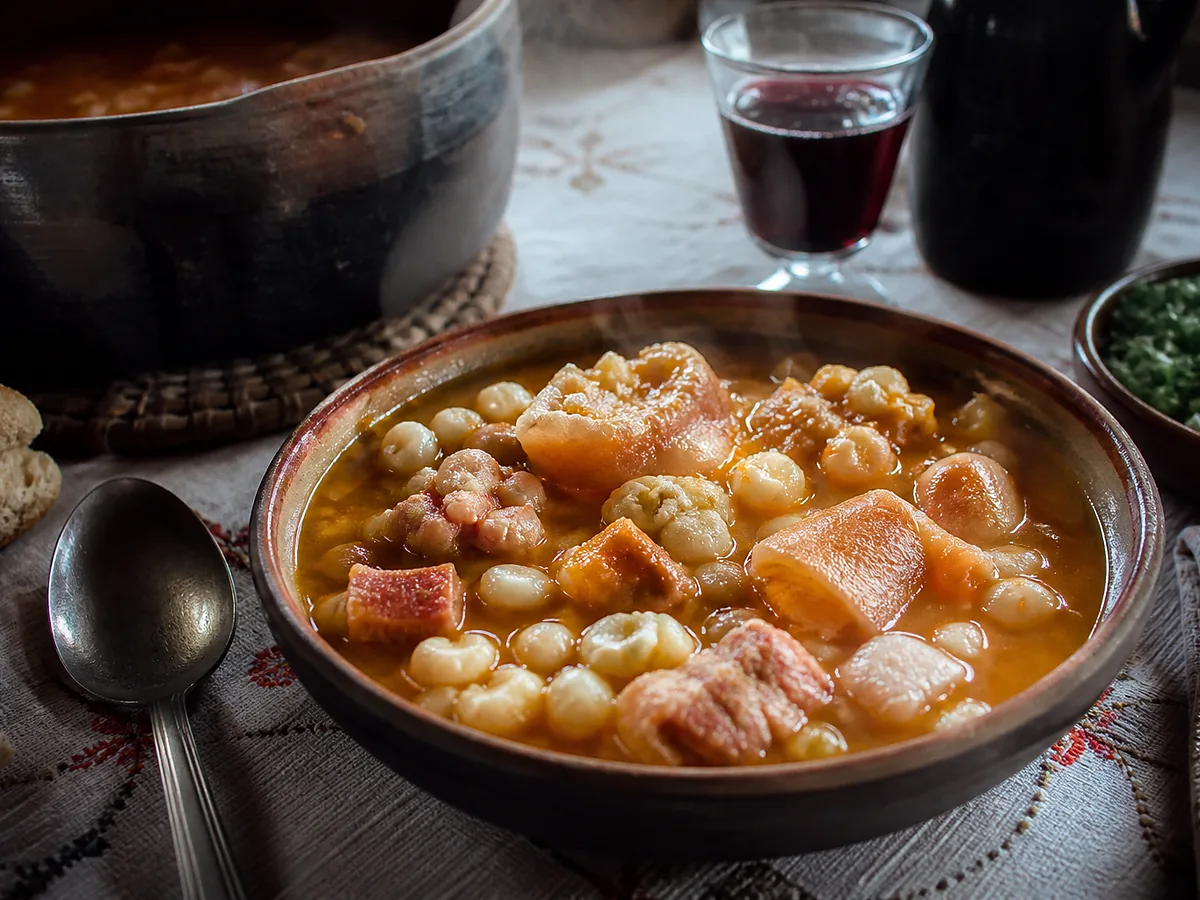
Locro is a slow winter stew of white corn, white beans, squash, and as much of the pig as the pot will take. You eat it on 25 de Mayo and 9 de Julio, and in July because the house is cold. It is Andean and criollo: a pre-Columbian corn stew that met Spanish pig. The heartland is the northwest — Salta, Jujuy, Tucumán, Catamarca — but on those two national days the whole country cooks it.
The rule people get wrong is thinness. They treat locro like a soup with things floating in it. If a spoon does not come up coated, you are not there yet. Body comes from squash and beans smashed against the pot, from pork collagen, from starch that leaks out of the corn after hours — not from cream, and not from a blender.
This is not Mexican pozole and it is not Brazilian feijoada. Pozole is nixtamalised corn in a chile-forward broth, finished with radish, cabbage, oregano, and lime, and the liquid stays a broth. Feijoada is black beans and pork, with no squash architecture and no white corn. Locro is thickened with squash, built on maíz blanco and porotos, seasoned with paprika, cumin, garlic, and onion, and finished at the table with paprika fat and scallion.
Overnight soak. Low simmer, three to four hours. Smash. Rest a little in the pot. Then the ají.
Soaked overnight
- 400 gabout 2⅓ cupsDried white corn / maíz blancohominy, or maíz pisado
- 300 gabout 1½ cupsDried white beans / porotos blancosalubias or similar
The pot
- 1 kg2.2 lb preparedSquash / zapallo, peeled and seededcut in 4 cm / 1½ in chunks
- 600 g1.3 lbPork stew meat / trozo, shoulder or collarin 4 cm / 1½ in cubes
- 250 g9 ozPork belly or panceta, skin on if you have itin 2 cm / ¾ in strips
- 300 g10 ozChorizo colorado or chorizo criollo2–3 sausages, sliced in 2 cm / ¾ in coins
- 300 g10 ozOnion, small diceabout 2 medium
- 20 g4 tspGarlic, minced5–6 cloves
- 15 gabout 2½ tbspSweet paprika / pimentón dulce, or ají molido dulce
- 4 g1½ tspGround cumin
- 12 g2 tspCoarse saltplus more at the end
- 2 g1 tspBlack pepper
- 2.5–3 L10½–12½ cupsWater, or light pork or chicken stockcorn variety and the gap around your lid change this
- 1 leaf1 leafBay leafoptional, and not the point
The table ají — paprika fat and scallion
- 60 ml4 tbspMelted pork fat from the potor oil, if the pot ran lean
- 8 g1 tbsp plus 1 tspSweet paprika
- 40 g⅓ cupScallion / verdeo, thinly sliced3–4 stalks
- 0.3 ga pinchHot ají molido or cayenneoptional
- 0.3 ga pinchSalt, for the ají
Yield
8 to 10 bowls as a main dish. As a holiday first plate you can stretch it toward 12, but then you are serving a cup, not a stew.
The ratio
Dried corn : dried beans : prepared squash at 400 g : 300 g : 1 kg. Pork — trozo plus panceta plus chorizo — sits around 1.15 kg for a holiday pot of 8 to 10. A starting point, not a locked formula.
On the corn
Maíz blanco is the spine. In the northwest you see maíz pisado, cracked white corn that hydrates faster and sheds more starch. Whole dried hominy is what most kitchens outside the Andes can buy. Canned hominy is a weekday departure: rinse it, skip the soak, add it in the last hour. Fresh sweet corn is the wrong species. If the bag says "pozole corn" you can use it — you are still making locro, not pozole.
On the beans and the squash
White beans: porotos blancos, alubias, navy, cannellini. They should go soft enough to smash. Black beans turn the pot grey and drag it toward feijoada. Chickpeas are a departure. Do not add baking soda to the soak; it speeds the skin and flattens the flavour. Zapallo is body, not garnish — anco, criollo, or a dry-fleshed winter squash. Butternut works. Spaghetti squash shreds instead of melting. Cut it big: small cubes dissolve before the corn is done and you lose the option to smash on purpose.
On the pig
Trozo for meat, panceta for fat and collagen, chorizo colorado for paprika and smoke. That three-part pig is the home pattern I cook. A trotter in the pot is traditional and good — more gelatin. I do not put morcilla in mine; it stains and sweetens. Beef is a stretch some families make when pork is short. Chicken is a different stew.
On the paprika, and the ají
The stew is seasoned in the pot. The ají — paprika fat and scallion — is seasoned at the table. Do not collapse those two jobs. Ají molido is a dried ground pepper, often mild; Spanish pimentón dulce is the closest foreign-shelf substitute. Smoked pimentón is a departure. The table spoon should smell like warm paprika and onion greens.
Equipment
- A heavy pot, 7 to 9 L — an enamelled Dutch oven or a thick aluminium olla
- A wooden spoon with an edge you can scrape and smash with
- Soak bowls, a ladle, and bowls that hold heat
Do not use: a blender to "finish" the body; a slow cooker on low all day without a smash; a thin wide soup pot that boils instead of simmers. Thin stainless scorches squash while the corn is still hard. A pressure cooker is a departure — times are in the substitutions below, but it is not my first pot.
Method
Soak8–12 hours, overnight
Cover the corn and beans with cold water, 8 to 10 cm above the food. Room temperature unless the kitchen is hotter than 25 °C / 77 °F. Drain in the morning.
The smell should be clean and slightly sweet. If the soak is foamy and sour, dump it and start the beans over.
They hydrate from the outside in. A short soak leaves a hard heart, and violent boiling then bursts skins and still leaves chalk.
Soak dried corn and beans for 8–12 hours in cold water covering them by 8–10 cm. Refrigerate if the kitchen is above 25 °C / 77 °F. Drain in the morning; discard a sour, foamy batch. If using canned hominy instead, rinse it, skip its soak and add it only in the last hour.
Render and brown20–25 min
Set the pot over medium heat and add the panceta. Let it shed fat and take colour, 8 to 10 minutes — blond edges toward gold, not dark crackling. Scoop the pieces out if they are already crisp; they go back in.
Add the pork cubes and brown them, in batches if you must, 6 to 8 minutes per batch, until opaque with caramel on the corners. Salt lightly as they go. Add the chorizo last, 2 to 3 minutes, just until the paprika fat runs. A hard skin now is a cork later.
Maillard on the pork is one of the few browned flavours in a stew that otherwise steams, and that fat is the medium for the onion and paprika.
Render panceta over medium heat for 8–10 minutes until golden; remove if crisp. Brown pork cubes in batches for 6–8 minutes each, salting lightly. Add chorizo for 2–3 minutes until it releases paprika-colored fat. Reserve the meats.
Onion, garlic, paprika8–10 min
Leave 2 to 3 tablespoons of fat in the pot and save the surplus for the ají. Add the onion with a pinch of salt and cook until translucent, 6 to 8 minutes. Add the garlic for 30 seconds, until it smells sweet.
Take the pot off the heat for ten seconds, then stir in the paprika and cumin for thirty seconds. Paprika burns in a hot dry pan and then the stew tastes like dust.
Paprika's flavour is fat-soluble. Dumping it into water later is colour without perfume.
Leave 2–3 tablespoons fat in the pot and reserve extra for the table ají. Cook onion with a pinch of salt for 6–8 minutes until translucent, then garlic for 30 seconds. Remove from heat for ten seconds; stir in paprika and cumin for thirty seconds without scorching.
Load and cover5 min
Return the meats. Add the drained corn, drained beans, squash, salt, pepper, and the bay if you are using it. Pour on 2.5 L of water or stock, then more until the food sits under 3 to 4 cm of liquid.
It will look too watery. The corn and beans will drink, and you will smash.
Bring it to a boil, then immediately drop to a low simmer — a lazy break of bubbles, 90 to 95 °C / 195 to 205 °F. A rolling boil blows the beans apart before the corn is tender.
Return meats; add drained corn and beans, squash, salt, pepper and optional bay. Start with 2.5 L water or stock, then add enough to cover by 3–4 cm. Bring to a boil, then lower to a gentle simmer, 90–95 °C / 195–205 °F.
The long simmer3–4 hours
Lid ajar. Stir every 20 to 30 minutes, scraping the bottom once the squash starts to collapse. Skim dirty foam at the beginning, but not every slick of paprika fat — you need that fat.
At 90 minutes the beans should yield to a tooth and the corn still has a chalky core. At 2 hours the squash is soft enough to smash. Do not smash yet if the corn is hard — the liquid becomes a purée that then scorches while you wait on the maize.
Between hour 3 and hour 4 the corn goes from edible to a kernel that compresses. That is the window. Add hot water only if the bottom is catching; cold water knocks the simmer down and tightens the meat.
Collagen needs time above roughly 80 °C / 176 °F to become gelatin, and corn starch leaches slowly. You cannot rush both at a boil without wrecking the beans.
Simmer with lid ajar for 3–4 hours. Stir and scrape the bottom every 20–30 minutes; skim initial foam. Beans may soften at 90 minutes and squash at 2 hours, but do not mash until the corn compresses easily, usually between hours 3 and 4. Add hot water if needed to prevent catching.
Smash for body5–10 min
When the corn is tender and the pork yields, mash about a third of the squash and a handful of beans against the wall of the pot. Stir.
The liquid should go from brothy to opaque and heavy, and coat a spoon. If it still reads as soup, smash more. If it reads as porridge, loosen it with hot water.
Taste the salt now. It should taste seasoned, with paprika in the fat and a sweet bottom from the squash.
When corn and pork are tender, mash about a third of the squash and a handful of beans against the pot wall. Stir until the broth coats a spoon. Mash more if soupy, or add hot water if too thick. Taste and adjust salt.
Rest in the pot15–20 min
Off the heat, lid on. The starch sets a little and the fat rises. Skim a few spoonfuls of clear fat for the ají if you did not save it earlier.
Locro is better 20 minutes after you thought it was done, and better still the next day.
Remove from heat, cover and rest 15–20 minutes. Reserve clear fat from the surface for the ají if you did not save it earlier.
The ají, at serving3 min
Warm the 60 ml of pot fat until fluid and fragrant, not smoking — about 80 to 90 °C / 175 to 195 °F. Off the heat, stir in the paprika until brick red. Add the scallion and a pinch of salt, plus the optional hot ají.
It should smell of paprika and green onion, and stay spoonable.
Each bowl gets locro, then a spoon of ají at the table. If you stir all of it into the pot, the scallion wilts and the paprika dulls.
Warm the 60 ml reserved fat to 80–90 °C / 175–195 °F, without smoking. Off heat, stir in the paprika for the table ají, then scallion, salt and optional hot ají. Spoon over individual bowls, rather than stirring it into the whole pot.
Storing it
Cooling and keeping
Pork and beans are not a counter project. Cool it in shallow containers and refrigerate within 2 hours. It keeps 3 to 4 days cold. The stew thickens hard in the fridge as the starch retrogrades — that is normal. Loosen it with water when you reheat to a simmer, 74 °C / 165 °F in the centre. Freeze up to 2 months and thaw in the refrigerator.
The bean rule
Undercooked beans are a gastrointestinal problem, not a texture choice. If a bean is still hard at hour 4, keep going. Do not serve locro from a pot that sat in the danger zone overnight. Make the ají the day you serve.
Troubleshooting
- It is soup.
You did not smash, or you added too much water and never cooked it back. Smash squash and beans against the pot, then simmer uncovered 15 to 20 minutes. Do not add flour.
- It is paste.
Too much smash, or watery squash. Add hot stock and stop crushing. Next time, bigger chunks and a later smash.
- Corn still hard at hour 4.
Old corn, a short soak, or you starved it of liquid. Keep simmering and add hot water. Canned hominy in the last 40 minutes is an emergency departure.
- Beans burst, corn raw.
The boil was too hard. Next time give the corn a 45-minute head start. Corn type decides this.
- Greasy slick on top.
Fatty sausage in a timid simmer. Skim it. Do not dump in potatoes to "soak up fat."
- It tastes flat.
Under-salted, paprika dumped into water, or you skipped the table ají. Salt at the end. Bloom the paprika in fat. Serve the spoon.
- Scorched bottom.
Thin pot, or you stopped stirring after the squash collapsed. Transfer what is not burnt. Burnt locro does not hide.
- The chorizo is a dry cork.
You browned it too far at the start. Let the sausage poach after a brief kiss in the fat.
- Too spicy.
You used hot paprika in the whole pot. Keep the heat in the table ají.
- It smells sour after the soak.
Fermented beans. Do not cook over a bad soak.
Substitutions
Traditional
White corn, white beans, zapallo, pork trozo, panceta, chorizo colorado or criollo, onion, garlic, paprika, cumin, a long simmer, a smash, and a table ají of fat, paprika, and scallion. Northwest lineage, national-holiday table.
Acceptable home shifts
Butternut for zapallo. Cannellini or navy for porotos blancos. A Spanish paprika sausage, not a raw Mexican fresh sausage. A trotter in the pot. Hot ají molido in the table spoon only.
Departures, named as such
Pressure cooker. Canned hominy. Beef for pork. Chickpeas. Smoked pimentón as the only paprika. Cream to thicken. Blender body. Lime, cabbage, radish, oregano — that is pozole dressing. Black beans, orange, farofa — someone else's pot.
The pressure cooker, if you must
Soak and brown as usual. Liquid toward the low end, about 2 L. High pressure 35 to 45 minutes, natural release 15 minutes, then smash and simmer uncovered 10 to 15 minutes for body. Cookers and corn vary.
Scaling
Simmer time does not scale. Liquid is the variable — food covered by 3 to 4 cm, then adjust.
A holiday table
For 16 to 20, double everything except the bay, and use a 12 to 16 L pot or two Dutch ovens. Do not triple in one thin pot. Soak in two bowls.
Halving
For 4: 200 g corn, 150 g beans, 500 g squash, half the meats. Still 3 hours, still a smash. Do not pour 3 L into a small pot because the recipe said so.
What to serve it with
Bread for the bowl, not rice in the bowl.
- Crusty bread
- A simple salad, if you need something raw on a 25 de Mayo table
- Wine, beer, or water
- Empanadas before it, with locro as the weight
I do not serve locro with chimichurri or lime wedges. On a working winter Tuesday, locro is the meal.
Questions
Can I skip the soak?
You can, and you will add an hour or more, and the skins will cook unevenly. Soak.
Do I have to use three kinds of pig?
You need fat, collagen, and a paprika sausage — or substitutes for each. All-lean stew meat makes a dry, polite soup.
Is canned hominy cheating?
It is a departure. Rinse it, add it late, and smash the squash harder for the starch the dried corn would have given you.
Why smash instead of blending?
You want intact kernels and cubes in a thickened liquor, not a purée. The spoon against the pot lets you stop when it coats.
Can I make it the day before?
Yes, and you should if you can. Cool it fast, refrigerate, reheat to a simmer, loosen with water, and make the ají fresh.
What if I cannot find maíz blanco?
Dried hominy is the honest substitute. Barley and wheat berries are different stews. Do not use sweet corn.
Is the table ají optional?
You can eat locro without it. You will be eating an unfinished bowl.
How do I know it is done?
Corn compresses, beans smash, pork yields, spoon coats. If those four are true it is done, even if the clock disagrees.